
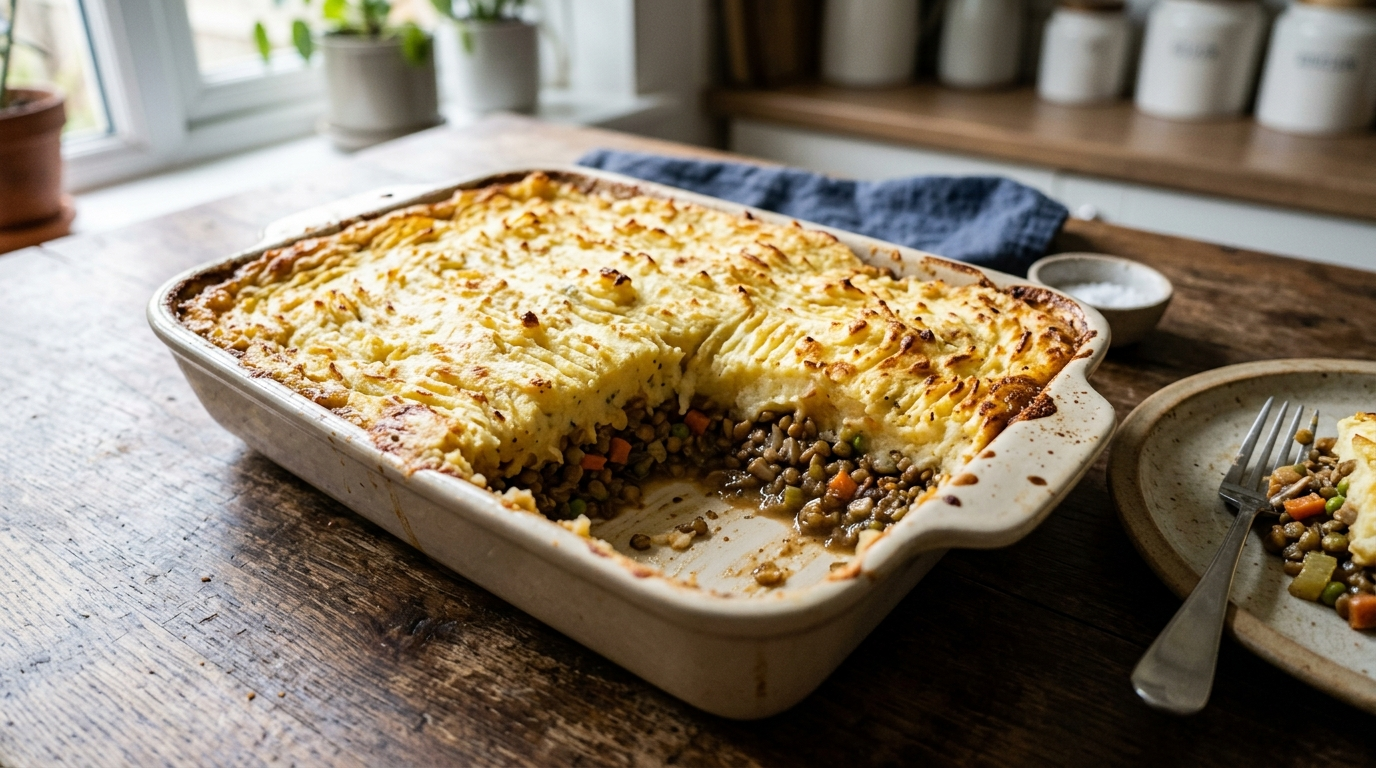
Vegetarian Shepherd’s Pie
Table of Contents
This vegetarian shepherd’s pie swaps ground meat for a savory lentil and mushroom filling, built the same way a traditional filling is — sautéed aromatics, a rich gravy, and enough simmer time to thicken properly — then topped with buttery mashed potatoes and baked until the edges turn golden and crisp.
Why This Vegetarian Shepherd’s Pie Works
Lentils and mushrooms create a hearty filling. Mushrooms bring savory depth, while brown or green lentils add substance and hold their shape well during baking.
A properly reduced gravy keeps the layers from collapsing into each other. Simmering the filling until it thickens on its own means the potato topping stays on top instead of sinking into a watery base.
Gentle mashing keeps the potato topping light. A ricer or hand masher helps create smooth mashed potatoes without overworking the starch.
Recipe
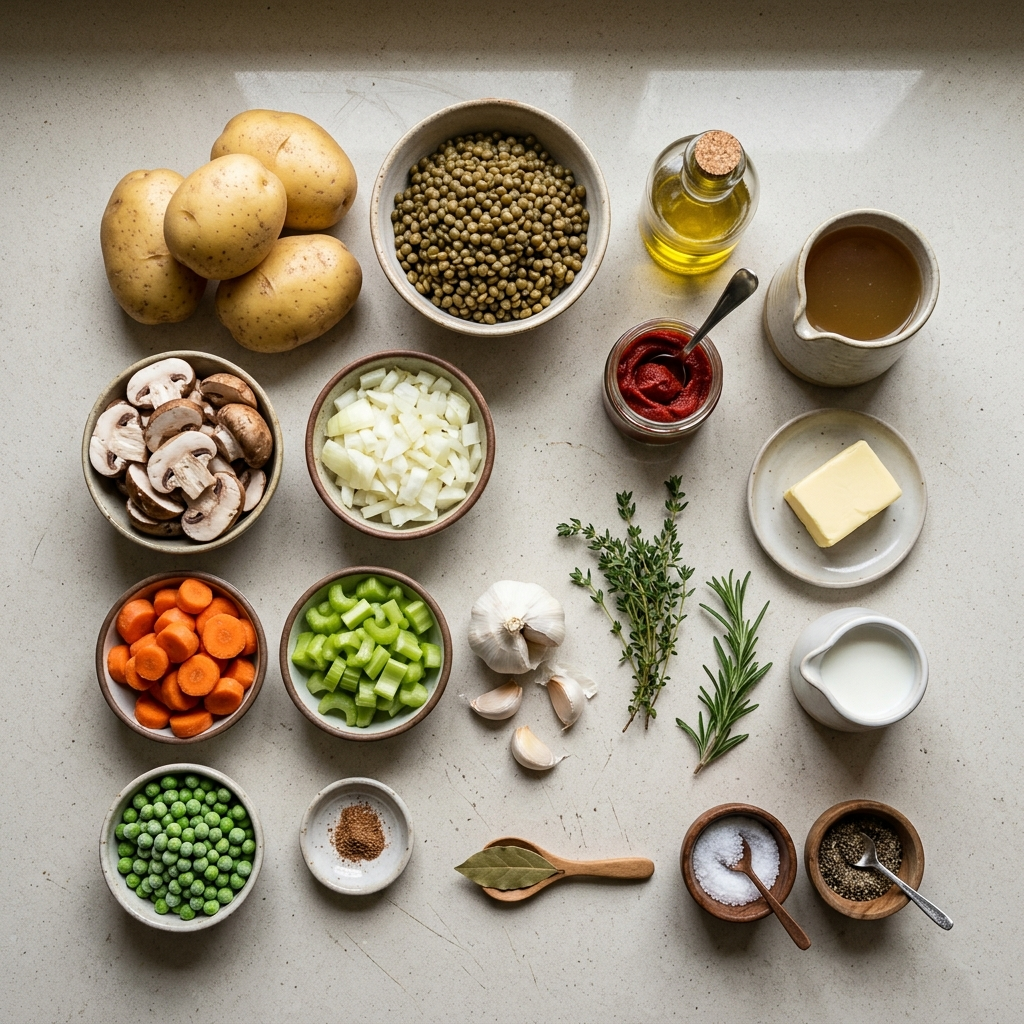
Prep time: 20 minutes | Cook time: 55 minutes | Rest time: 10 minutes | Serves: 6 Per serving (estimated, without optional cheddar): ~350 calories | ~12g protein | ~47g carbs | ~13g fat
Ingredients
For the filling:
- 2 tbsp olive oil
- 1 onion, diced
- 2 carrots, diced
- 2 celery stalks, diced
- 3 garlic cloves, minced
- 8 oz cremini mushrooms, sliced
- 1 tbsp tomato paste
- 1½ cups cooked brown or green lentils, drained well
- 1½ cups vegetable broth
- 1 tsp fresh thyme (or ½ tsp dried)
- 1 tsp fresh rosemary (or ½ tsp dried)
- 1 bay leaf
- 1 cup frozen peas
- Salt and black pepper
For the topping:
- 2 lbs Yukon Gold potatoes, peeled and cubed
- 4 tbsp butter
- ½ cup warm milk
- ½ cup shredded cheddar, optional
- Salt, pepper, and a pinch of nutmeg
Equipment
This post may contain affiliate links. If you purchase through one of these links, I may earn a small commission at no extra cost to you.
- Large skillet : gives the vegetables and mushrooms enough room to cook and lets the filling reduce properly.
- 9×13-inch baking dish : provides enough surface area to spread the filling and mashed potato topping evenly.
- Potato ricer : helps create smooth mashed potatoes without overworking them. A regular hand masher works well too.
- Instant-read thermometer: useful for checking that reheated leftovers have reached a safe temperature.
Instructions
- Bring a large pot of salted water to a boil. Add the potatoes and cook until fork-tender, 15 to 20 minutes.
- While the potatoes cook, heat the olive oil in a large skillet over medium heat. Add the onion, carrots, and celery, and cook until softened, about 8 minutes.
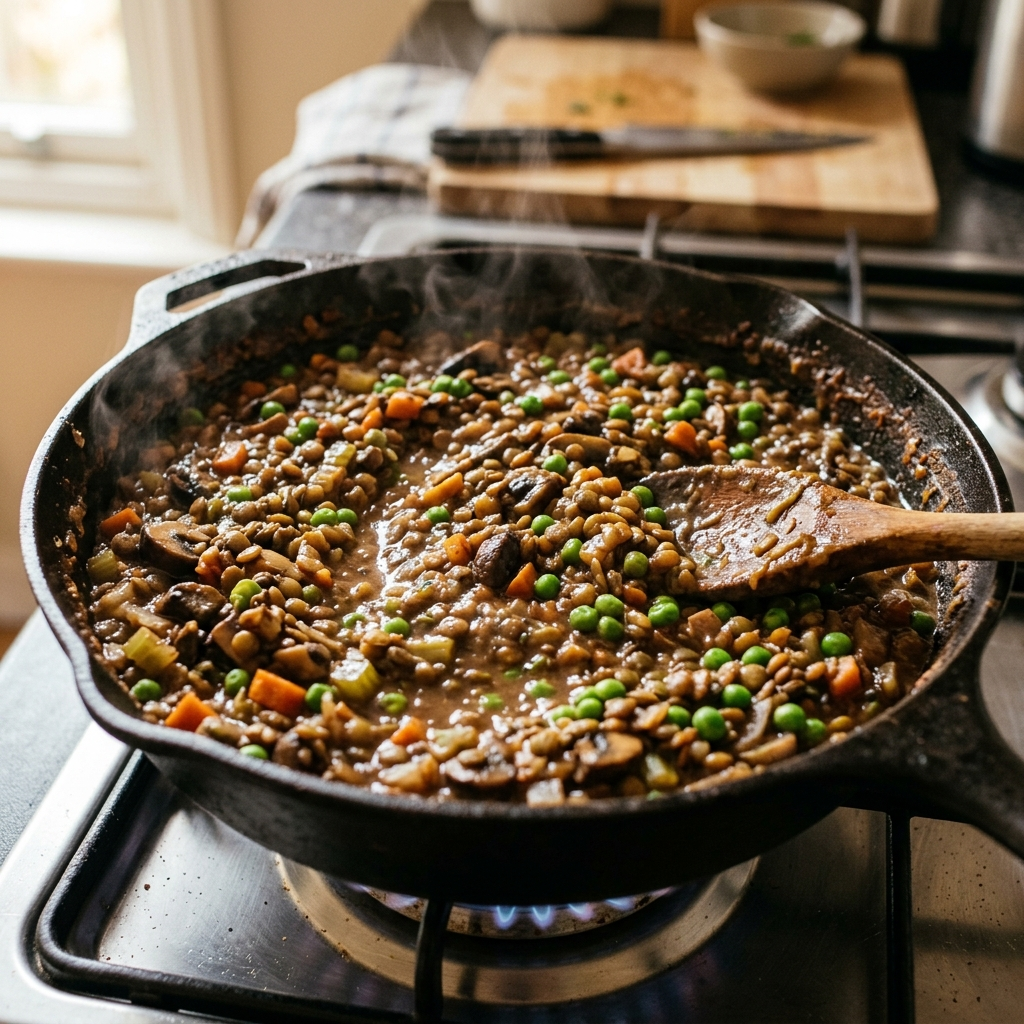
- Add the garlic and mushrooms. Cook, stirring occasionally, until the mushrooms release their moisture and start to brown, about 5 minutes.
- Stir in the tomato paste and cook for 2 minutes to take the raw edge off it. Add the lentils, vegetable broth, thyme, rosemary, and bay leaf. Simmer, uncovered, for about 10 minutes, until the liquid has reduced and the filling holds together rather than looking soupy.
- Stir in the peas, season with salt and pepper, and remove the bay leaf. Transfer the filling to a greased 9×13-inch baking dish, spreading it evenly.
A 9×13-inch baking dish gives the filling enough surface area for the potato topping to spread evenly and develop good ridges.
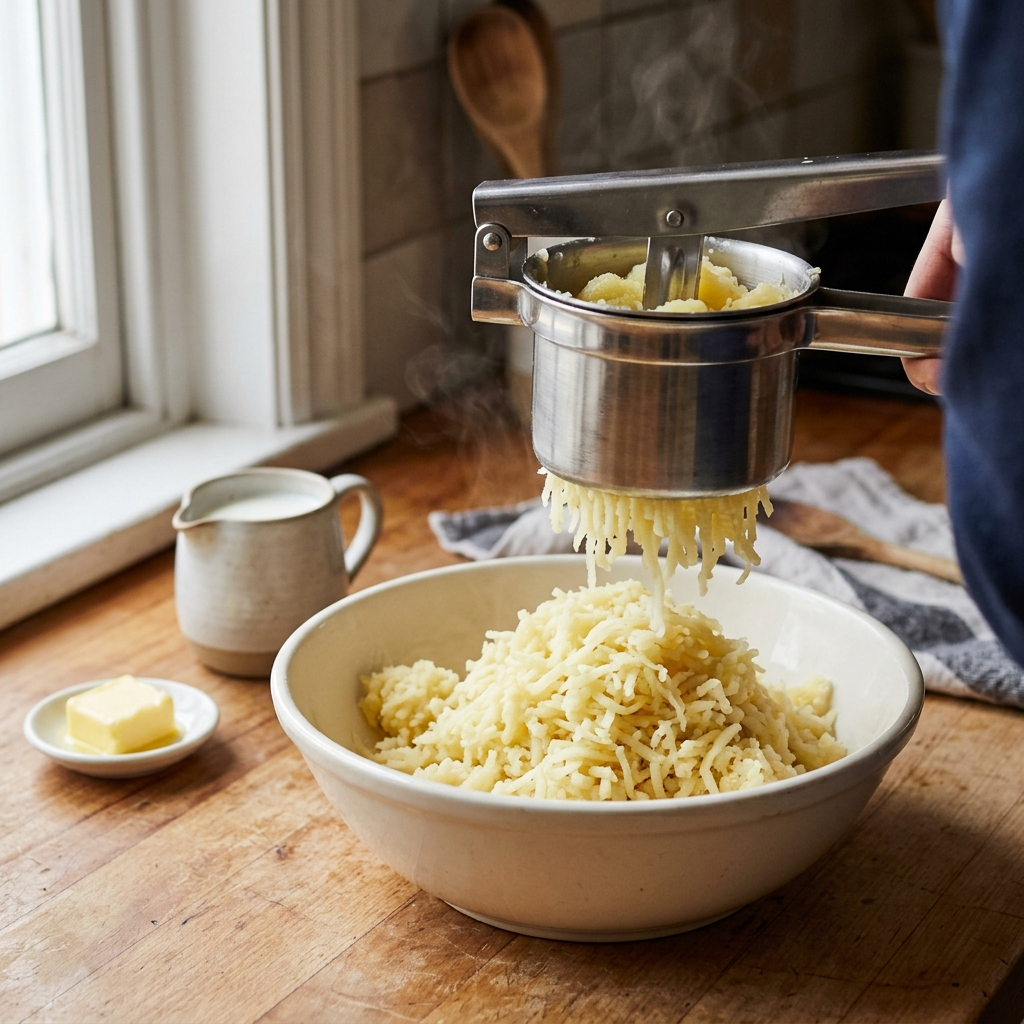
- Drain the potatoes and return them to the warm pot over low heat for a minute to dry out any excess moisture. Add the butter and warm milk, then mash with a ricer or hand masher — not a food processor, which tends to overwork the starch and turn the potatoes gummy. Fold in the cheese, if using, and season with salt, pepper, and nutmeg.
A potato ricer makes it easy to create a light, even texture without overworking the potatoes. A regular hand masher works well too.
- Preheat the oven to 400°F. Spoon the mashed potatoes over the filling in mounds, working from the edges in, rather than dumping it in the center and spreading outward — this keeps the heavier potatoes from sinking into the gravy. Gently spread it to the edges with an offset spatula or the back of a spoon.
- Run a fork across the surface to create ridges, which will brown and crisp more than a flat top.
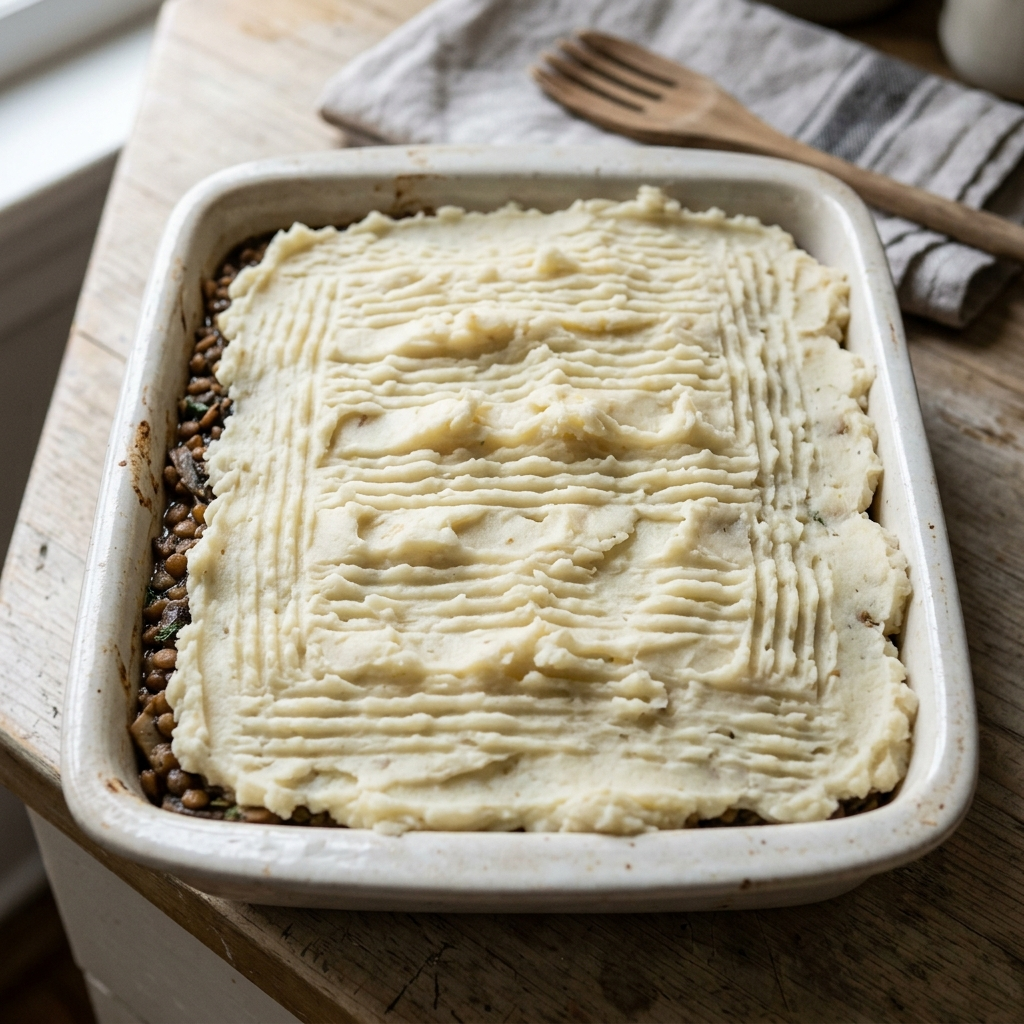
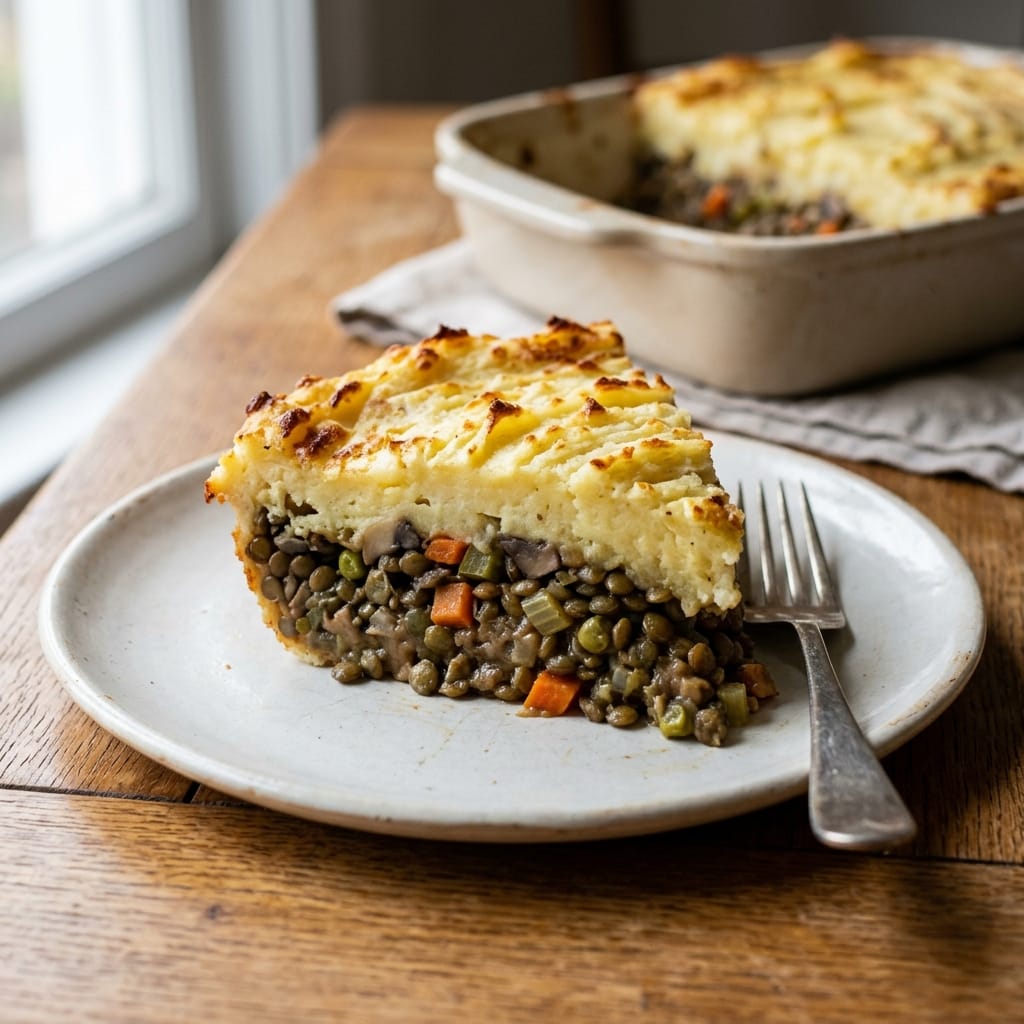
- Bake for 25 to 30 minutes, until the filling is bubbling at the edges and the potato peaks are golden. For deeper color, broil for the final 1 to 2 minutes, watching closely
- Let the pie rest for 10 to 15 minutes before serving — this gives the filling time to set so each portion holds its shape.
Troubleshooting
Gummy or gluey mashed potatoes. Almost always comes from overworking the starch. Use a ricer or a hand masher, fold in the butter and milk gently, and stop as soon as the potatoes are smooth rather than continuing to whip them.
Filling too thin or watery. Continue simmering the filling uncovered for a few more minutes. It should be thick enough to hold its shape on a spoon before going into the baking dish.
Potato topping sinking into the filling. This usually comes from spreading the potatoes from one central dollop, which pushes the filling down before the potatoes have anywhere to go. Spoon small mounds across the whole surface first, then spread them gently toward the edges.
Variations
Make it vegan: use olive oil or a plant-based butter in place of dairy butter, an unsweetened plant milk in place of dairy milk, and skip the cheese or use a dairy-free alternative. A tablespoon of nutritional yeast stirred into the mash adds a savory, cheese-like flavor.
Add more vegetables: diced bell peppers, corn, or extra frozen peas all fold in easily with the lentils.
For another easy meatless dinner option, try one of these vegetarian pasta recipes.
Make-Ahead, Storage, and Reheating
Make-ahead: the filling and mashed potatoes can be prepared ahead and refrigerated separately. Assemble and bake when ready to serve.
Refrigerating leftovers: refrigerate leftovers within 2 hours of cooking and store them in an airtight container for 3 to 4 days.
Reheating: warm leftovers in a 325°F oven, covered loosely with foil, until the center reaches 165°F, checked with a food thermometer — that’s the standard safe reheating temperature for leftovers generally. In the microwave, cover with a damp paper towel to help keep the potatoes from drying out.
FAQ
What’s the best potato for this recipe? Yukon Golds give a naturally buttery flavor and smooth texture. Russets work too, for a lighter, fluffier result. Avoid waxy potatoes like red bliss, which tend to turn gummy when mashed.
How do I keep the filling from turning watery? Let it simmer, uncovered, until the liquid reduces and the mixture holds its shape on a spoon before it goes into the baking dish.
Can I make this vegan? Yes — swap the butter for olive oil or a plant-based butter, use a plant-based milk, and skip the cheese or use a dairy-free version. Nutritional yeast in the mash adds a savory flavor that helps replace what the cheese would have added.
Can I prepare this in advance? Yes. The filling and mashed potatoes can be made ahead and refrigerated separately, then assembled and baked when you’re ready to serve.
How do I get crisp, golden ridges on the potato topping? Run a fork across the surface after spreading the mashed potatoes to create ridges and peaks — the extra surface area browns faster than a flat top. A couple of minutes under the broiler at the end deepens the color further.
How should I store and reheat leftovers? Refrigerate in an airtight container for 3 to 4 days. Reheat in a 325°F oven until the center reaches 165°F, or in the microwave with a damp paper towel over the dish to help keep the potatoes from drying out.
You might also like my Vegetarian Quiche Lorraine for another savory meatless dinner.