
Cottage Cheese Pancakes
Table of Contents
These cottage cheese pancakes are golden on the outside and fluffy and tender inside, and they take about 25 minutes to make with a blender. A serving of four has about 24 grams of protein before toppings.
Why This Recipe Works
Blending cottage cheese with eggs makes a smooth batter that needs only a little flour. The pancakes are thicker and more custardy than regular pancakes, with a golden outside and a soft, moist center. Cottage cheese adds protein, and a small amount of flour and baking powder keeps them light enough to stack and top.
If you like cottage cheese for breakfast, try my Cottage Cheese Egg Bites for a savory version.
How to Make Cottage Cheese Pancakes
Prep time: 10 minutes | Cook time: 15 minutes | Total: 25 minutes | Makes: 8 pancakes (serves 2)
Estimated nutrition per serving (4 pancakes, no toppings): ~360 calories | ~24g protein | ~36g carbs | ~12g fat Includes the optional 1 tbsp maple syrup and about 1 tsp butter for the pan. Not included: toppings.
Ingredients

- 1 cup (226g) 2% small-curd cottage cheese
- 3 large eggs
- ½ cup (60g) all-purpose flour
- 1 tsp baking powder
- ¼ tsp salt
- 1 tsp vanilla extract
- 1 tbsp maple syrup (optional)
- Butter or cooking spray, for the pan (about 1 tsp butter in total)
Equipment: a blender or food processor, a large non-stick skillet or griddle, and a thin spatula.
Instructions
- Blend the cottage cheese, eggs, vanilla and maple syrup on low speed for 20 to 30 seconds, until smooth. Add the flour, baking powder and salt and pulse 3 or 4 times, just until combined. Do not blend for long, or the pancakes may turn tough. The batter should be thick but pourable.

- Heat a large non-stick skillet or griddle over medium-low heat and lightly grease it. Let the pan get fully hot before the first pancake goes in.
- Pour about ¼ cup of batter per pancake, leaving space between them (4 at a time in a large skillet).
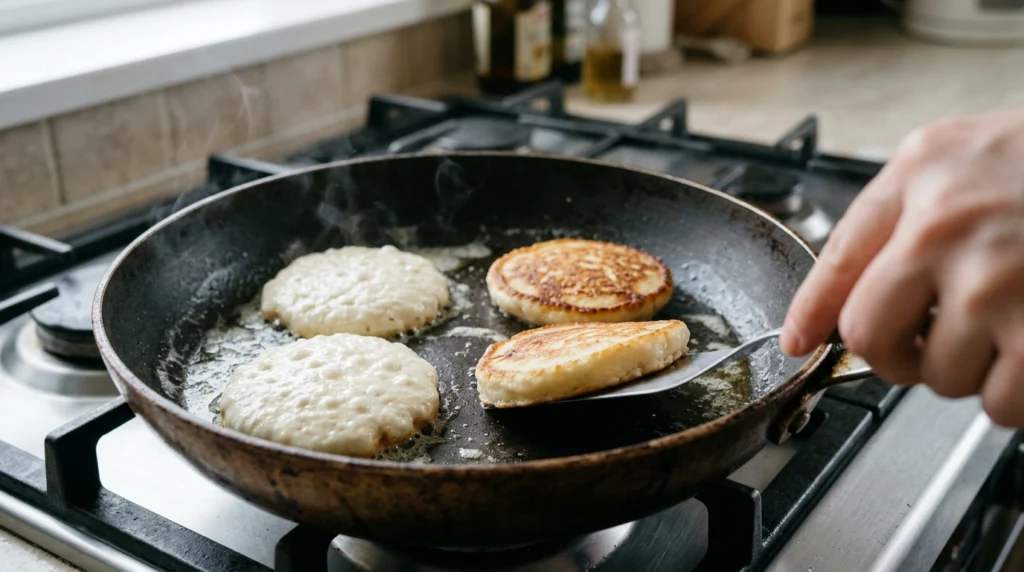
- Cook for 2 to 3 minutes, until bubbles appear on top and the edges look set. Flip carefully with a thin spatula and cook for 1 to 2 minutes more, until golden and the center is set and springy. Because the batter contains raw egg, cook them all the way through (160°F in the center if you check with an instant-read thermometer).
- Repeat with the remaining batter, regreasing the pan as needed and lowering the heat if the pancakes brown too fast. Serve warm.
Tips for Fluffy Cottage Cheese Pancakes
- Blend the cottage cheese smooth. Curds left whole make a lumpier, wetter batter. If you only have large-curd cottage cheese, blend it a little longer.
- Go easy once the flour is in. Pulse or stir just until combined.
- Keep the heat medium-low. The batter is wetter than regular pancake batter, so high heat browns the outside before the middle sets.
- Make them small. About ¼ cup each. Large pancakes are harder to flip and cook through.
- Wait for the bubbles and set edges before flipping. If you flip too soon, the pancake can break apart.
- Don’t have a blender? Mash the cottage cheese with a fork and whisk in the eggs. The pancakes will have visible curds and a more rustic texture.
Variations
- Blueberry: fold ½ cup of blueberries into the batter after blending. They add moisture, so the pancakes may need a little longer on each side. The nutrition will change.
- Banana or cinnamon: add ½ tsp cinnamon to the batter, or serve with sliced banana. The nutrition will change.
- Savory: leave out the vanilla and maple syrup, and fold in 2 tbsp chopped chives and a pinch of black pepper, or ¼ cup shredded cheddar. Serve with a fried egg or avocado. The nutrition will change.
- Gluten-free: swap the flour for certified gluten-free oat flour. I haven’t tested this, so the batter may be thicker (add milk 1 tablespoon at a time). If you avoid gluten, check that the oats and baking powder are labeled gluten-free.
- More protein: I haven’t tested adding protein powder, so I can’t give a swap. Topping the pancakes with plain Greek yogurt is an easy way to add protein.
What to Serve With Cottage Cheese Pancakes
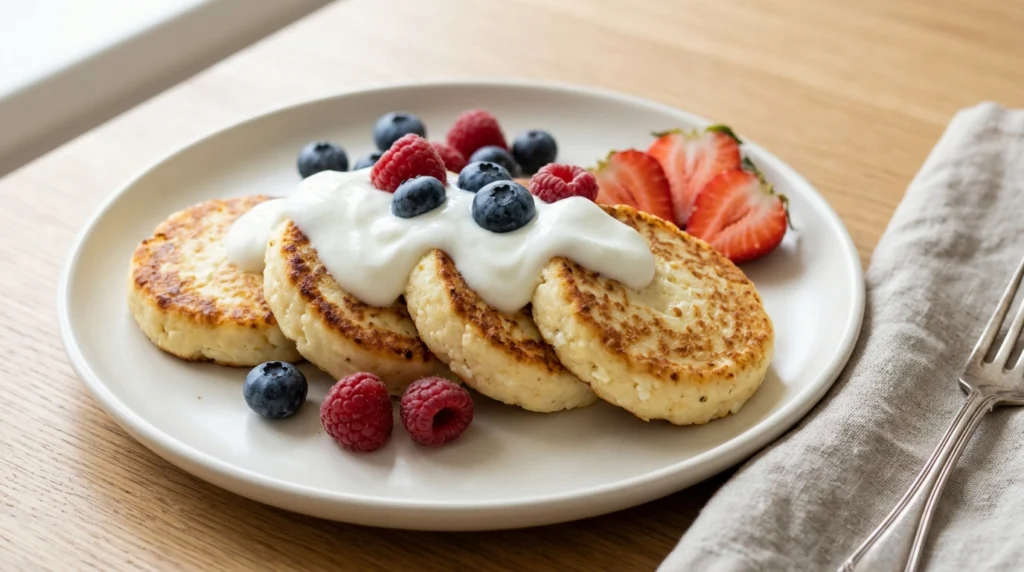
- Protein-friendly toppings: plain Greek yogurt, a spoonful of nut butter, or more cottage cheese.
- Fruit and crunch: fresh berries, sliced banana, chopped walnuts or chia seeds.
- Sweet: a light drizzle of maple syrup or honey. Syrup and honey add sugar and calories, so use as much as you like and track it if you’re counting.
- Savory: avocado slices, a fried egg or smoked salmon.
Storage, Freezing and Reheating
- Refrigerator: let the pancakes cool briefly on a wire rack so they don’t steam in the container, then refrigerate them in an airtight container within 2 hours (1 hour if the temperature is above 90°F). They keep 3 to 4 days at 40°F or below. Store toppings separately.
- Freezer: freeze cooled pancakes in a single layer on a baking sheet for about 1 hour, then move them to a freezer bag with parchment between them. For best quality, use within 2 months.
- Reheating: warm them in a toaster (best for a crisp outside), in a skillet over medium-low heat with a little butter, or in a 350°F oven for about 5 minutes. To microwave, use short 15-second bursts so they don’t turn rubbery. Reheat until hot throughout and 165°F in the center. Frozen pancakes need a little longer, so check the temperature and not the clock.
- Batter: cook it right away. Baking powder starts working once it meets the wet ingredients, and I haven’t tested make-ahead batter.
Troubleshooting
- Gummy or undercooked in the middle: the heat was too high, so the outside browned before the center set. Lower the heat to medium-low and cook a little longer.
- Dense or tough: the flour was over-mixed, or the baking powder was old. Pulse just until combined, and use fresh baking powder.
- Batter too thin: cottage cheese brands vary in liquid. Whisk in 1 tablespoon of flour at a time.
- Batter too thick: add 1 tablespoon of milk at a time until it pours.
- Sticking: the pan wasn’t hot enough or wasn’t greased. Preheat fully and regrease between batches.
- Cottage cheese flavor too strong: add a pinch of cinnamon or an extra ½ tsp of vanilla.
- Burned edges: lower the heat and make smaller pancakes.
More Easy High-Protein Breakfasts
- Baked Blueberry Cottage Cheese Breakfast Bowls: a sweet baked breakfast with cottage cheese and blueberries.
- 40g Protein Overnight Oats: a creamy, no-cook breakfast you can prepare ahead.
- High Protein Breakfast Burritos: a savory, freezer-friendly breakfast.
Want a new high-protein recipe in your inbox each week? Join the newsletter.
FAQ
Do I need a blender to make cottage cheese pancakes? No. Mash the cottage cheese with a fork and whisk in the eggs for a rustic texture with visible curds. A blender or food processor gives the smoothest batter.
How do cottage cheese pancakes differ from regular pancakes? They are thicker and more custardy inside, with a tender, moist crumb, and a little less fluffy than pancakes made with milk. They also have more protein than regular pancakes.
Should I use small-curd or large-curd cottage cheese? Either works. Small curds blend more easily. Blend large curds a little longer so the batter is smooth.
Why are my pancakes gummy in the middle? The heat is usually too high. Cook over medium-low heat and give each side enough time, and make smaller pancakes.
Can I make them gluten-free? You can try certified gluten-free oat flour in place of the flour. I haven’t tested it, so the batter may be thicker.
How can I add more protein? Top the pancakes with plain Greek yogurt or serve with eggs. I haven’t tested protein powder in this recipe.
Can I freeze cottage cheese pancakes? Yes. Freeze them in a single layer, then store in a freezer bag for up to about 2 months. Reheat in a toaster or oven.
How do I know when to flip them? When bubbles show on top and the edges look set and matte. Cottage cheese pancakes bubble less than regular pancakes, so rely on the set edges and a golden underside.
What if the batter is too thin? Whisk in 1 tablespoon of flour at a time. The batter should be thick, spoonable and hold its shape on the pan.
How much protein is in each serving? About 24 grams for 4 pancakes, estimated from the cottage cheese, eggs and flour divided across 2 servings, without toppings. Nutrition varies by brand, especially the cottage cheese.
Hit your protein goal all year
The 2027 High Protein Planner + Tracker: a printable planner AND an Excel and Google Sheets tracker that calculates your daily goal and adds up your protein for you. Instant download.
Get the Planner + Tracker →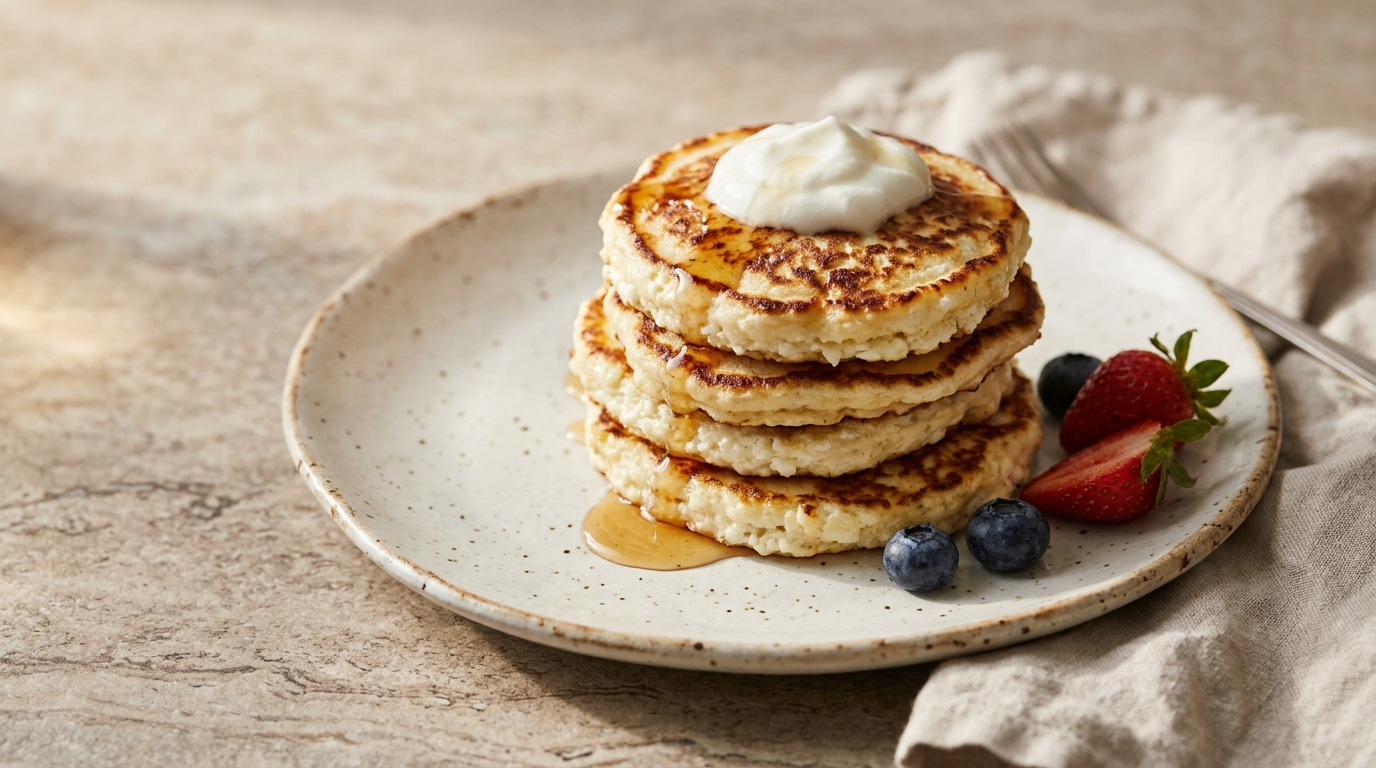
Cottage Cheese Pancakes
Ingredients
Method
- Blend the cottage cheese, eggs, vanilla and maple syrup on low speed for 20 to 30 seconds, until smooth. Add the flour, baking powder and salt and pulse 3 or 4 times, just until combined. The batter should be thick but pourable.
- Heat a large non-stick skillet or griddle over medium-low heat and lightly grease it. Let the pan get fully hot before adding the batter.
- Pour about ¼ cup of batter per pancake, leaving space between them.
- Cook for 2 to 3 minutes, until bubbles appear on top and the edges look set. Flip carefully and cook 1 to 2 minutes more, until golden and the center is set and springy (160°F if you check with a thermometer).
- Repeat with the remaining batter, greasing the pan as needed and lowering the heat if the pancakes brown too fast. Serve warm.
Notes
No blender? Mash the cottage cheese with a fork and whisk in the eggs. The pancakes will have visible curds and a more rustic texture.
For more protein, top with plain Greek yogurt.
Storage: refrigerate up to 4 days or freeze up to 2 months. Reheat in a toaster, skillet or 350°F oven until hot throughout.