
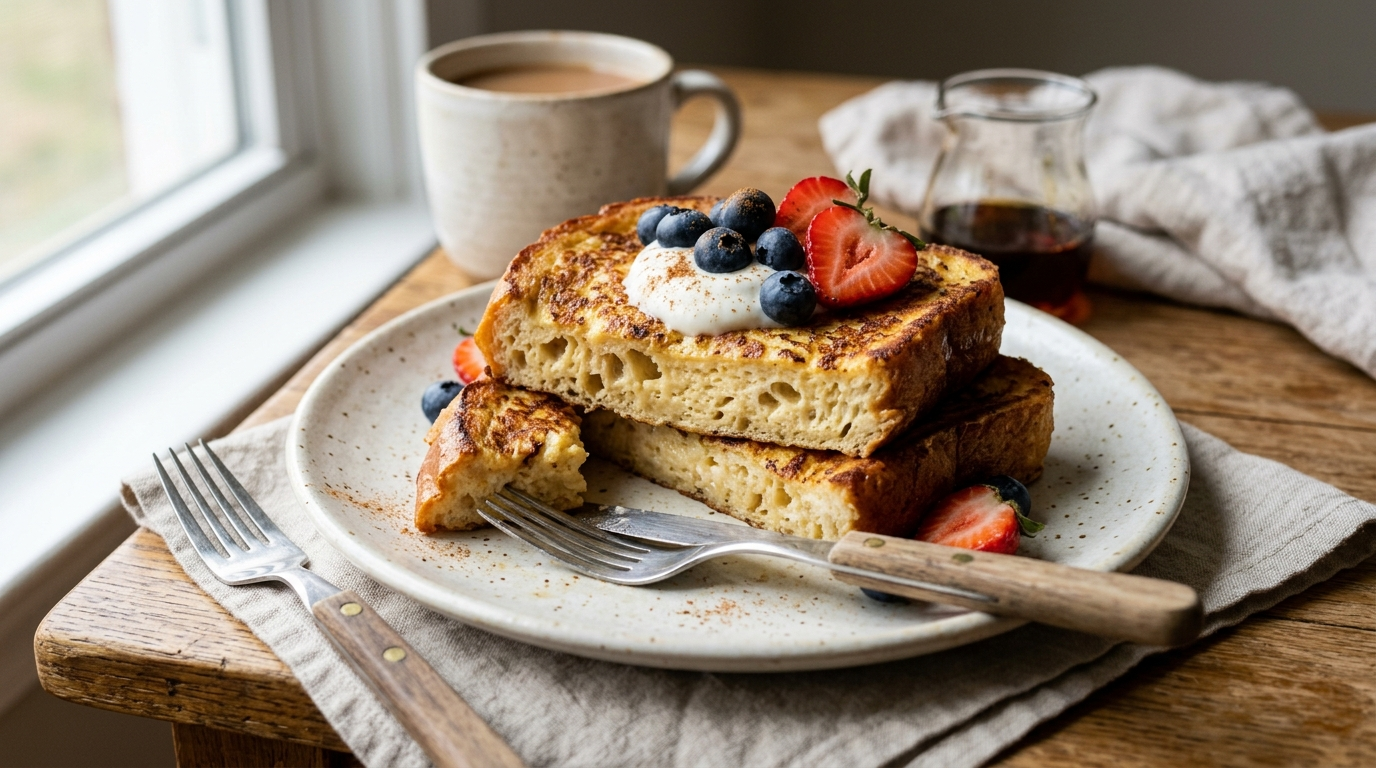
High Protein French Toast
Table of Contents
This high protein French toast combines eggs, egg whites, and blended cottage cheese for a creamy, protein-rich custard without protein powder. Thick slices of bread soak up the cinnamon-vanilla mixture before cooking until golden outside and soft in the center, making it an easy high-protein breakfast for busy mornings.
Why This High Protein French Toast Works
Protein is built into the custard. Eggs, egg whites, and blended cottage cheese create the base of the French toast rather than relying on high-protein toppings.
Blended cottage cheese keeps the custard smooth. Blending removes the curds and helps the cottage cheese mix evenly with the eggs and milk.
Thick bread holds the custard better. Sturdy slices absorb the egg mixture without falling apart during cooking.
Recipe
Prep time: 10 minutes | Cook time: 15 minutes | Serves: 4 (8 slices) Per serving (approximate): ~475 calories | ~25g protein | ~48g carbs | ~19.5g fat
Ingredients
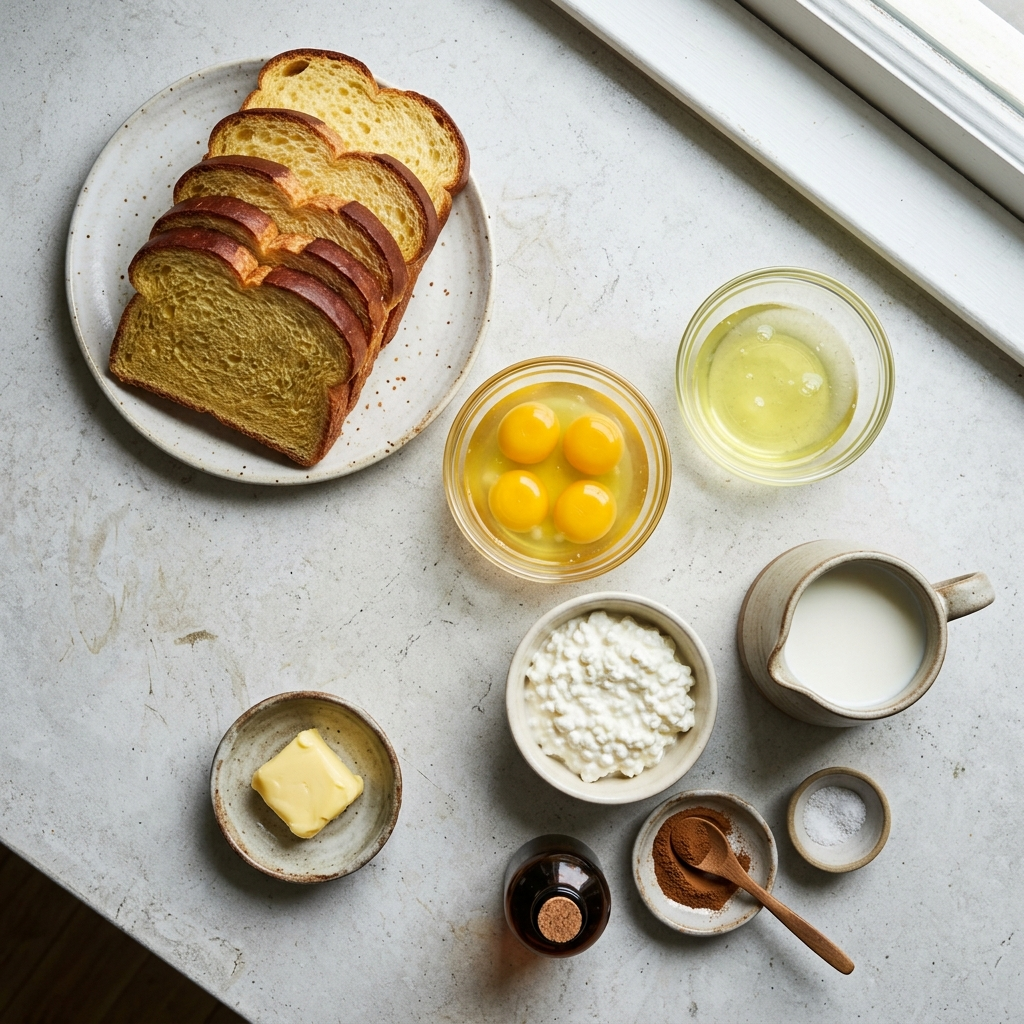
- 8 thick-cut slices brioche
- 4 large eggs
- 4 large egg whites
- ¾ cup cottage cheese
- ½ cup milk
- 1 tsp vanilla extract
- 1 tsp ground cinnamon
- Pinch of salt
- Butter or oil, for the skillet
Other sturdy breads — challah or a hearty sourdough — work too, though the nutrition numbers above are calculated using brioche specifically.
Equipment
- Blender: blends the cottage cheese into the egg mixture for a completely smooth custard.
- Large nonstick skillet or griddle: gives the French toast enough surface area to brown evenly.
- Instant-read thermometer: makes it easy to check the center of thick slices for doneness.
- Wide, shallow dish: makes dipping the bread easier without breaking the slices.
Instructions
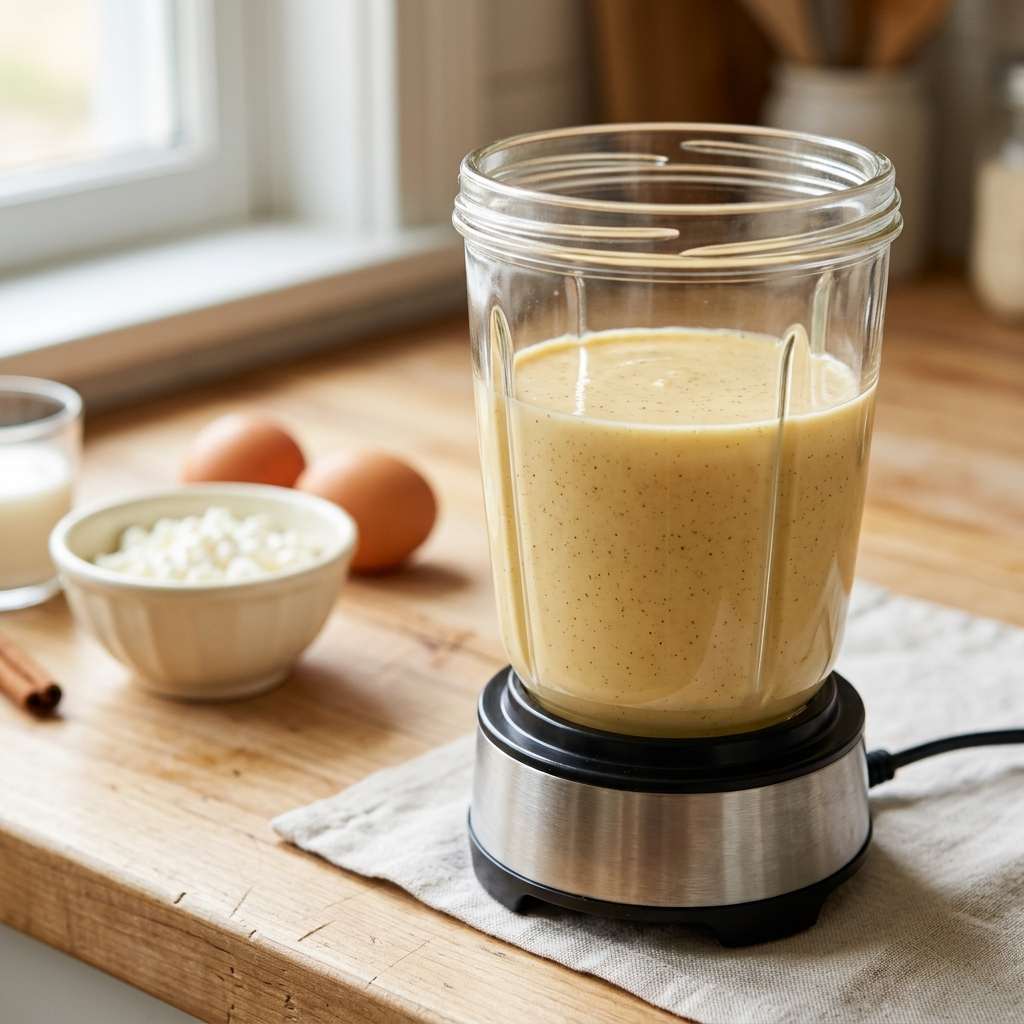
- Combine the eggs, egg whites, cottage cheese, milk, vanilla, cinnamon, and salt in a blender. Run it until the mixture is completely smooth — no cottage cheese curds should remain. Pour into a wide, shallow dish.
- Warm a nonstick skillet over medium-low heat and add a small amount of butter or oil.
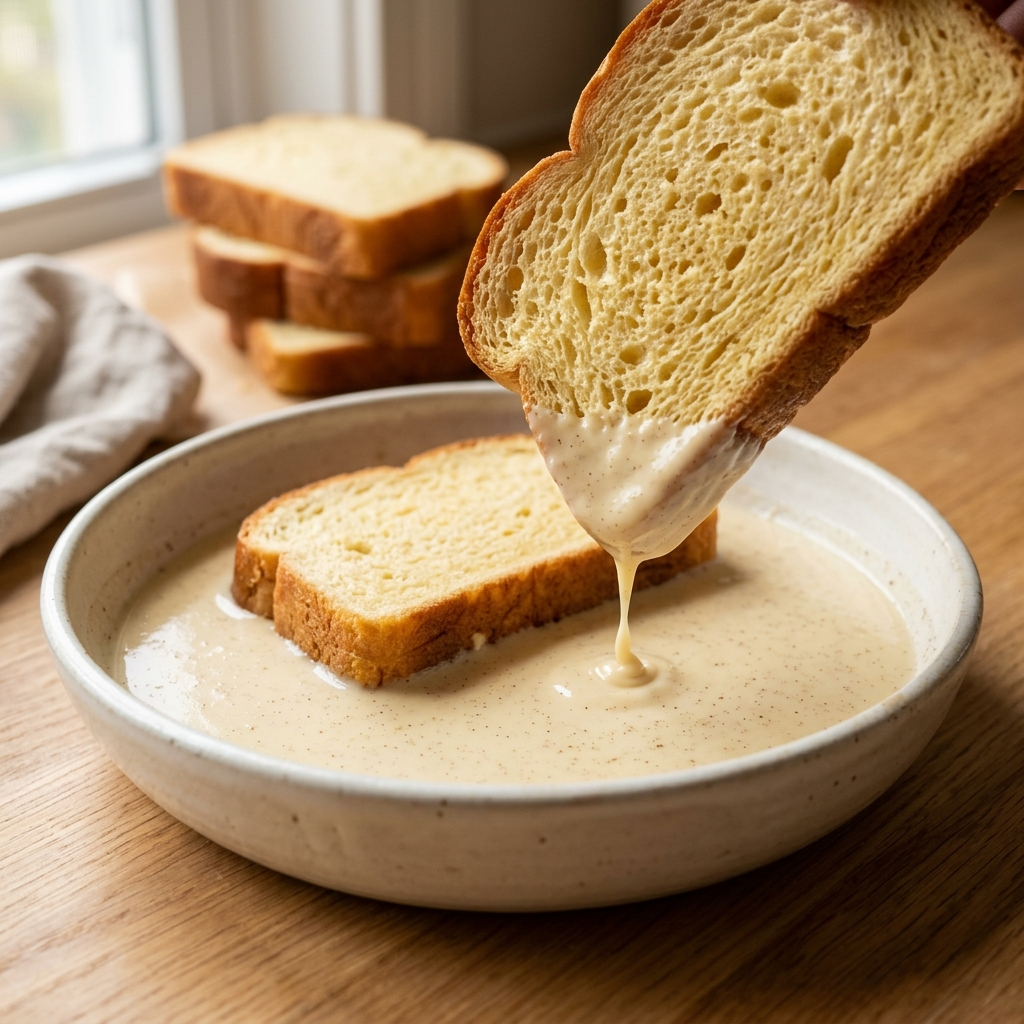
- Dip a slice of bread into the custard, giving each side a count of about 10, then let the excess drip off before it hits the pan.
4. Lay the soaked slice in the skillet and leave it alone until the underside is deeply golden, roughly 3 to 4 minutes. Flip once and cook the second side the same way.
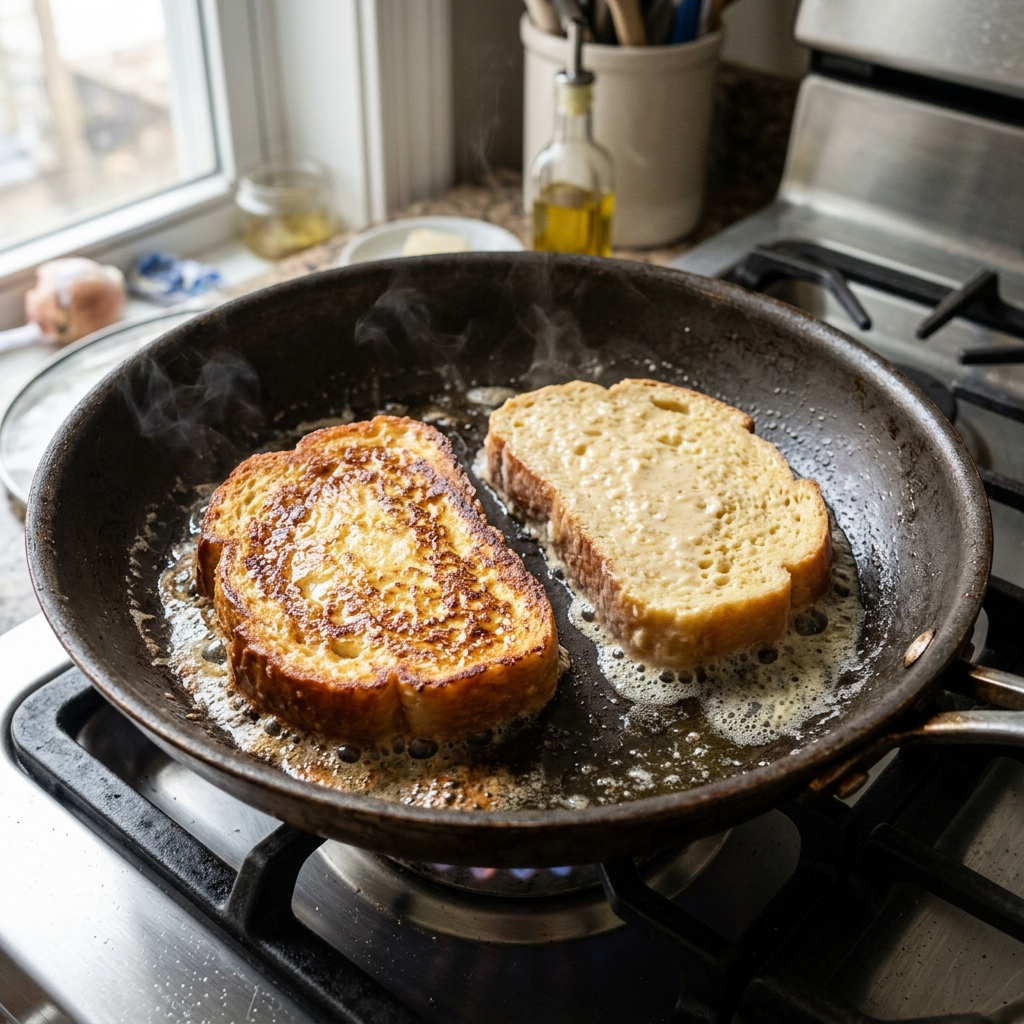
5. Move finished slices to a baking sheet in a low oven (around 200°F) to stay warm while you work through the rest of the batch.
6. Serve warm, with whatever toppings you like.
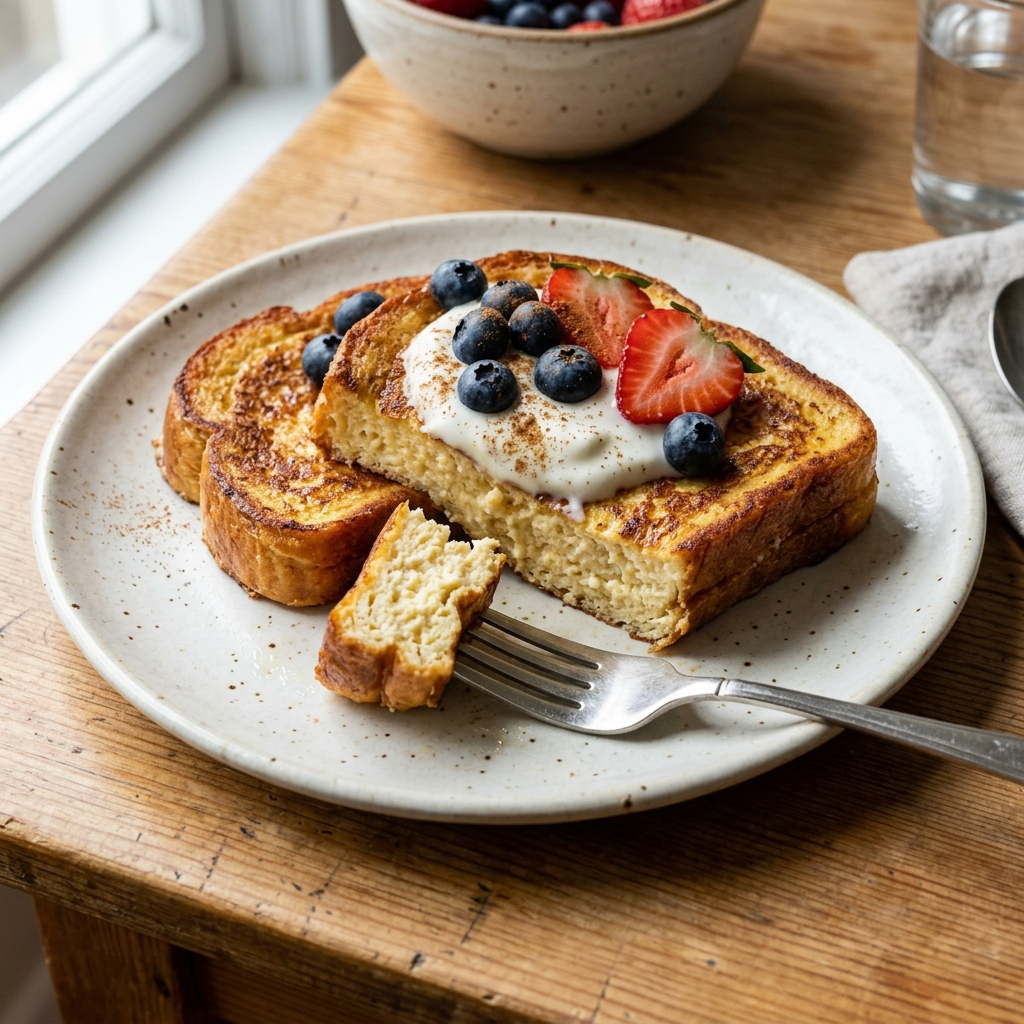
A Note on Food Safety
Because the batter contains raw egg, USDA guidance calls for cooking egg-based dishes like French toast to an internal temperature of 160°F, checked with a food thermometer. Color alone isn’t a reliable way to confirm this — a thermometer is.
Troubleshooting
Soggy in the middle. Usually means the bread was too thin to hold up to the custard, or the pan wasn’t hot enough when the bread went in — low heat lets liquid soak deep into the bread before the outside has a chance to set. Use thicker bread, preheat your skillet properly, and don’t crowd the pan.
Dry or rubbery texture. A protein-heavy batter sets faster than a traditional all-cream custard, so it’s easy to overcook it without realizing it. Pull the toast as soon as it hits temperature rather than leaving it for extra color.
Batter too thick. Thin it with a splash more milk until it coats the bread evenly rather than sitting on top in clumps.
Customizing This Recipe
Gluten-free: use a sturdy gluten-free bread — the custard itself doesn’t contain gluten.
French toast sticks: Cut the bread into strips about an inch wide, dip them in the same custard, and cook them in the skillet until golden and cooked through.
FAQ
What makes this high protein French toast different from a regular recipe? Regular French toast leans on eggs, milk, and bread alone. This version blends cottage cheese directly into the custard, which raises the protein per serving without needing a protein powder or scoop.
How much protein is in this French toast? One serving provides approximately 25g of protein, based on four servings. (This is a generic estimate — confirm against your actual tested recipe and specific brioche before publishing it as final.)
Do I need to blend the cottage cheese? Yes — blending removes the curds and lets the cottage cheese mix smoothly into the eggs and milk, rather than leaving noticeable lumps in the finished custard.
Why is my French toast soggy in the middle? Most often it’s thin bread that can’t hold up to the custard, or a pan that wasn’t hot enough when the bread went in. Thicker bread and a properly preheated skillet fix most cases.
Can I make this without a blender? You can whisk the cottage cheese in by hand, but expect a slightly less smooth custard with some texture from the curds. A blender gets you closer to a completely smooth result.
Can I make this gluten-free? Yes — use a sturdy gluten-free bread. The custard itself doesn’t contain gluten.
Looking for more protein-packed breakfast ideas? Try my 40g protein overnight oats, banana protein pancakes, or high protein breakfast burritos for a savory option — or browse the full high protein breakfasts for weight loss roundup for more ideas.