
high-protein, low-carb breakfast (5 Minutes, No Cooking, Low-Carb)
Table of Contents
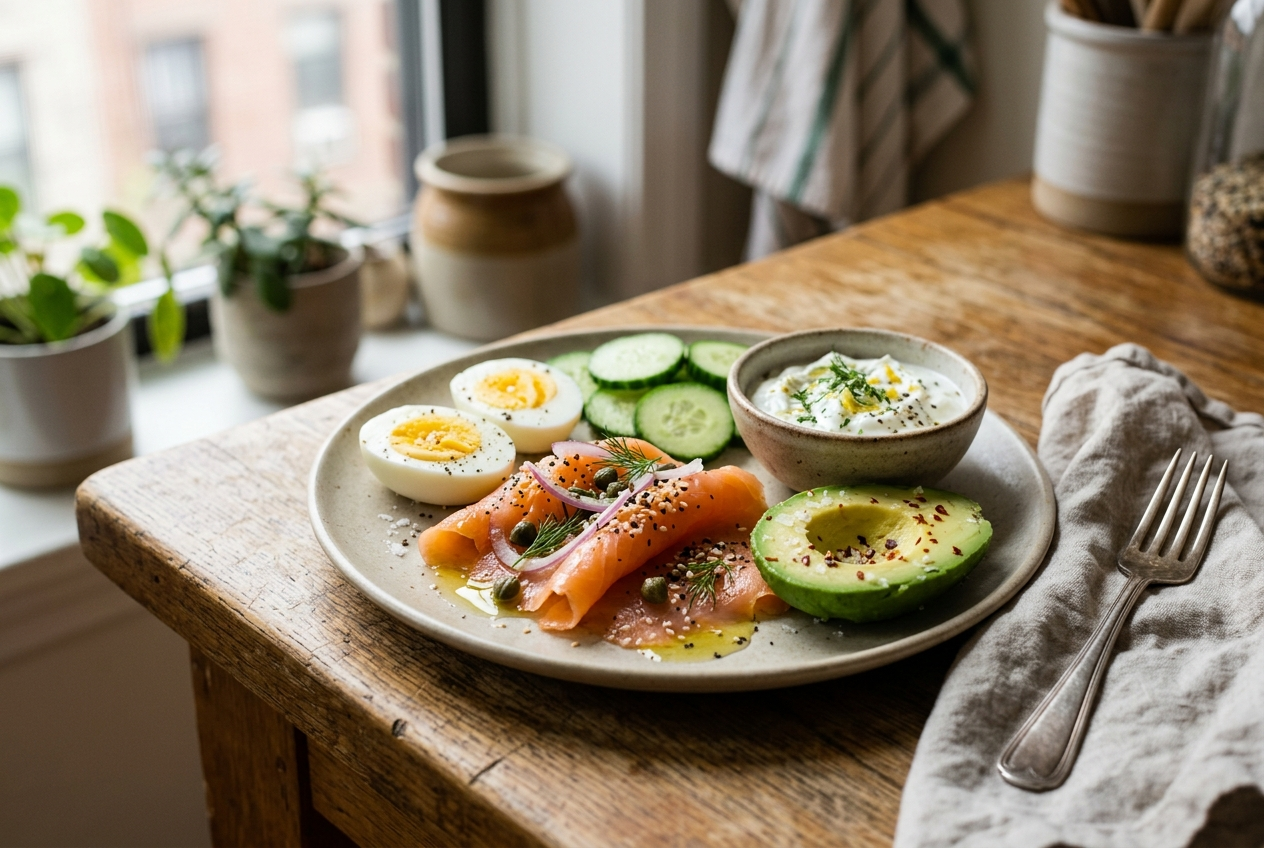
Smoked salmon, eggs, Greek yogurt, cucumber, and avocado make this an easy high-protein, low-carb breakfast you can assemble in minutes — no cooking required.
Serves 1 · Prep 5 min · Cook 0 min (if eggs are pre-boiled) · Total 5 min
Some mornings I don’t want to cook anything, and oatmeal makes my blood sugar do something I can feel by 10am. This is the breakfast for mornings when even a blender feels like too much effort. It’s not really a recipe — it’s an arrangement — but the combination took a few tries to get right, and the ratios matter more than you’d expect for something this simple.
The trick that makes this actually a five-minute breakfast: boil a batch of eggs on Sunday. Once that’s done, this is genuinely zero cooking, every time.
Why This Combination Works
What makes this a genuinely high-protein, low-carb breakfast with no cooking involved:
Each piece here is doing a specific job:
- Smoked salmon is the salty, savory, high-protein anchor of the plate.
- Eggs add substance and a softer texture to balance the silky salmon.
- Greek yogurt, mixed with dill and lemon, turns into a quick sauce — the difference between a pile of cold ingredients and something that actually feels like a meal.
- Cucumber adds crunch and freshness, and it’s doing more work than it looks like it is.
- Avocado adds richness, so the plate doesn’t taste like diet food.
- Lemon, dill, and capers give the whole thing the flavor profile of a classic smoked-salmon breakfast — the one you’d normally get on a bagel. That’s really what this is: bagel-and-lox flavors, without the bagel.
Ingredients
Serves 1
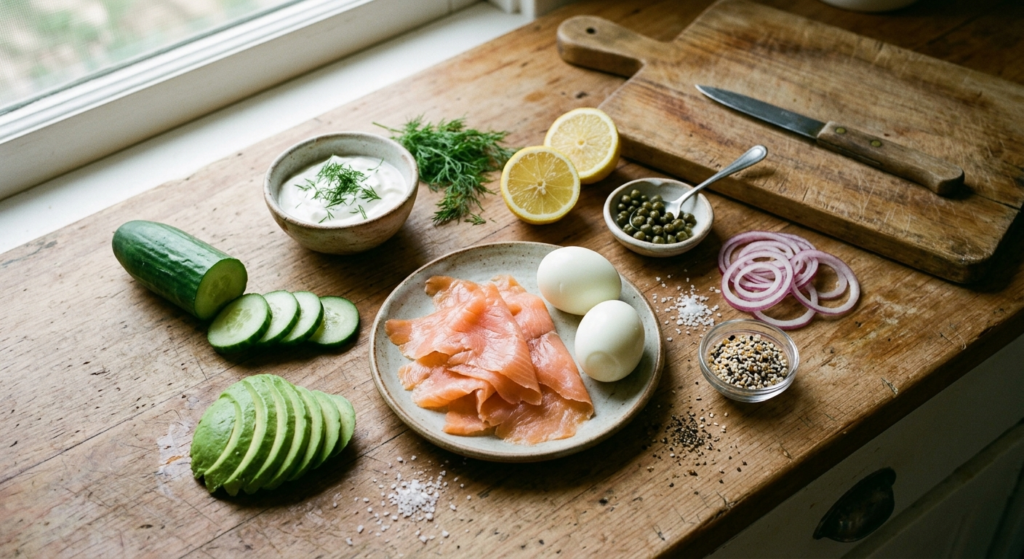
- 100g (3.5oz) smoked salmon
- 2 hard-boiled eggs, halved
- ½ cucumber, sliced into rounds
- 2 tbsp (30g) plain Greek yogurt
- Fresh dill, chopped
- A squeeze of lemon juice (a handheld citrus juicer makes this faster if lemons are a regular thing for you)
- ¼ avocado, sliced
- Salt and black pepper, to taste
- Optional: capers, thinly sliced red onion, everything bagel seasoning
The Method
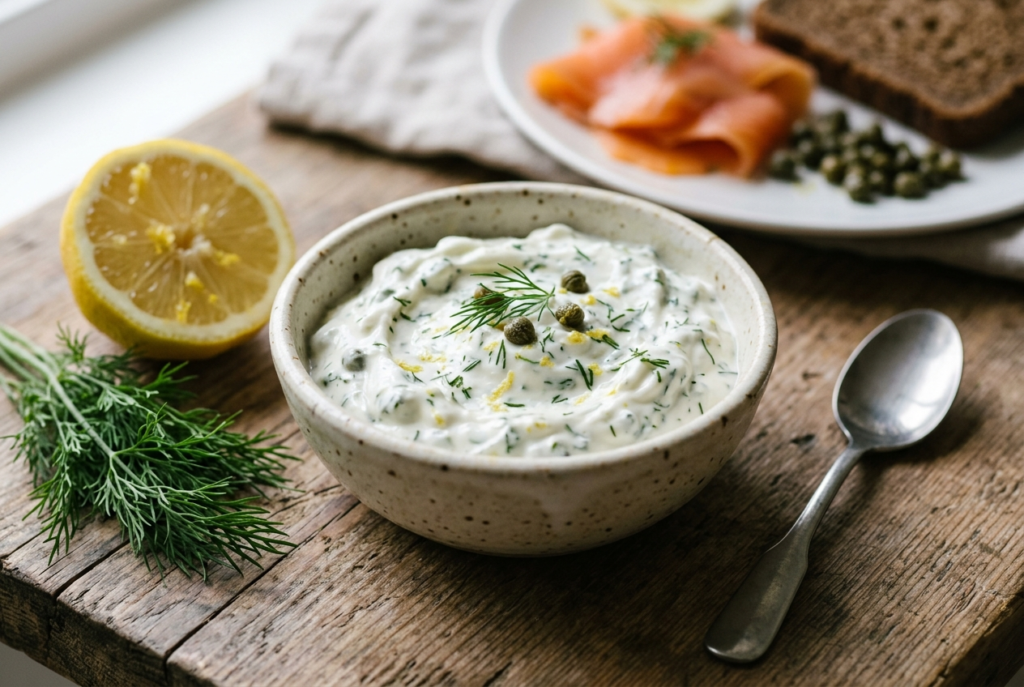
1. Make the dip. Stir the Greek yogurt, chopped dill, a squeeze of lemon juice, and a pinch of salt together until smooth. If you’re adding capers, chop them roughly and stir half into the dip — it adds a briny hit that works well with the salmon.
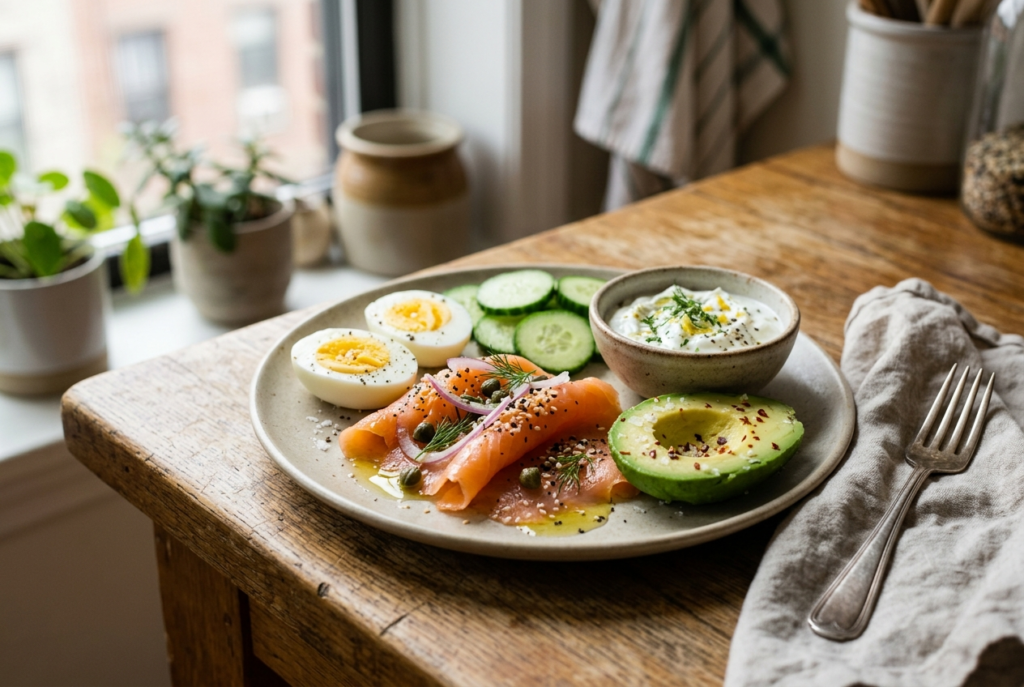
2. Arrange the plate. Lay out the smoked salmon, hard-boiled egg halves, cucumber rounds, and avocado slices. Don’t overthink the arrangement — the point is that everything’s ready to eat, not a plating exercise.
3. Season and finish. A crack of black pepper over the eggs and avocado, the rest of your capers or red onion scattered over the salmon if using, and the dill yogurt in a small pile or dip on the side.
4. Eat with your hands, or a fork. This is deliberately not a recipe that needs cutlery discipline.
What I Tested to Make This Work
Full-fat vs. nonfat Greek yogurt. Nonfat was thinner and needed more lemon and salt to taste like anything. Full-fat (or even 2%) held together better as a dip and needed less seasoning to taste good.
Cucumber vs. no cucumber. Without it, the plate felt heavier and more one-note — all protein and fat, nothing crisp. The cucumber isn’t decorative; it’s doing real textural work.
Cold-smoked vs. hot-smoked salmon. Cold-smoked (the thin, silky, deli-style kind) worked better for this — it drapes over the plate and pairs well with the cold yogurt dip. Hot-smoked (flakier, more like cooked fish) is good too, but it eats more like a different dish — closer to a salmon salad than this plate.
Sunday-batch eggs vs. fresh eggs. No meaningful quality difference through about day 4 in the fridge, which is what makes the “batch boil on Sunday” approach genuinely worth doing rather than just a nice idea.
The 3 Things That Actually Matter
Use full-fat or 2% Greek yogurt for the dip, not nonfat. It holds together, tastes better, and needs less doctoring with salt and lemon to make up for the flavor nonfat yogurt is missing.
Don’t skip the cucumber. It’s the one ingredient here that’s easy to consider optional and shouldn’t be — it’s what keeps the plate from feeling heavy.
Batch-boil your eggs. This is the single thing that turns this from “a good idea for breakfast” into “something you’ll actually make on a Tuesday.” Do it once on Sunday and this becomes a genuinely zero-cook breakfast for the rest of the week.
Nutrition
Approximate values for the full plate as listed (not including optional capers, red onion, or everything seasoning), calculated from standard USDA nutrient values for each ingredient at the quantities above. Added salt to taste isn’t included in the sodium figure below.
| Nutrient | Per Serving |
|---|---|
| Calories | ~390 kcal |
| Protein | ~36g |
| Carbohydrates | ~12g |
| Fat | ~23g |
| Fiber | ~4g |
| Sodium | ~810mg |
The sodium is worth noting — smoked salmon is naturally high in it, and this plate is already at roughly a third of the commonly cited daily limit before you add any salt to taste. If you’re watching sodium specifically, this isn’t the recipe to add extra salt to, and skipping the capers (also salty) helps too.
With about 12g total carbohydrate per serving as written, this fits many people’s definition of a low-carb breakfast, though it’s not as strictly low-carb as something like egg muffins — most of the carbs here come from the cucumber and avocado, which is a reasonable trade for the fiber and nutrients they add.
ooking for another high-protein breakfast without protein powder? Try my 40g high-protein overnight oats for a no-cook option you can prepare the night before.
Variations
Want the bagel-and-lox experience?
Add capers, thinly sliced red onion, and a sprinkle of everything bagel seasoning over the salmon. The combination gives you most of the salty, savory, oniony character of a classic bagel-and-lox breakfast, without the bagel.
No dairy. Skip the Greek yogurt dip and use a squeeze of lemon plus olive oil directly over the plate instead. You’ll lose some protein from the dip, but the core plate still works.
Add greens. A handful of arugula or baby spinach underneath everything turns this into more of a composed salad, if you want extra volume without adding much in calories.
Make it more filling. Add another hard-boiled egg, another ounce of salmon, or more cucumber and greens — in that order of priority if you want to keep adding protein rather than just volume.
Make-Ahead: The Sunday Egg Batch
This entire recipe hinges on not boiling eggs fresh every morning, so it’s worth doing properly:
- Boil 6–8 eggs at once — enough for the week.
- Cool them fully in an ice bath before peeling; this also makes them noticeably easier to peel cleanly.
- Refrigerate within 2 hours of cooking. Store peeled eggs in a covered container and use within 7 days, per USDA guidance for hard-cooked eggs.
- The dill yogurt dip can be made a day ahead too, though it’s genuinely a two-minute job each morning if you’d rather make it fresh.
More High-Protein Breakfasts
If this plate becomes a regular in your rotation, a few others worth adding to the mix:
- High-Protein Low-Carb Egg Muffins — another make-ahead option, ~40g protein and ~4g carbs per serving, for mornings when you want something warm.
- Banana Protein Pancakes — higher carb, still no protein powder, for the mornings this plate feels too savory.
- 7 High-Protein Breakfasts for Weight Loss (30g+ Protein) — the full roundup this recipe is drawn from, with six more built on the same protein framework.
FAQ
Can I eat smoked salmon without cooking it? Refrigerated smoked salmon is commonly sold as ready-to-eat, but it isn’t risk-free. The FDA specifically advises pregnant women, older adults, and people with weakened immune systems to avoid refrigerated smoked seafood unless it’s part of a cooked dish, due to the risk of listeria — a bacterium that can grow even at refrigerator temperatures. If you’re in one of those groups, follow your healthcare provider’s guidance, and consider using fully-cooked (hot-smoked or canned) salmon instead. Always check the storage and use-by instructions on the package, regardless of which category you’re in.
Can I use canned salmon instead of smoked? You can, but it changes the dish meaningfully — canned salmon is milder and flakier rather than silky and cured. It’ll still be high in protein, just a different eating experience than what this plate is going for. It’s also fully cooked, which makes it a reasonable substitute if you’re avoiding cold-smoked fish for food safety reasons.
What kind of smoked salmon should I buy? Cold-smoked (often labeled “nova-style” or “lox”) is thin, silky, and cured rather than fully cooked — it’s what this recipe is built around. Hot-smoked salmon is fully cooked, flakier, and more like a different dish here, but it’s a good substitute if you want a fully-cooked option.
Can I make this without avocado? Yes — swap it for extra cucumber, sliced tomato, or a handful of greens. You’ll lose some of the richness, but the rest of the plate still works.
Can I use cottage cheese instead of Greek yogurt? Yes, and it’s a reasonable high-protein swap. Blend it smooth first if you want a dip texture rather than a chunky one — the same blending trick used in the high-protein egg muffins recipe gets rid of any graininess.
How long do hard-boiled eggs actually last in the fridge? Up to 7 days, refrigerated, according to USDA guidance — as long as they went into the fridge within 2 hours of cooking.
Can I make this the night before? Mostly, yes. Keep the components separate rather than assembling the full plate — the eggs, salmon, cucumber, and dip all hold up fine overnight. Slice the avocado fresh when you’re ready to eat, since it browns quickly.
Why does my dill yogurt dip taste bland? Usually under-salted, or made with nonfat yogurt. Add salt gradually and taste as you go, and a little extra lemon juice brightens it more than more dill will.