
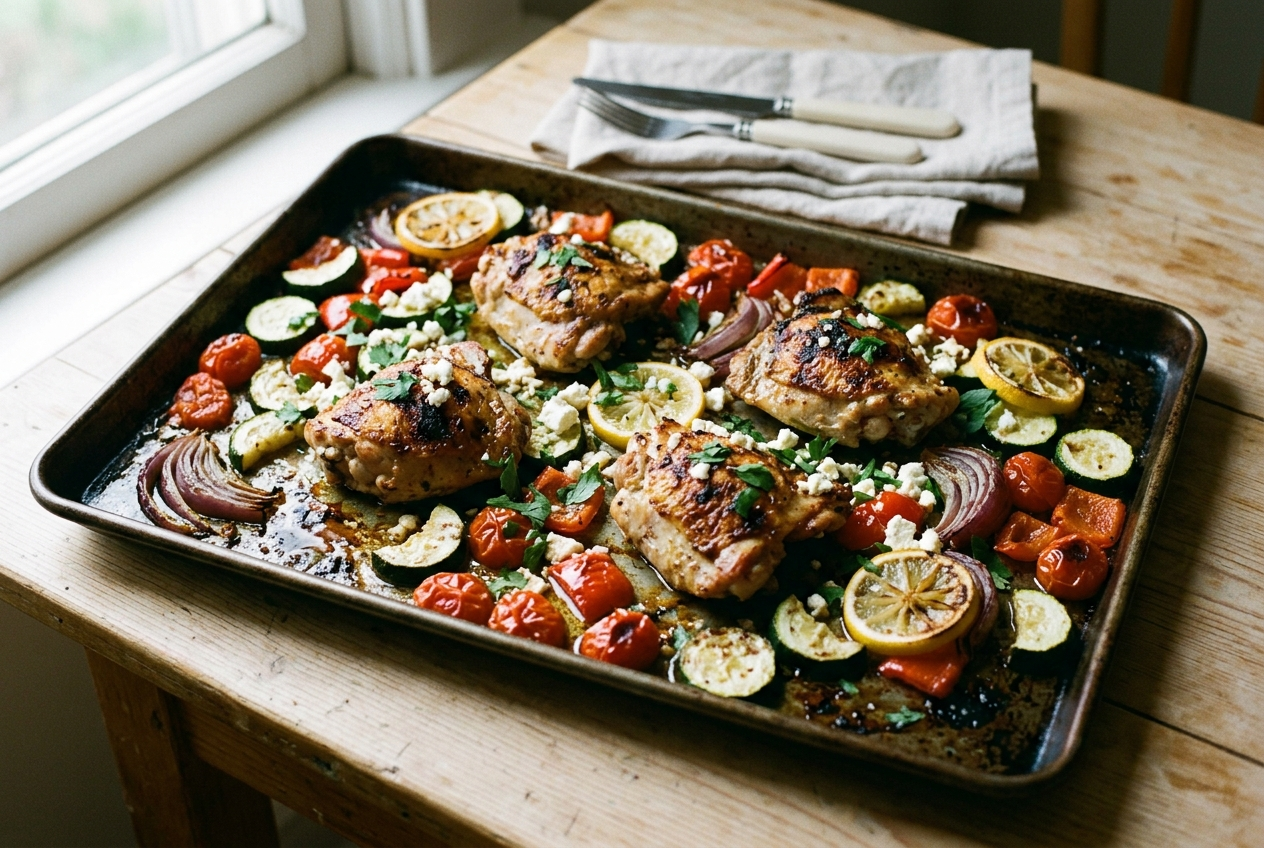
Greek Sheet Pan Chicken Thighs and veggies: An Easy Mediterranean Sheet Pan Dinner
Table of Contents
One pan, 50 minutes, no babysitting the oven — juicy chicken thighs and bright Mediterranean flavor, ready for a weeknight dinner or a week of meal prep.
Serves 4 · Prep 15 min · Cook 35 min · Total 50 min
For years my “healthy chicken dinner” was a sad, dry chicken breast and whatever vegetable I could steam without thinking about it. It worked, technically. I dreaded it every time. IIf breast is what you have on hand or genuinely prefer, check out what to make with chicken breast instead — the timing principles are similar, just with less room for error.
The thing that actually fixed it wasn’t a fancier recipe — it was switching to thighs and stopping the vegetables from turning to mush before the chicken was even close to done. Once I figured out the timing, this became the dinner I make on nights I don’t want to think about dinner.
This Chicken Thighs recipe is a Mediterranean-inspired combination of lemon, oregano, olive oil, and feta — not a claim to any single regional tradition, just flavors that work. It’s not a diet recipe pretending to be exciting. It’s a genuinely good sheet-pan dinner that happens to be high in protein and light on effort.
Why you’ll love this recipe:
- ~40g protein per serving
- One pan, about 50 minutes start to finish
- No long marinade required
- Great for meal prep — reheats well through the week
- Chicken thighs stay juicy even if you run a few minutes long
Why Thighs, Not Breasts
Chicken breast gets all the “healthy protein” attention, but it’s also the easiest cut to dry out, especially in a hot oven where timing has to be exact. Thighs have more fat marbled through the meat, which buys you a much wider margin for error — a few extra minutes in the oven won’t ruin them the way it will a breast.
Yes, thighs have a little more fat than breast, but that extra richness is exactly what makes them so forgiving in a hot oven — it’s what keeps the meat juicy without needing sauce, cream, or a marinade doing damage control. One raw thigh in this recipe (about 6oz/170g) contributes roughly 34g of protein on its own, before the vegetables and feta add more.
Sheet Pan Chicken Ingredients
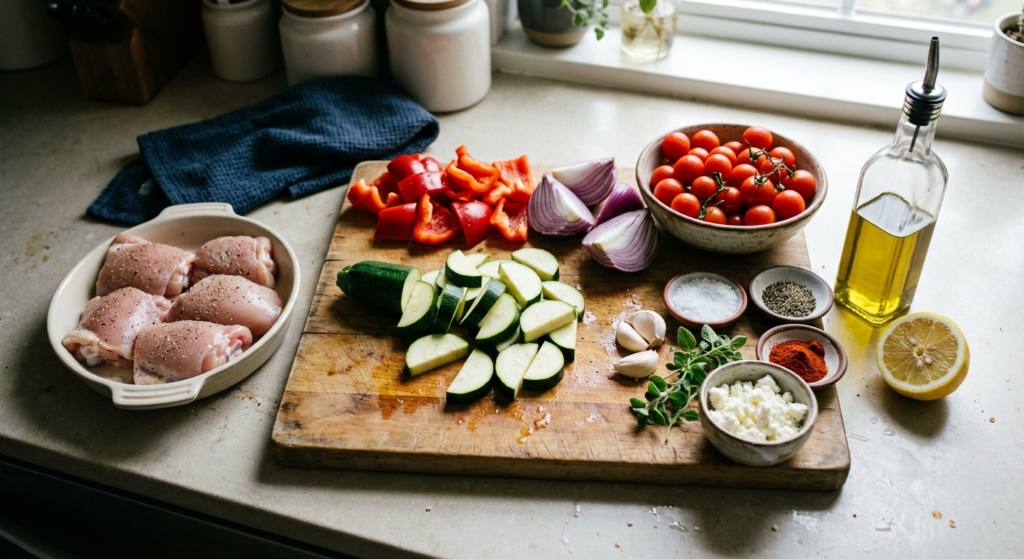
Serves 4
For the chicken and vegetables:
- 4 boneless, skinless chicken thighs (about 1.5 lb / 680g total)
- 1 medium zucchini, sliced into half-moons
- 1 red bell pepper, cut into 1-inch pieces
- 1 small red onion, cut into wedges
- 1 cup cherry tomatoes
- 3 tbsp olive oil, divided
- 3 garlic cloves, minced
- 1 tbsp fresh oregano, chopped (or 1 tsp dried)
- 1 tsp smoked paprika
- 1 lemon, half juiced, half sliced
- Salt and black pepper
Optional finish:
- ⅓ cup crumbled feta
- Fresh parsley, chopped
The sheet pan dinner Method
1. Heat the oven to 425°F (220°C). I tested this against 400°F — at 400°F the chicken finished fine, but the vegetables were noticeably paler. 425°F gave better browning on both without drying out the chicken, as long as it comes out at the right internal temperature rather than a fixed time.
2. Pat the chicken dry. Wet chicken steams instead of browning. A minute with paper towels makes a real difference in the final texture.
3. Season the chicken. In a mixing bowl, toss the thighs with 2 tbsp olive oil, garlic, oregano, smoked paprika, lemon juice, salt, and pepper. Let it sit while you prep the vegetables — I tested 10 minutes against a full 30-minute marinade and didn’t find enough difference in the finished dish to justify the extra planning on a weeknight.
4. Toss the vegetables separately. Zucchini, bell pepper, and red onion with the remaining 1 tbsp olive oil, salt, and pepper. Keep the cherry tomatoes separate — they go in later.
5. Arrange on the sheet pan, with space. Spread the vegetables across the pan first, then nestle the chicken thighs among them. Don’t overcrowd — if things are touching on all sides, split it across two pans. I use this half-sheet pan because it’s big enough to fit this whole recipe without crowding. Crowding traps steam and you’ll get pale, soft vegetables instead of caramelized ones.
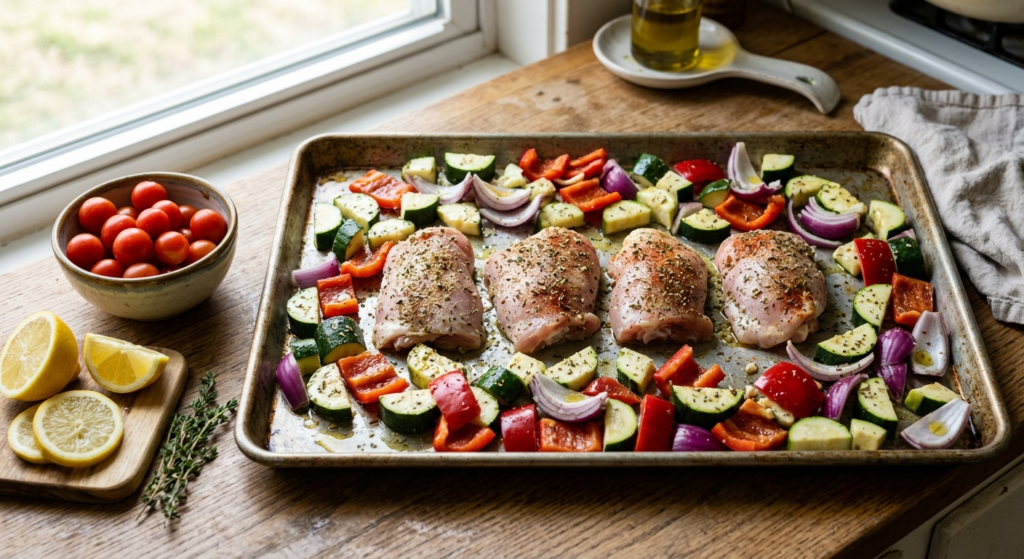
6. Roast 20 minutes, then add the cherry tomatoes and lemon slices to the pan. Roast another 12–15 minutes, until the chicken reaches 165°F (74°C) internally and the vegetables are tender with some browned edges.
7. Rest 5 minutes before serving. This gives the juices a little time to redistribute and makes the chicken easier to slice without immediately losing moisture onto the plate.
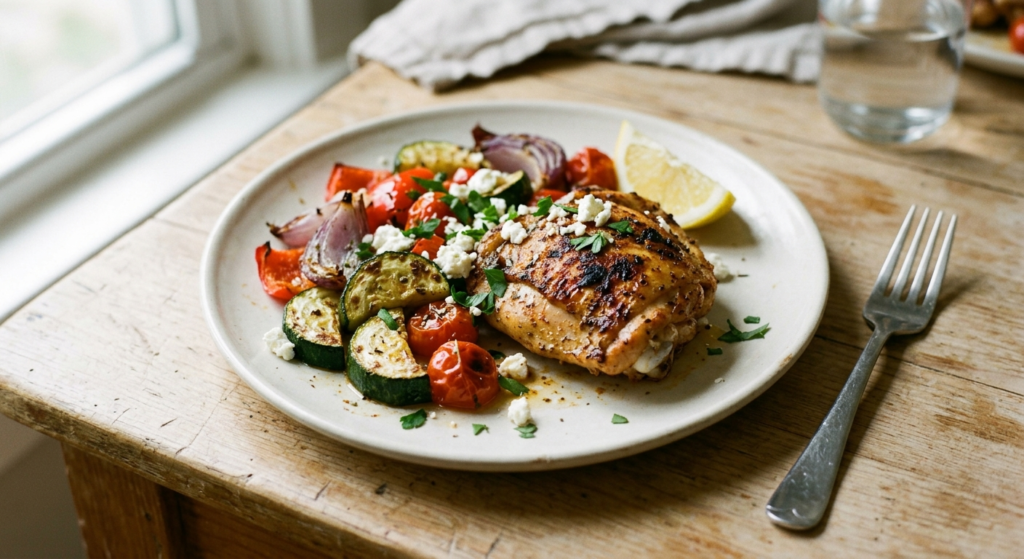
8. Finish and serve. Scatter feta and parsley over the top if using. Serve straight off the pan.
What I Tested
- One pan vs. two pans, same oven. Crowded on one pan, the vegetables released enough moisture to steam rather than roast — noticeably softer, less caramelized. Splitting across two pans (or using a properly sized sheet pan) made a real, visible difference.
- All ingredients added at once vs. staggered. Cherry tomatoes added at the start burst and turned to mush by the time the chicken finished. Adding them partway through kept them intact with just enough blistering.
- 425°F vs. 400°F. At 400°F, the chicken finished nearly on time, but the vegetables were noticeably less caramelized. 425°F gave better browning on both without drying out the chicken, as long as it wasn’t left in past the target internal temperature.
- Marinating 10 minutes vs. 30 minutes. I tested both side by side and didn’t find enough difference in the finished dish to justify the extra planning on a weeknight.
The 3 Things That Actually Matter
Pat the chicken dry before seasoning. This is the single most skipped step, and it’s the difference between a nicely browned thigh and a pale, steamed one.
Don’t overcrowd the pan. Space between pieces is what allows roasting instead of steaming. If it’s tight, use two pans.
Cook to temperature, not time. Ovens vary enough that “35 minutes” is a starting estimate, not a guarantee. An instant-read thermometer removes the guesswork — pull the chicken at 165°F (74°C).
The 4 Things You Don’t Need to Worry About
You don’t need bone-in, skin-on thighs. Boneless, skinless cooks faster and is easier for weeknight timing. Bone-in is great too, just budget extra roasting time.
You don’t need a long marinade. Ten minutes while you prep vegetables is enough for a lemon-and-herb marinade like this one.
You don’t need a specific brand of olive oil or feta. Whatever you have on hand works fine here — this isn’t a dish where a premium bottle makes a detectable difference.
You don’t need to babysit the oven. Once it’s in, you have a genuine 20-minute window to do something else before the next step.
Nutrition
Approximate values per serving (1 thigh + vegetables + feta), calculated from standard USDA nutrient values for the raw ingredient weights listed in the recipe, divided into 4 servings.
| Nutrient | Per Serving |
|---|---|
| Calories | ~495 kcal |
| Protein | ~40g |
| Carbohydrates | ~10g |
| Fat | ~32g |
| Fiber | ~2g |
Skip the feta to cut about 65 calories and 5g fat per serving if you want a leaner version — the dish holds up fine without it.
Greek Sheet Pan Chicken & Other Mediterranean Chicken Variations
This base recipe flexes into a few other genuinely different dinners depending on what you’re craving.
Greek sheet-pan chicken, dressed up. Serve straight off the pan with a side of Greek salad — cucumber, tomato, olives, red onion, and a little extra feta — plus warm pita and a spoon of plain Greek yogurt on the side. It turns the same sheet pan into a full Greek-style spread with almost no extra cooking.
Chicken shawarma style. Swap the smoked paprika and oregano for a shawarma spice blend (cumin, coriander, turmeric, cinnamon, a little cayenne), and serve the sliced chicken over rice or in pita with a yogurt-tahini sauce instead of feta. Same method, genuinely different dinner idea.
Air fryer. Cook the seasoned thighs at 380°F (193°C) for 16–18 minutes, flipping halfway, until they hit 165°F internally. Roast the vegetables separately in the oven or a second air-fryer batch — this method doesn’t have enough surface area to do both at once well.
Grilled chicken. Marinate as written, then grill over medium-high heat, about 6–7 minutes per side for boneless thighs, until they hit 165°F internally. The bright Mediterranean lemon marinade holds up well to the char.
Storage, Meal Prep, and How to Reheat This Sheet Pan Meal
- Fridge: up to 4 days in an airtight container.
- Freezer: the cooked chicken freezes well for up to 3 months; the roasted vegetables get watery after thawing, so I’d freeze the chicken separately and make fresh vegetables — or add additional veggies from whatever’s on hand — on the day.
- Reheating: a dry skillet over medium heat brings back more texture than a microwave, which tends to make the chicken rubbery.
Turn it into a week of meals. Double the recipe on a Sunday, and you’ve got a genuine head start on lunches — this is the easy one-pan meal that actually makes meal prep this recipe worth doing:
- Day 1: straight up — chicken and roasted vegetables, as written.
- Day 2: sliced over a grain bowl with cooked quinoa or rice, extra feta, and a squeeze of lemon.
- Day 3: chopped into a wrap with greens and a yogurt-based sauce.
- Day 4: cold, over greens with cucumber and a simple vinaigrette — the leftover vegetables work well here too.
More easy Chicken Thigh Recipes
If you love sheet pan dinners as much as I do, a few more chicken thigh recipes worth bookmarking:
- What to Make With Chicken Breast — the same timing principles, adjusted for a leaner cut
- Leftover Rotisserie Chicken Recipes — for the nights you’re starting from already-cooked chicken instead
FAQ
Can I use bone-in chicken thighs? Yes. Bone-in thighs work well, but they’ll generally need more time — 15–20 minutes longer, depending on size. Use the thermometer rather than the clock, and make sure the thickest part (not touching bone) reaches 165°F (74°C).
Can I use chicken breast instead? Yes, but reduce the roasting time — breasts cook faster and dry out more easily than thighs. Start checking the temperature around 18–20 minutes.
Why did my chicken come out rubbery? Almost always overcooking. Once chicken passes about 175–180°F internally, the proteins tighten up and squeeze out moisture. Add the chicken to the oven, cook until the thickest part reaches 165°F (74°C) on an instant-read thermometer, then pull it — don’t wait for a higher number “to be safe.” That’s the whole difference between rubbery chicken and juicy chicken thighs.
Is this recipe good for meal prep? Yes — it reheats well, and the flavors hold up over a few days. The one thing to watch is the vegetables getting softer with each reheat; if that bothers you, prep them fresh partway through the week.
Can I make this dairy-free? Yes, just skip the feta. The dish doesn’t rely on it for the core flavor — it’s a garnish, not a base ingredient.
What can I substitute for the vegetables listed? Anything that roasts in a similar timeframe works — broccoli, asparagus, or green beans are good substitutes for the zucchini and pepper. Avoid dense vegetables like potatoes or carrots unless you give them a head start in the oven before adding the chicken.
How do I know the chicken is cooked without a thermometer? Honestly, get a thermometer — they’re inexpensive and remove all the guesswork. Short of that, cut into the thickest part: the juices should run clear, not pink, and the chicken skin (if using skin-on thighs) should be well browned, not translucent.