
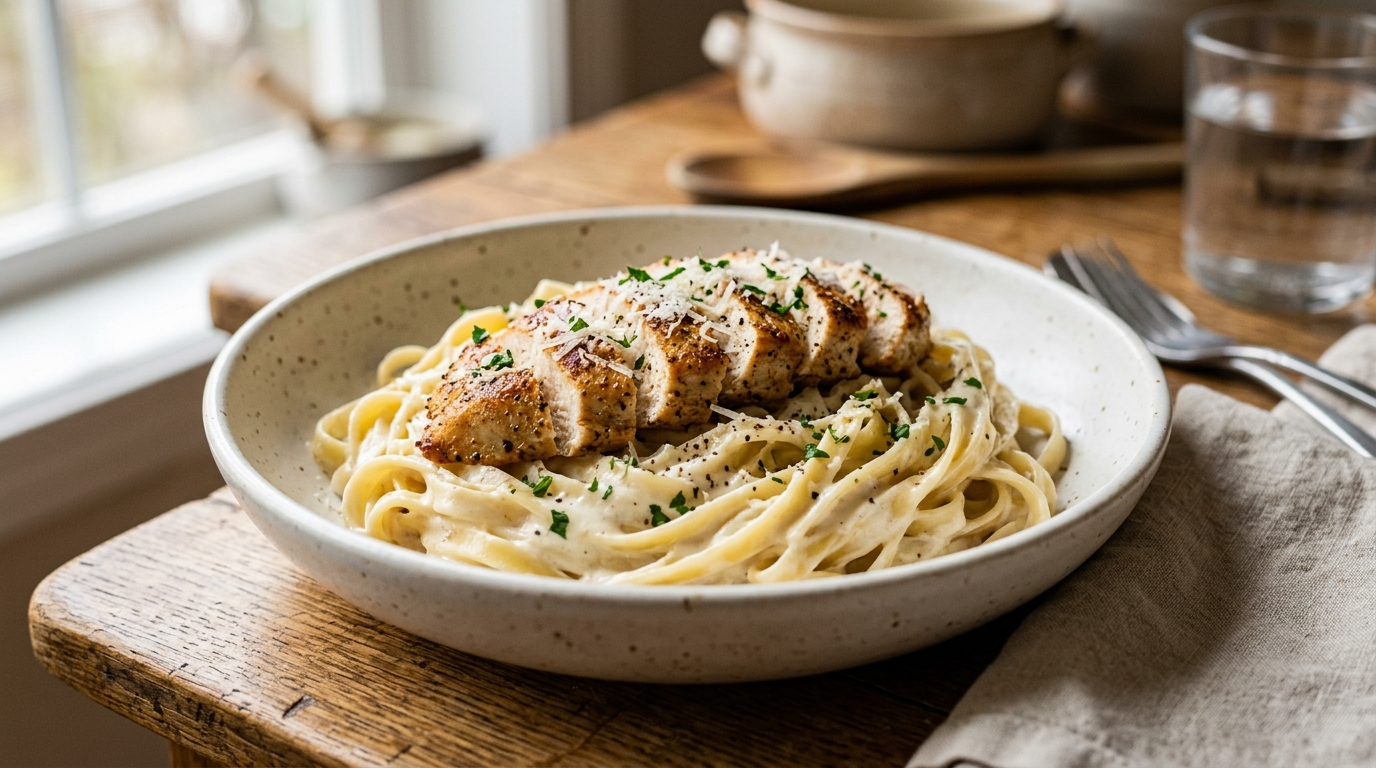
High Protein Chicken Alfredo
Table of Contents
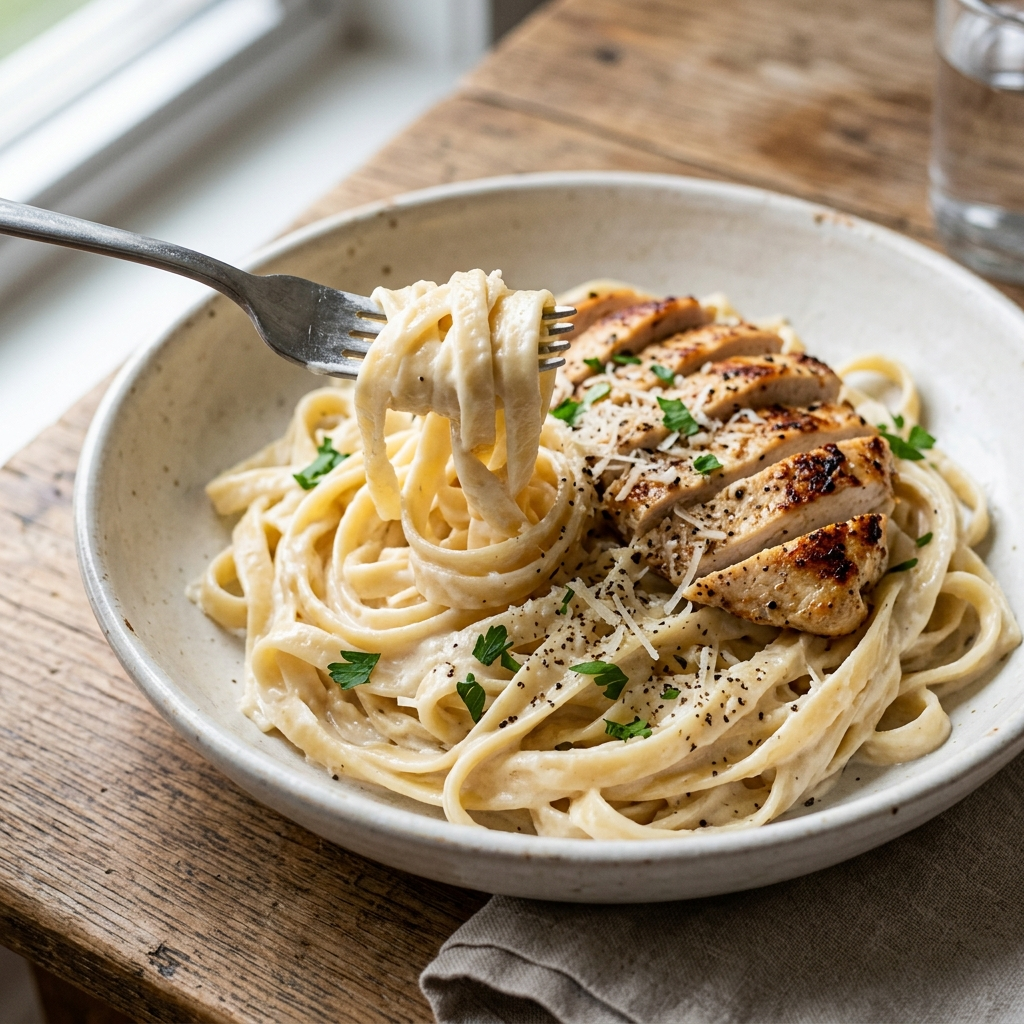
This high protein chicken Alfredo combines tender chicken and fettuccine with a creamy sauce made from blended cottage cheese, milk, garlic, butter, and Parmesan. The cottage cheese adds protein while creating a smooth sauce without relying on heavy cream. The chicken and sauce cook in the same skillet, keeping the method simple enough for a weeknight dinner.
Why This High Protein Chicken Alfredo Works
Blended cottage cheese instead of heavy cream. Blended until completely smooth, cottage cheese creates a creamy base while adding protein without relying on heavy cream.
Fresh Parmesan matters here. Grate it yourself rather than reaching for the pre-shredded bag — the anti-caking coating on packaged shreds tends to leave the sauce with a slightly grainy finish instead of the silky one you’re after.
One pan carries the chicken through to the finished dish. Searing the chicken first leaves browned bits stuck to the bottom of the skillet, and those bits get scraped up and folded into the Alfredo sauce once the cottage cheese mixture goes in — building flavor without an extra pan to wash.
Looking for a tangier, yogurt-based version instead? Try my Greek yogurt chicken pasta — same core idea, a different sauce technique and flavor direction.
Recipe
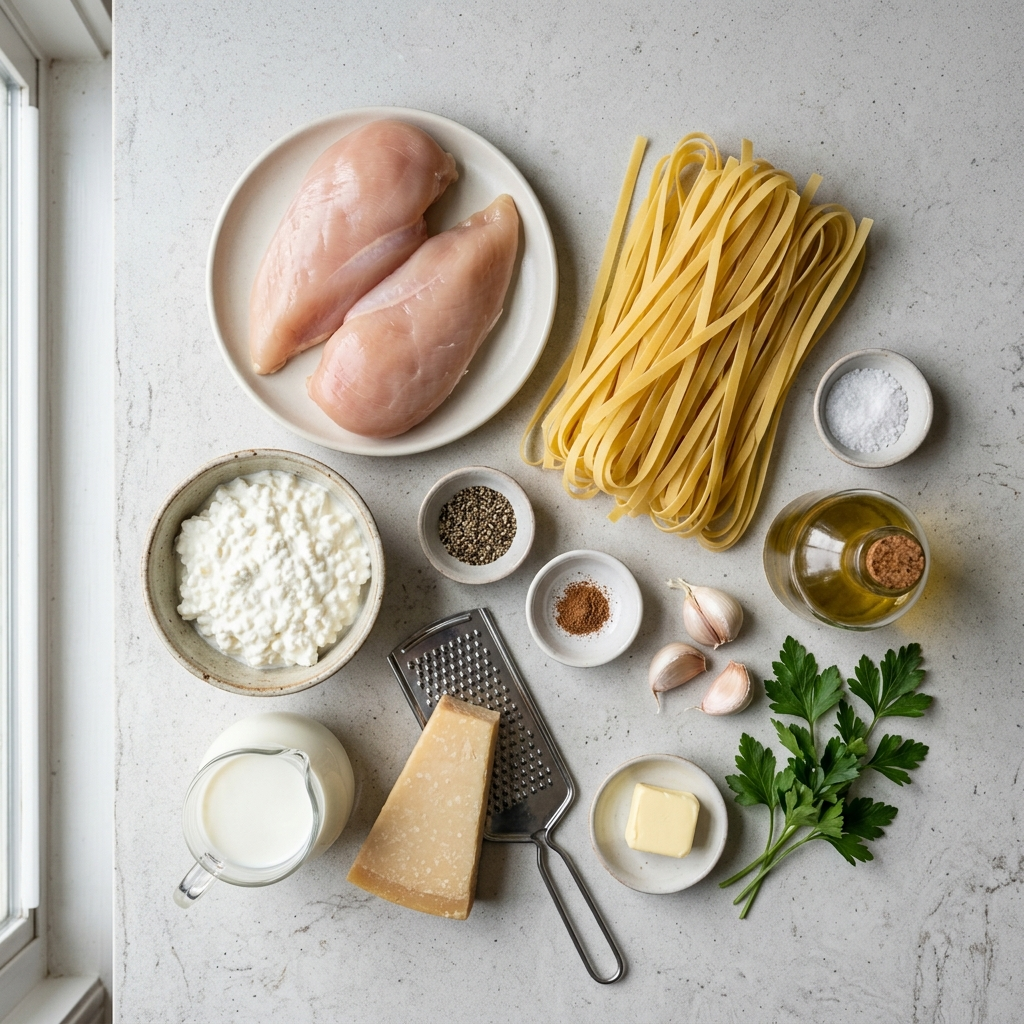
Prep time: 15 minutes | Cook time: 25 minutes | Serves: 4 Per serving (approximate): ~600 calories | ~53g protein | ~42g carbs | ~19g fat
Ingredients
- 1 lb boneless, skinless chicken breast
- Salt and black pepper
- 1 tbsp olive oil
- 8 oz fettuccine (whole-wheat or protein-enriched pasta works well)
- 1½ cups cottage cheese
- ½ cup milk
- 2 tbsp butter
- 3 garlic cloves, minced
- 1 cup freshly grated Parmesan, divided, plus more for serving
- ½ cup reserved pasta water
- Pinch of ground nutmeg (optional, but a classic Alfredo touch)
- Chopped parsley, for garnish
Equipment
You don’t need any special equipment for this high protein chicken Alfredo, but a few basic kitchen tools make the recipe easier:
- 12-inch skillet: A large skillet gives the chicken enough room to sear without crowding and leaves plenty of space to toss the fettuccine with the Alfredo sauce.
- Blender or small food processor: Blending the cottage cheese until completely smooth is key to getting a creamy Alfredo sauce without visible curds.
- Instant-read meat thermometer: Use it to check that the thickest part of the chicken reaches 165°F without having to cut into it.
- Large pot: For cooking the fettuccine and reserving the starchy pasta water before draining.
- Fine cheese grater: Freshly grated Parmesan melts more smoothly into the sauce than many pre-shredded options.
Instructions
- Bring a large pot of salted water to a boil. Cook the fettuccine until al dente. Before draining, reserve ½ cup of the pasta water.
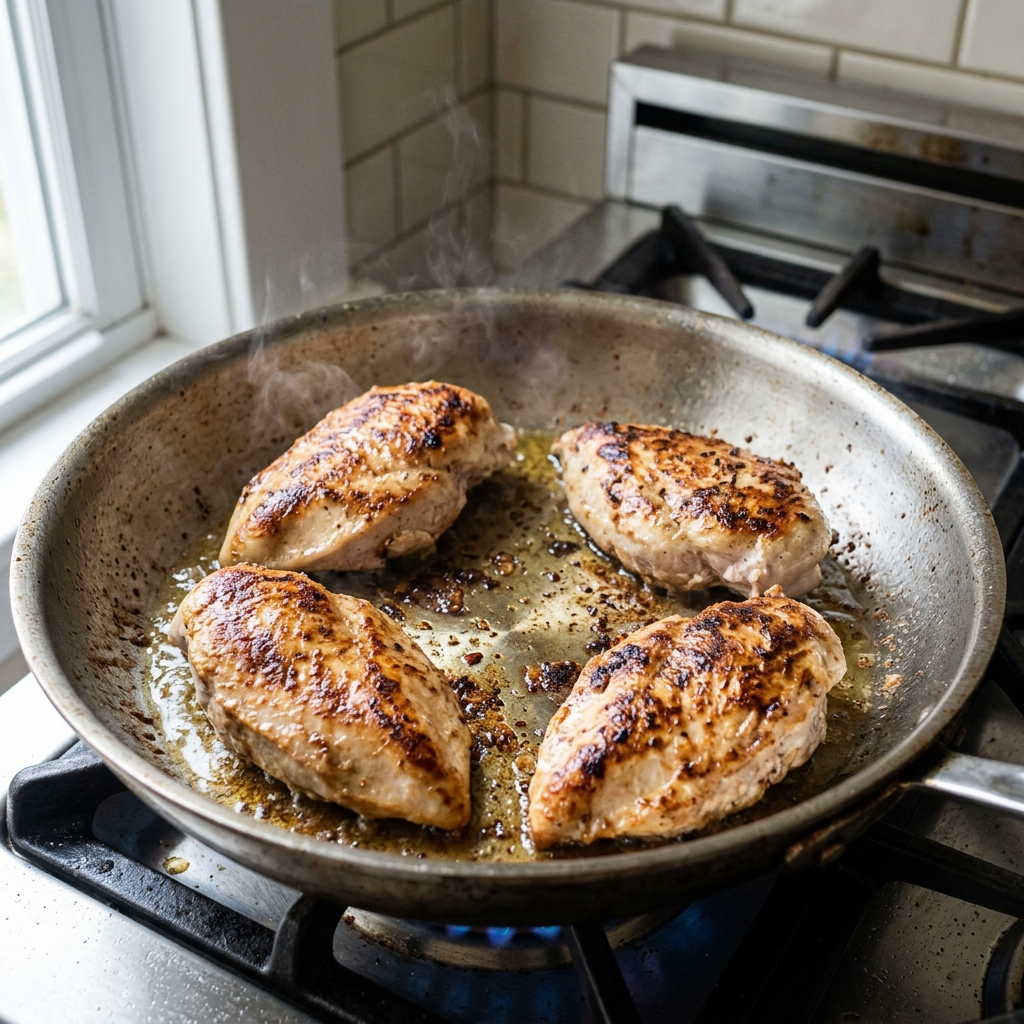
- While the pasta cooks, season the chicken with salt and pepper. Heat the olive oil in a large skillet over medium-high heat and sear the chicken until golden and the thickest part reaches 165°F, checked with an instant-read thermometer.
An instant-read thermometer makes it easy to check the chicken without cutting into it and losing juices.
- Move the chicken to a cutting board and give it 5 minutes before touching it with a knife. Once rested, slice it into strips, cutting across the grain rather than along it.
A 12-inch skillet gives the chicken room to sear properly and makes it easier to build the sauce and toss the pasta in the same pan afterward.
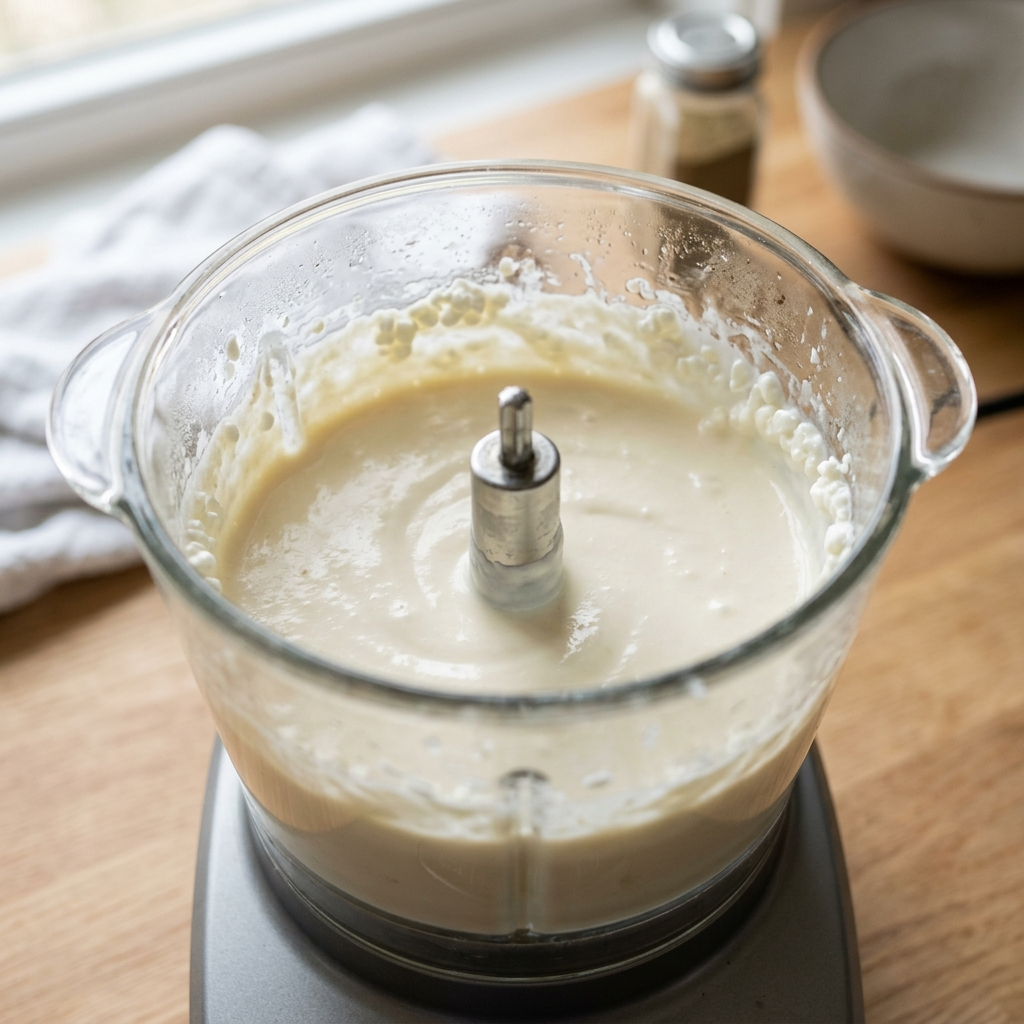
- While the chicken rests, blend the cottage cheese and milk in a food processor or blender until completely smooth, with no visible curds.
A small food processor makes quick work of blending the cottage cheese into a smooth, creamy base — this step is what gives the sauce its texture, so it’s worth doing properly rather than skipping.
- Drop the heat under the skillet to medium-low. Add the butter and let it melt, working it around the pan to lift the browned bits left behind by the chicken. Drop in the garlic and give it about 30 seconds, just until you can smell it — pull it off the heat before it takes on any color, since scorched garlic turns bitter fast.
- Pour in the blended cottage cheese mixture. With the burner still on low, work in half the Parmesan a handful at a time, stirring until it disappears into the sauce. Taste and adjust with salt, pepper, and the nutmeg, if you’re using it.
- Add the drained pasta to the skillet and toss until well coated. If the sauce is too thick, add a little reserved pasta water, one tablespoon at a time, until the sauce is smooth.
- Slide the sliced chicken back into the pan and fold it through gently, just long enough to bring it back to temperature. Keep the burner on low the whole time — letting the sauce reach a boil here is the fastest way to turn it grainy or watch it break.
- Sprinkle the remaining Parmesan and parsley on top, then serve immediately while it’s hot.
Tips for a Smooth Sauce
Blend the cottage cheese thoroughly. This is the step that determines the sauce’s final texture — don’t rush it. Stop only once it’s completely smooth, with no visible curds left.
Keep the burner low once the sauce is in the pan. Letting it hit a boil is the quickest way to end up with a grainy or broken sauce.
Use pasta water to fix the texture. Too thick — add reserved pasta water a tablespoon at a time. Too thin — stir in a little more Parmesan, which thickens as it melts in.
Variations
Add vegetables: Steamed broccoli, sautéed mushrooms, or a handful of baby spinach all stir into the finished pasta easily — none of them tack much time onto the recipe, and they round the plate out with more fiber and color.
Use rotisserie chicken: Skip searing raw chicken entirely — shred pre-cooked rotisserie chicken and stir it into the sauce at the end just until warmed through.
Swap in chicken thighs: Boneless, skinless thighs bring a richer flavor and stay juicy easily. Cook them the same way, to 165°F.
Make it gluten-free or lower-carb: Swap the fettuccine for a gluten-free pasta, or use spiralized zucchini or spaghetti squash for a lower-carb version — both hold up reasonably well under the sauce.
Add heat: A pinch of red pepper flakes or a teaspoon of Cajun seasoning stirred in with the garlic adds a different, spicier direction.
Serving and Storage
Good sides: a crisp green salad with vinaigrette, roasted green beans, or garlic-sautéed spinach all balance the richness of the sauce well.
Storage: refrigerate leftovers in an airtight container for 3–4 days.
Reheating: use gentle heat — a skillet over low heat with a splash of milk or reserved pasta water works better than the microwave for keeping the sauce smooth. High heat is the most likely way to make the sauce separate or turn oily.
FAQ
How much protein is in this chicken Alfredo? Each serving provides approximately 53g of protein, based on four servings. Most of the protein comes from the chicken, cottage cheese, and Parmesan.
How do you make high protein Alfredo sauce? Blend cottage cheese until completely smooth, then use it in place of heavy cream as the base of the sauce, along with a little milk and freshly grated Parmesan. This keeps the classic Alfredo flavor while adding protein from the cottage cheese and Parmesan.
Can you make Alfredo sauce with cottage cheese? Yes — blended until smooth, cottage cheese takes on a texture close to a light cream sauce. It won’t taste identical to a traditional heavy-cream Alfredo, but it gets close while adding protein from the cottage cheese itself.
How do you make cottage cheese Alfredo sauce smooth? Blend it thoroughly in a food processor or blender before it goes anywhere near the pan — this is the step that matters most. Once it’s in the skillet, stick to low heat and don’t let it come to a rolling boil, or the texture can turn grainy on you.
Can I meal prep this chicken Alfredo? Yes. It refrigerates well for 3–4 days. The sauce will thicken in the fridge, so reheat gently on the stovetop with a splash of milk or water to bring it back to a smooth consistency.
Can I add vegetables to this recipe? Yes — steamed broccoli, sautéed mushrooms, or baby spinach all stir in easily without changing the cooking method.