
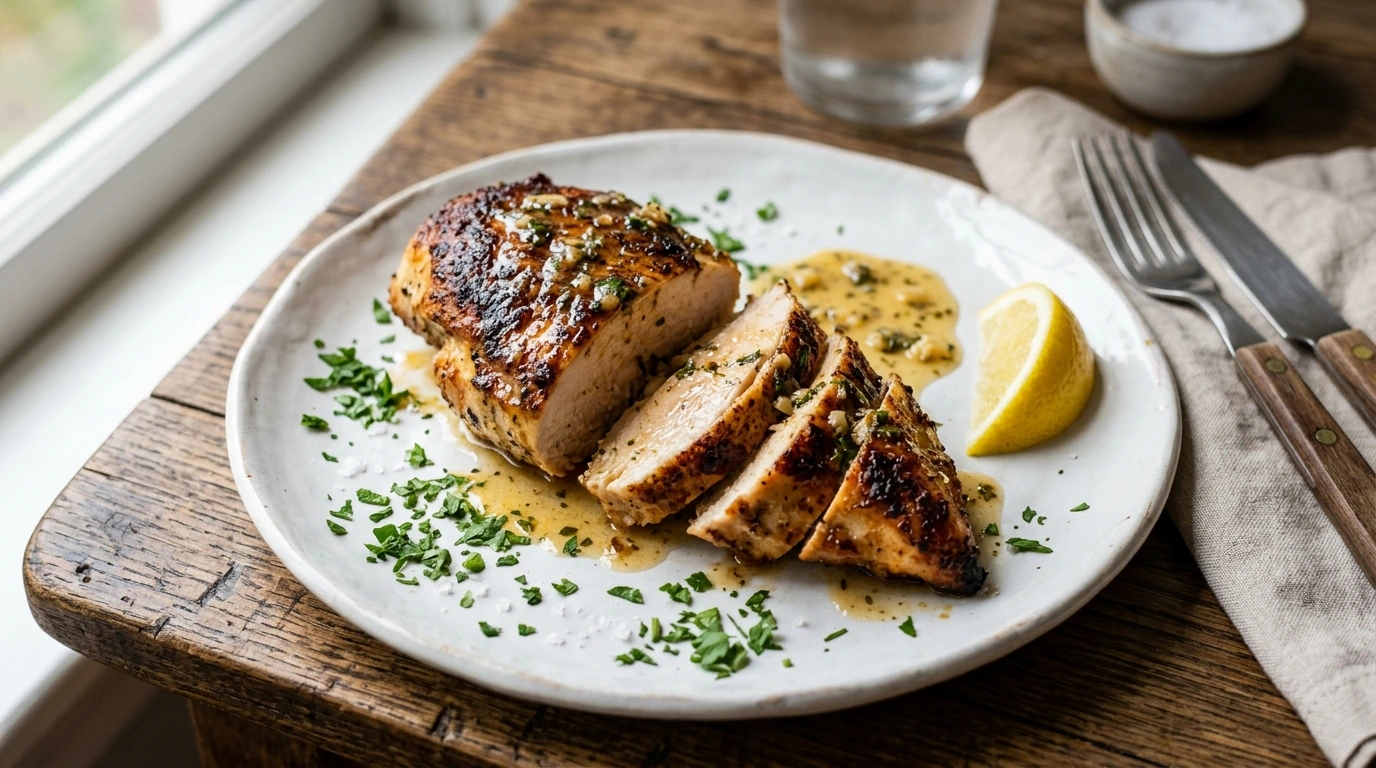
Easy Chicken Breast Recipes for Dinner: What to Make With Chicken Breast — One-Pan, Weeknight Easy Meals & Honey Garlic ChickenMeals to make with chicken breast ideas
Table of Contents
Chicken breast has a bad reputation it mostly deserves, because most of us were taught to cook it wrong — too hot, too long, straight from the fridge, unsalted until the last minute. The one change that fixed it for me wasn’t a fancy technique, it was salting it 30 minutes ahead and actually using a thermometer instead of cutting into it to check. Everything below is what’s actually in my rotation now.
Chicken breast is the most-cooked and most-overcooked protein in most kitchens — lean enough to dry out fast, bland enough that people give up seasoning it properly, and inconsistent enough in thickness that one end is always done before the other. None of that is the meat’s fault. Below: the real reason it usually comes out dry, an actual timing table by cooking method, 4 complete recipes, and what to do with leftovers.
Why Chicken Breast Comes Out Dry (It’s Rarely the Meat’s Fault)
Three things cause almost every dry chicken breast, and none of them is “chicken breast is just naturally dry”:
1. It’s cooked past 165°F. Chicken breast has almost no fat to protect it once it overshoots done. The gap between “juicy” and “chalky” is often less than 5 degrees. I use an instant-read thermometer for exactly this reason — it removes the guessing entirely: pull it at 165°F (74°C), not a minute later.
2. It’s unevenly thick. A standard chicken breast can run nearly twice as thick at one end as the other. By the time that thick end reaches a safe internal temperature, the thin end has often overshot it by a wide margin — enough of a gap that it’s already dry while the center just finished cooking. Pound the thick end down with a meat mallet (or the bottom of a heavy pan) until the whole piece is roughly even — this alone fixes more “dry chicken” complaints than any sauce or marinade.
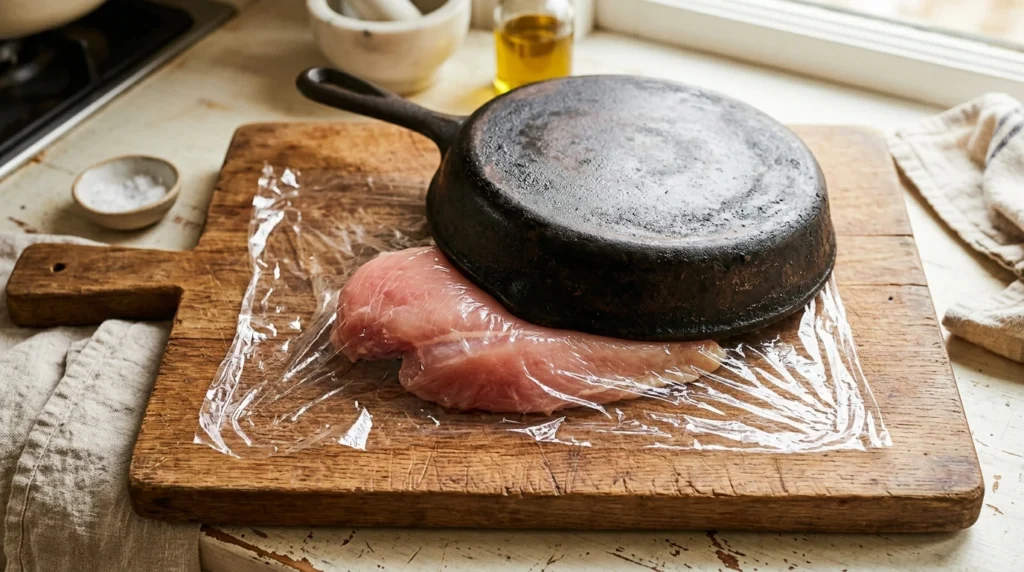
Pro Tip: If you don’t own a meat mallet, a small heavy skillet works — put the chicken between two sheets of plastic wrap first so you’re not cleaning raw chicken off the pan afterward.
3. It’s cooked straight from the fridge with no salt. This is the step almost nobody does and it makes a real difference: salt the chicken 30 minutes before cooking (or up to overnight, uncovered, in the fridge). Salt draws moisture to the surface initially, then — given time — that moisture (now seasoned) reabsorbs back into the meat. It’s a genuinely different result from salting right before the pan, not just a flavor preference. If you only take one thing from this article, take this one.
Why pat it dry, specifically? Moisture on the surface has to fully evaporate before browning can start — so a wet piece of chicken spends its first minute or two in the pan just steaming, not searing. That delay is what stops the Maillard reaction (the browning that builds real flavor) from ever properly kicking in, which is why chicken that goes into the pan wet comes out pale and flavorless no matter how hot the pan is.
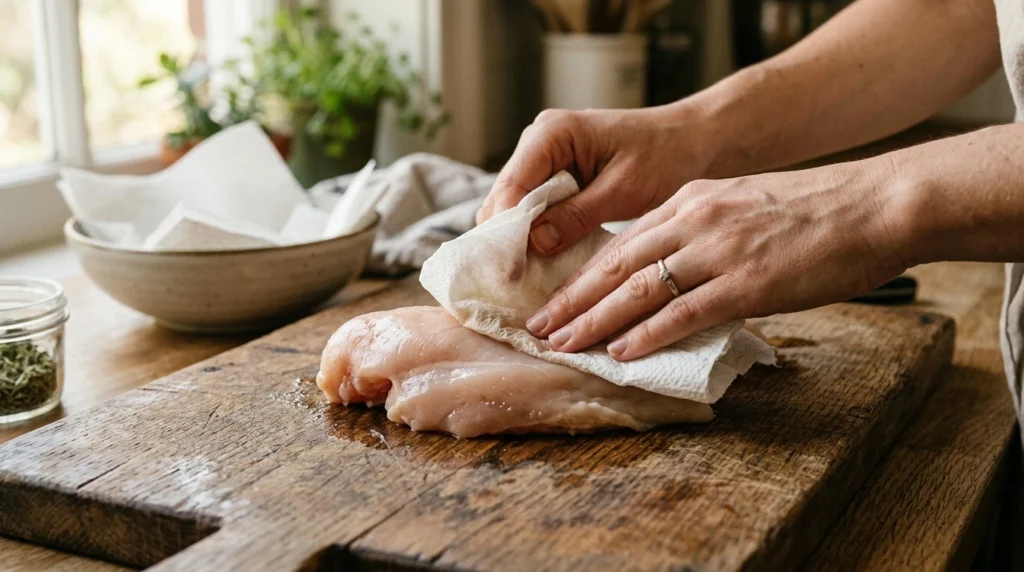
Biggest Mistake: Skipping the pat-dry step because the chicken “looks dry enough.” Even chicken that looks dry usually has a thin surface film of moisture (from the salt step above, or just condensation) that’s enough to sabotage the sear.
The Timing Table (By Cooking Method)
Times below are for a standard 6–8oz (170–225g) boneless, skinless breast, pounded to even thickness. Always confirm with a thermometer — these are strong starting points, not guarantees, since stove and oven strength varies.
| Method | Heat | Time | Notes |
|---|---|---|---|
| Pan-sear | Medium-high | 6–7 min per side | Don’t move it for the first 3–4 min per side — that’s the crust forming |
| Oven-bake | 400°F / 200°C | 20–25 min | Longer for bone-in; check at 20 |
| Poach | Bare simmer | 12–15 min | Water should barely bubble — a rolling boil toughens it |
| Steam | Steady steam | 15–18 min | Gentlest method; best for salads and shredding |
| Grill | Medium-high | 6–8 min per side | Close the lid between flips to hold heat |
Best Temperature: 165°F (74°C), every method, no exceptions — per USDA guidance . Rest 5 minutes before slicing; that’s what actually keeps the juices in the meat instead of on the cutting board.
What to Make With Chicken Breast: 12 Easy Recipes for Dinner
Recipe 1: Foolproof Pan-Seared Chicken with Lemon-Butter Pan Sauce
The technique above, turned into an actual dinner. Once you can do this one reliably, every other chicken breast recipe gets easier.
Serves 2 | Prep 5 min (+ 30 min salting) | Cook 15 min
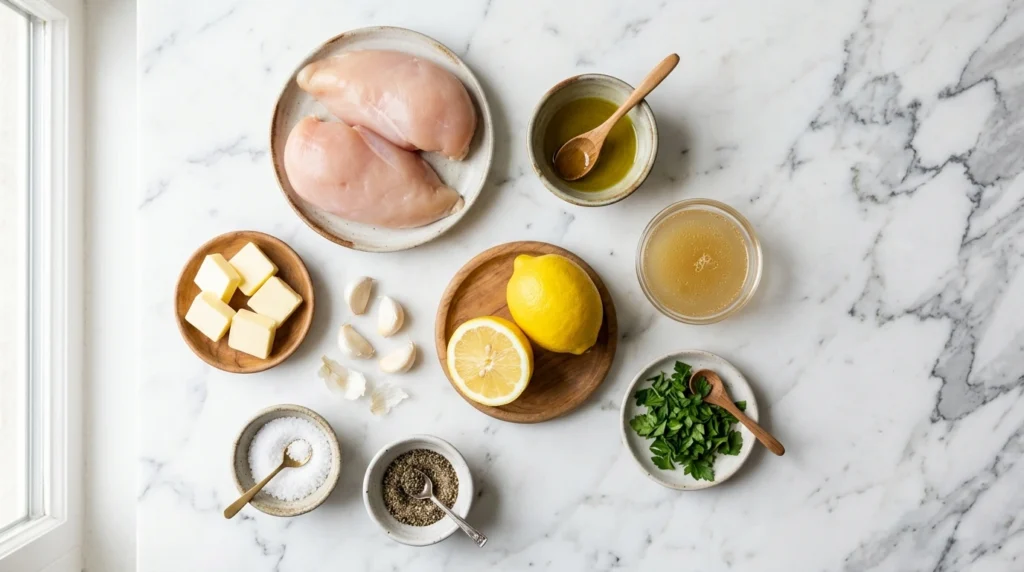
Ingredients
- 2 boneless, skinless chicken breasts (6–8oz / 170–225g each), pounded to even thickness
- 1 tsp salt, 1/2 tsp black pepper
- 1 tbsp olive oil
- 2 tbsp butter
- 2 cloves garlic, minced
- Juice of 1 lemon
- 1/4 cup (60ml) chicken broth
- 1 tbsp chopped parsley
Method
- Salt both sides of the chicken, set uncovered in the fridge at least 30 minutes (up to overnight).
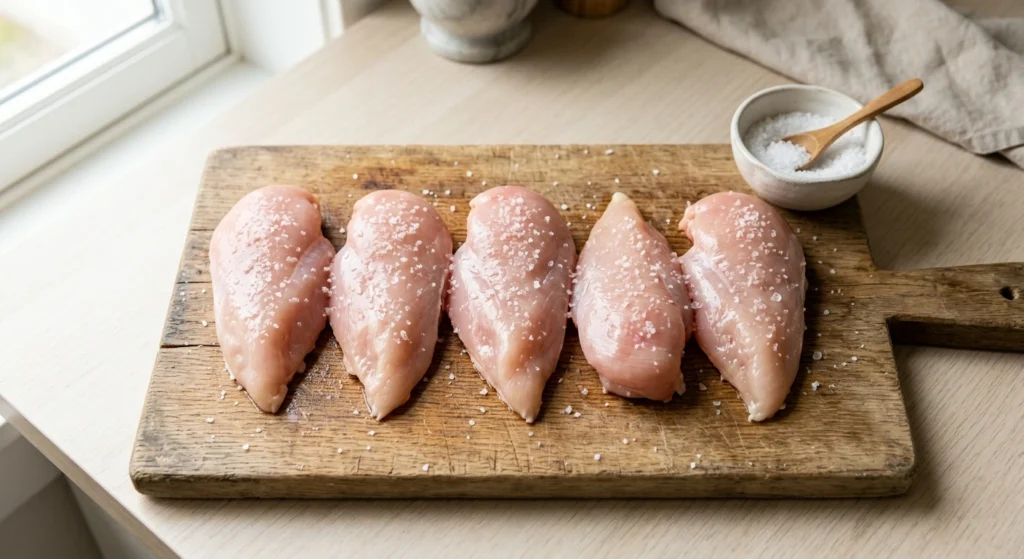
- Pat dry thoroughly (see the Maillard note above — this step is doing real work, not just tidiness). Pepper both sides.
- Oil in a heavy skillet over medium-high until shimmering. Chicken in, don’t touch it for 3–4 minutes — let the crust form.
Pro Tip: If the chicken sticks when you try to flip it, it isn’t ready yet. A properly formed crust releases from the pan on its own — fighting it just tears the crust and leaves it behind in the pan instead of on the chicken.
- Flip, another 3–4 minutes. Check temperature at the thickest point. At 165°F, remove and rest on a plate.
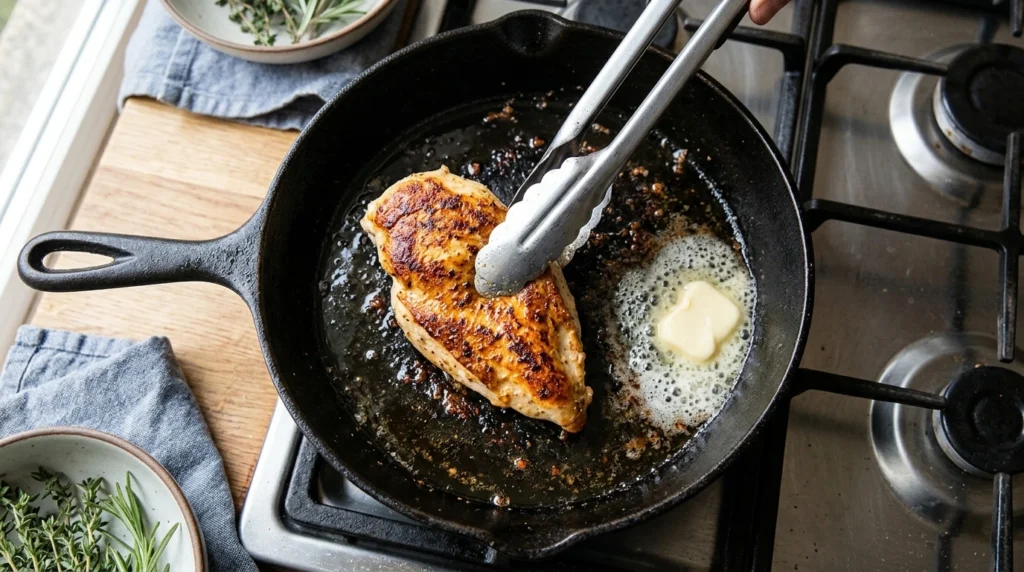
- Same pan, off the highest heat: butter and garlic, 30 seconds until fragrant. Lemon juice and broth, scrape up the browned bits (that’s flavor). Simmer 1–2 minutes until slightly reduced.
- Spoon sauce over the chicken, parsley on top.
Nutrition (per serving, estimated): ~410 calories | 46g protein | 2g carbs | 24g fat Derivation: 1 breast (~200g raw) yields roughly 150g cooked at typical pan-sear moisture loss; USDA figures for cooked skinless chicken breast run about 165 kcal and 31g protein per 100g, giving ~247 kcal / ~46g protein from the chicken alone. The remaining calories and fat come from the butter and oil in the sauce.
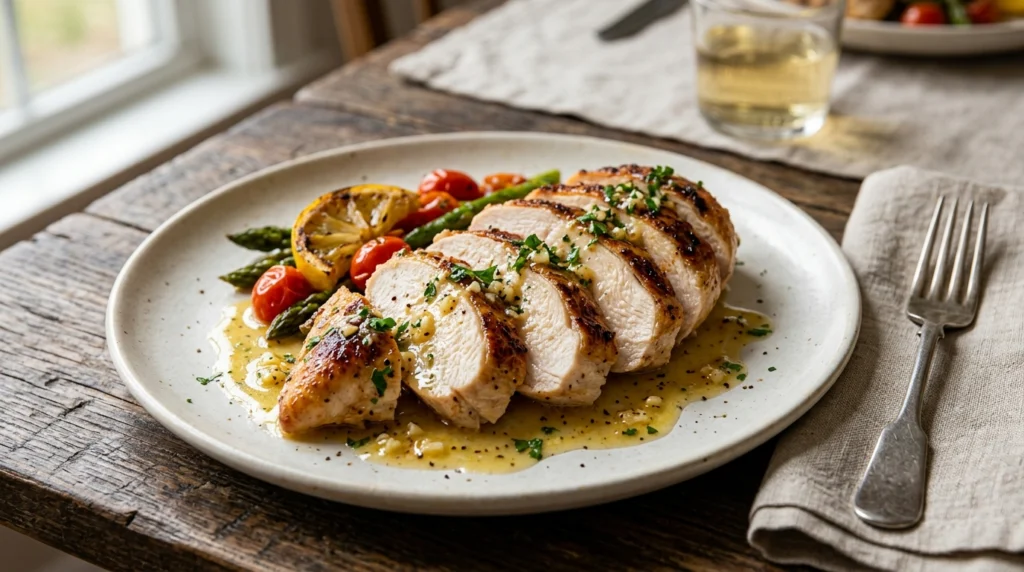
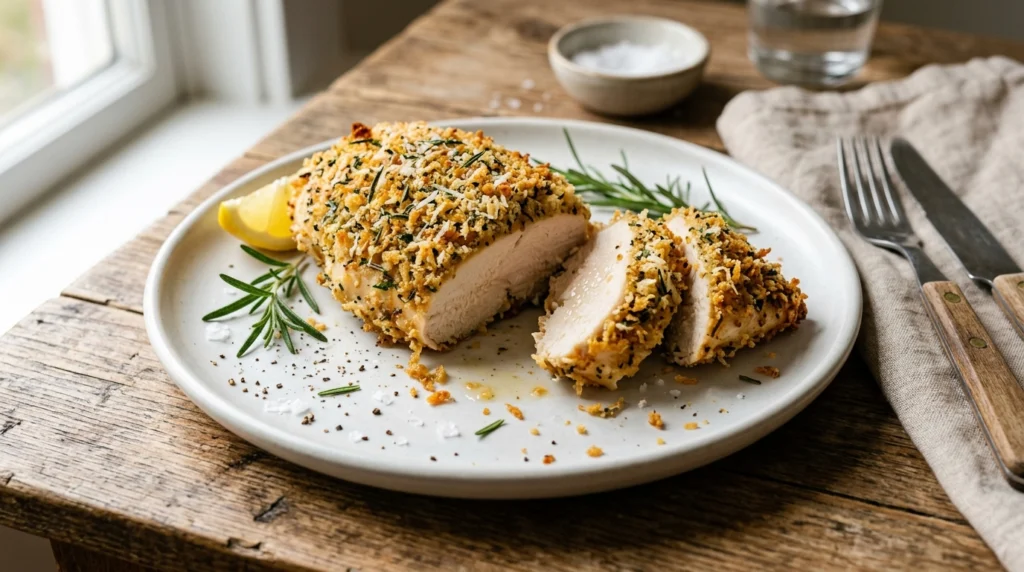
Recipe 2: Herb-Crusted Baked Chicken Breast
Serves 4 | Prep 10 min (+ 30 min salting) | Cook 22 min
Ingredients
- 4 chicken breasts (6–8oz / 170–225g each), pounded to even thickness
- 1 tsp salt (for the pre-salt step)
- 1/2 cup (30g) panko breadcrumbs
- 30g grated parmesan
- 1 tbsp chopped fresh rosemary and thyme (or 1 tsp each dried)
- 2 tbsp olive oil, divided
- 1 tbsp Dijon mustard — this is what makes the crust actually stick; skipping it means half your topping ends up on the pan, not the chicken
- Salt and pepper
Method
- Salt the chicken 30 minutes ahead (see technique section).
- Oven to 400°F (200°C). Mix panko, parmesan, herbs, 1 tbsp olive oil, salt, and pepper.
- Pat chicken dry. Brush each piece with Dijon, then press firmly into the breadcrumb mix so it adheres on top.
- Arrange on a parchment-lined sheet pan, drizzle remaining oil over the crusts.
- Bake 20–25 minutes, checking at 20. Pull at 165°F.
Nutrition (per serving, estimated): ~370 calories | 50g protein | 5g carbs | 14g fat Same derivation method as Recipe 1 (chicken ~46g protein from ~150g cooked), plus the panko/parmesan crust and oil divided across 4 servings
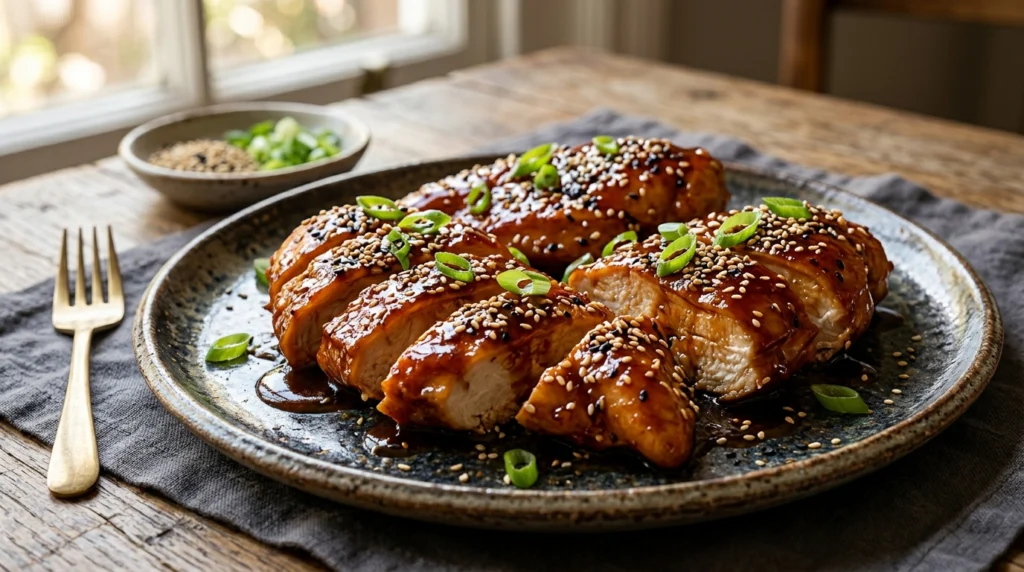
Recipe 3: Skillet Honey Garlic Chicken
A faster, stovetop take on the classic sweet-savory glaze — built the same way our slow cooker honey garlic chicken — internal link handles it: the honey goes in at the end, not the start, so it glazes instead of burning.
Serves 2 | Prep 5 min | Cook 15 min
Ingredients
- 2 chicken breasts (6–8oz / 170–225g each), pounded to even thickness
- Salt and pepper
- 1 tbsp olive oil
- 3 cloves garlic, minced
- 3 tbsp honey
- 2 tbsp low-sodium soy sauce
- 1 tbsp rice vinegar
- 1 tbsp water
- Sesame seeds and sliced scallion, to finish
Method
- Season chicken. Sear in oil over medium-high, 6–7 minutes per side, until 165°F. Remove, rest.
- Same pan, lower heat to medium. Garlic, 30 seconds.
- Off heat, whisk in honey, soy sauce, vinegar, and water — mixing off the direct heat keeps the honey from scorching against a hot pan.
- Back on low heat, simmer 1–2 minutes until glossy and slightly thickened.
- Return chicken to the pan, spoon glaze over both sides. Sesame seeds, scallion.
Nutrition (per serving, estimated): ~415 calories | 47g protein | 27g carbs | 12g fat Chicken contributes the same ~46g protein baseline as Recipe 1; the honey is the main carb source.
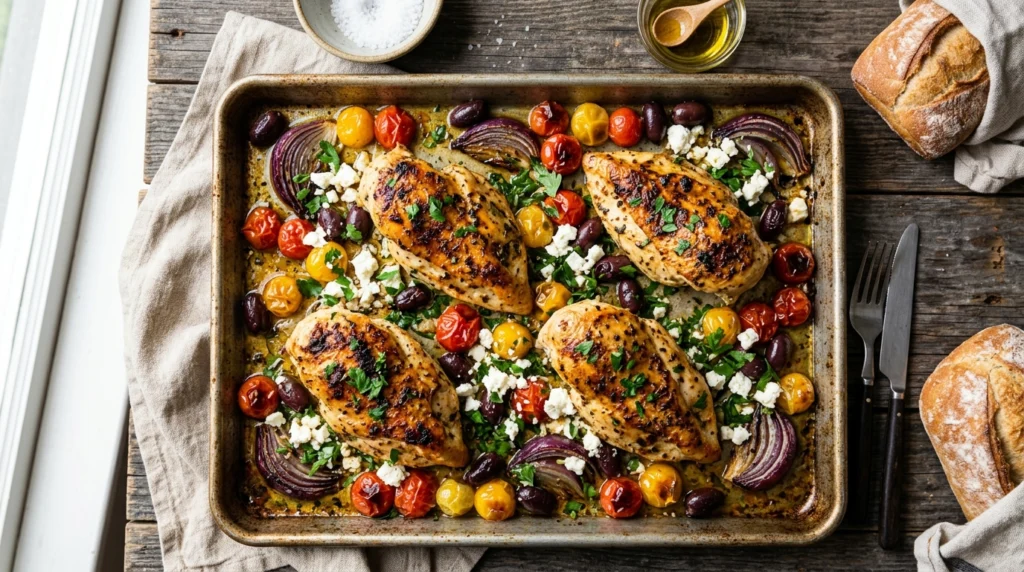
Recipe 4: Sheet Pan Mediterranean Chicken
Serves 4 | Prep 10 min | Cook 25 min
Ingredients
- 4 chicken breasts (6–8oz / 170–225g each), pounded to even thickness
- 2 tbsp olive oil, divided
- 1 tsp dried oregano, zest of 1 lemon, 2 cloves garlic (minced), salt and pepper
- 1 pint cherry tomatoes
- 1 cup (150g) kalamata olives
- 1 red onion, sliced into wedges
- 80g crumbled feta
- Fresh parsley, lemon wedges to serve
Method
- Oven to 400°F (200°C). Toss chicken with 1 tbsp oil, oregano, lemon zest, garlic, salt, pepper.
- Toss tomatoes, olives, and onion with remaining oil on a sheet pan. Nestle chicken among the vegetables.
- Bake 22–25 minutes, until chicken hits 165°F and tomatoes have started to blister.
- Feta scattered over everything hot from the oven so it softens slightly. Parsley, lemon wedges.
Nutrition (per serving, estimated): ~445 calories | 50g protein | 8g carbs | 22g fat Chicken baseline ~46g protein per serving, plus feta’s extra ~3g; olives and oil account for most of the added fat.
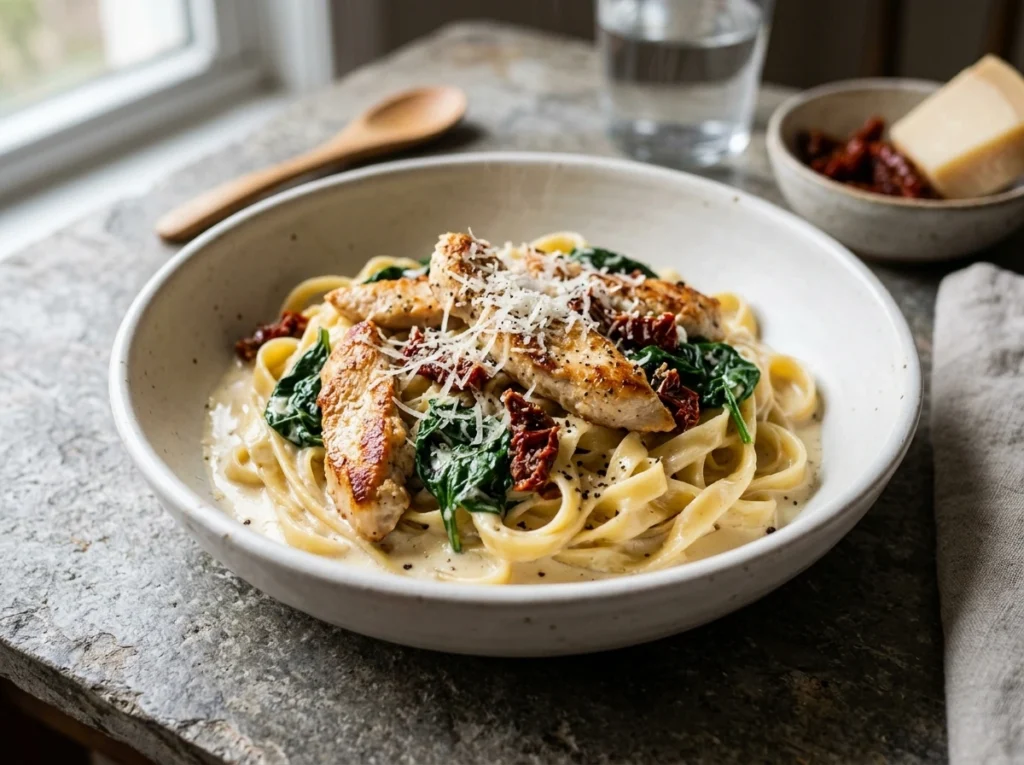
Recipe 5: Creamy Chicken Pasta with Sun-Dried Tomatoes (Alfredo-Style)
Serves 4 · Prep 10 min · Cook 20 min
Ingredients
- 2 chicken breasts, pounded even and cut into strips
- 12 oz pasta (penne or fettuccine)
- 2 tbsp butter
- 3 cloves garlic, minced
- ½ cup sun-dried tomatoes, chopped
- 1 cup heavy cream
- ½ cup grated parmesan
- 2 cups baby spinach
- Salt and black pepper
Method
- Cook pasta to al dente, reserve ½ cup pasta water, drain.
- Sear the chicken strips in a hot skillet 4–5 minutes until 165°F. Remove, rest.
- Same pan, butter and garlic, 30 seconds. Add sun-dried tomatoes, then cream. Simmer 2–3 minutes until it starts to thicken into a proper pasta sauce.
- Stir in parmesan until melted, then spinach until wilted.
- Toss in the pasta and chicken, loosening with pasta water if needed.
Nutrition (per serving, estimated): ~520 calories | 38g protein | 42g carbs | 22g fat
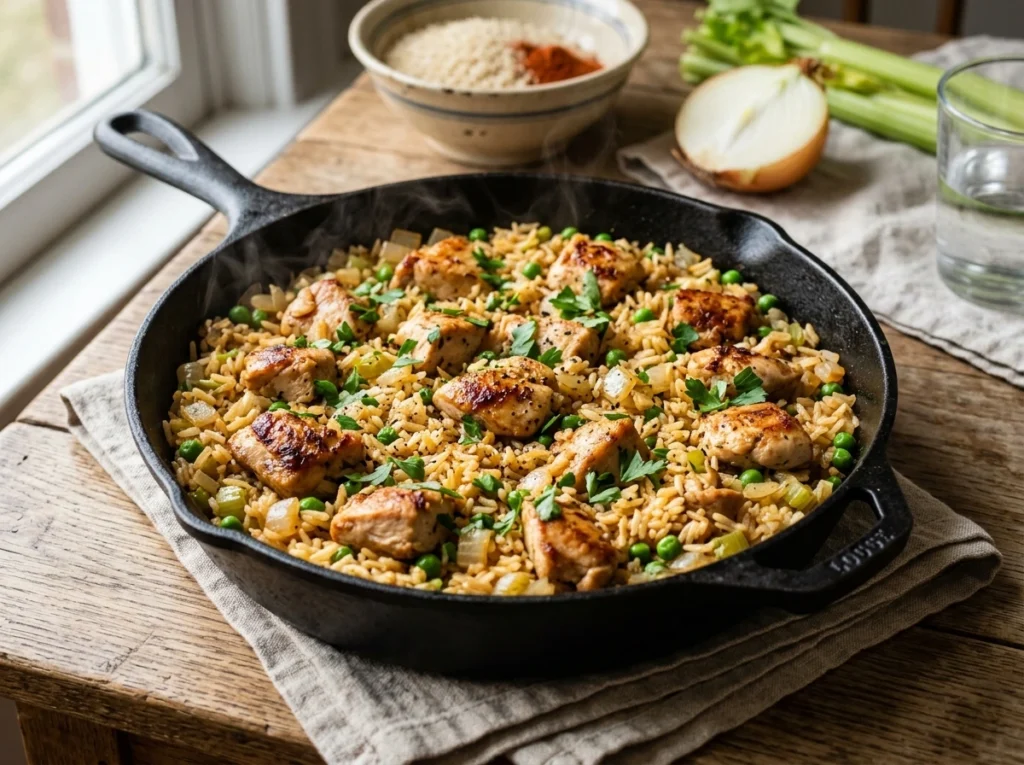
Recipe 6: Chicken and Rice Skillet
Simple ingredients, one pan, genuinely easy weeknight cooking.
Serves 4 · Prep 10 min · Cook 25 min
Ingredients
- 2 chicken breasts, diced into 1-inch pieces
- 1 tbsp olive oil
- 1 onion, diced
- 2 celery stalks, diced
- 1 cup long-grain rice
- 2 cups chicken broth
- 1 tsp paprika, salt and pepper
- ½ cup frozen peas
Method
- Sear the diced chicken in oil over medium-high, about 5 minutes until browned on the outside. Remove.
- Same pan, sauté onion and celery until soft, about 4 minutes.
- Add rice, toast 1 minute, then pour in broth and paprika.
- Simmer covered 15–18 minutes until rice is tender and liquid is absorbed.
- Stir in the chicken and peas for the last 3 minutes to heat through.
Nutrition (per serving, estimated): ~380 calories | 32g protein | 40g carbs | 8g fat
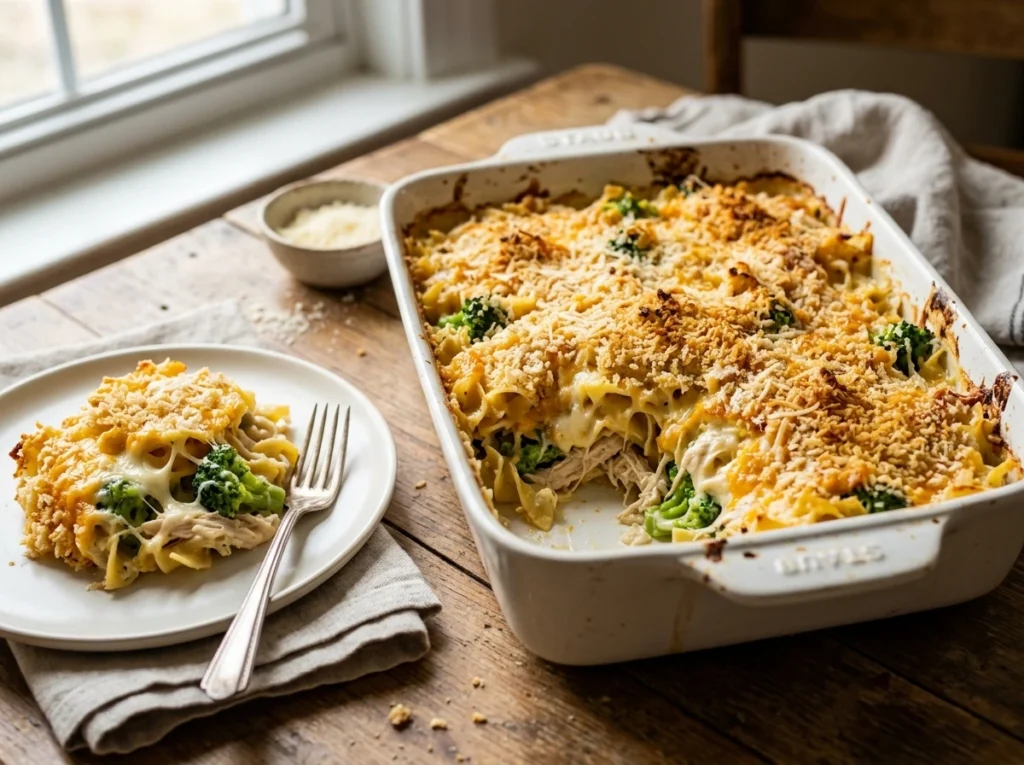
Recipe 7: Chicken Broccoli Parmesan Casserole
Serves 4–6 · Prep 15 min · Cook 30 min
Ingredients
- 3 cups cooked, shredded chicken breast
- 3 cups blanched broccoli florets
- 2 cups cooked egg noodles
- 1 can cream of chicken soup
- ½ cup sour cream
- 1½ cups shredded cheddar
- ⅓ cup grated parmesan
- ½ cup panko breadcrumbs, 2 tbsp melted butter
Method
- Preheat oven to 375°F. Whisk soup and sour cream together.
- Fold in chicken, broccoli, noodles, and 1 cup of cheddar.
- Transfer to a greased 9×13 dish, top with remaining cheddar and parmesan.
- Bake covered 15 minutes.
- Mix panko with melted butter, scatter over the top, and bake uncovered for the final 10 minutes until golden and crispy.
Nutrition (per serving, estimated): ~410 calories | 35g protein | 18g carbs | 21g fat
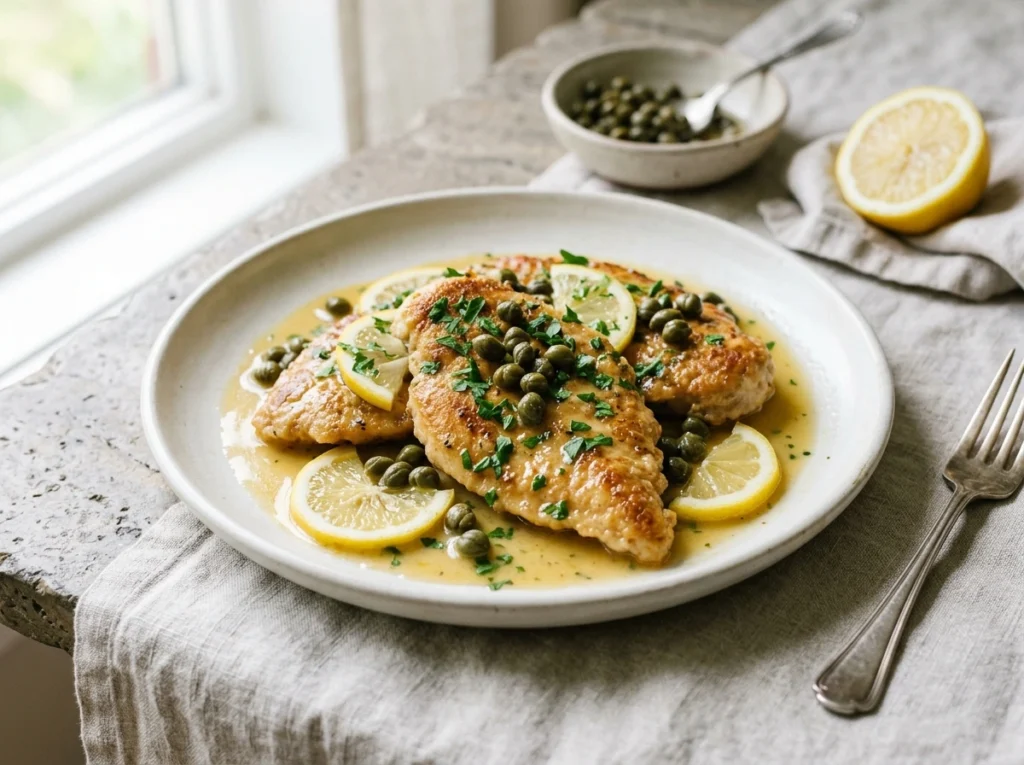
Recipe 8: Chicken Piccata
Serves 4 · Prep 10 min · Cook 20 min
Ingredients
- 4 chicken breasts, pounded thin
- ⅓ cup flour, salt and pepper
- 3 tbsp olive oil, 2 tbsp butter, divided
- 3 cloves garlic, minced
- ½ cup chicken broth
- ¼ cup lemon juice
- 3 tbsp capers, drained
- 2 tbsp chopped parsley
Method
- Dredge the seasoned chicken in flour, shaking off excess.
- Sear in oil and 1 tbsp butter over medium-high, 3–4 minutes per side, until golden and 165°F. Remove, rest.
- Same pan: garlic, 30 seconds. Broth, lemon juice, and capers, simmer 2–3 minutes to reduce slightly.
- Off heat, swirl in remaining butter until glossy.
- Return chicken to the pan, spoon sauce over. Parsley to finish.
Nutrition (per serving, estimated): ~390 calories | 42g protein | 8g carbs | 20g fat
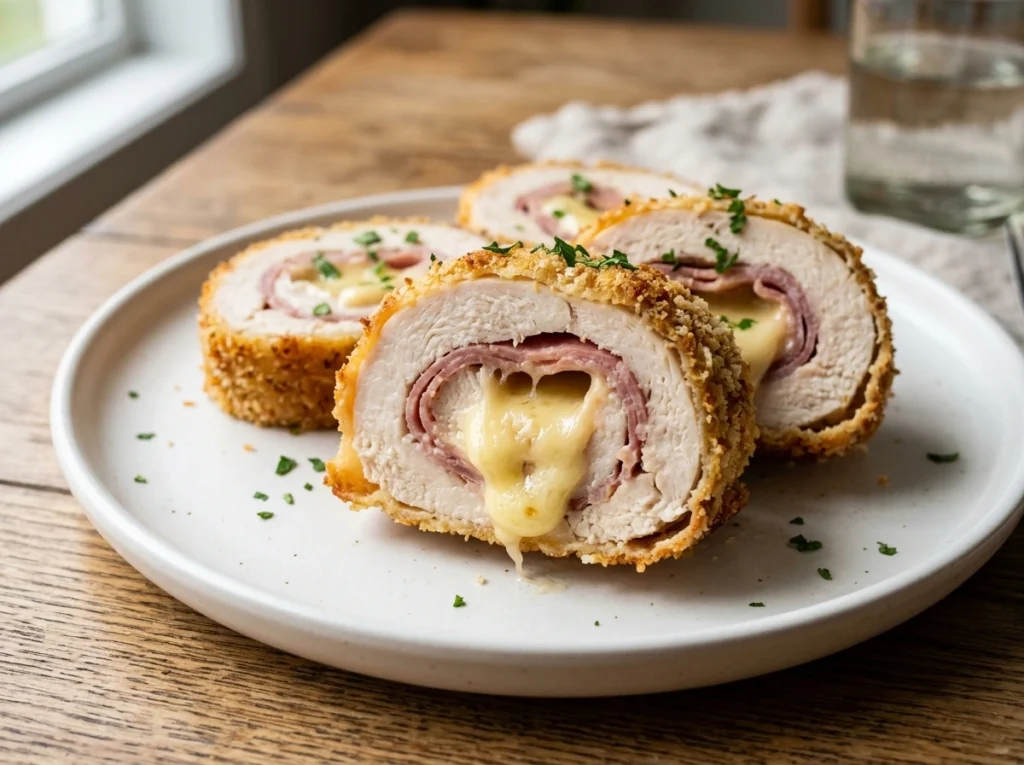
Recipe 9: Chicken Cordon Bleu (Simplified, Baked)
A baked, weeknight-friendly take on the classic — no deep frying required.
Serves 4 · Prep 15 min · Cook 25 min
Ingredients
- 4 chicken breasts, pounded thin
- 4 slices deli ham
- 4 slices Swiss cheese
- ½ cup flour
- 2 eggs, beaten
- 1 cup panko breadcrumbs
- 2 tbsp grated parmesan
- Salt and pepper
- Toothpicks
Method
- Preheat oven to 400°F. Season chicken, lay a slice of ham and cheese on each piece, roll tightly, secure with a toothpick.
- Dredge each roll in flour, then egg, then panko mixed with parmesan — press to coat.
- Place on a parchment-lined sheet pan. Bake 22–25 minutes until golden and 165°F at the center.
- Rest 5 minutes, remove toothpicks before serving.
Nutrition (per serving, estimated): ~430 calories | 48g protein | 14g carbs | 18g fat
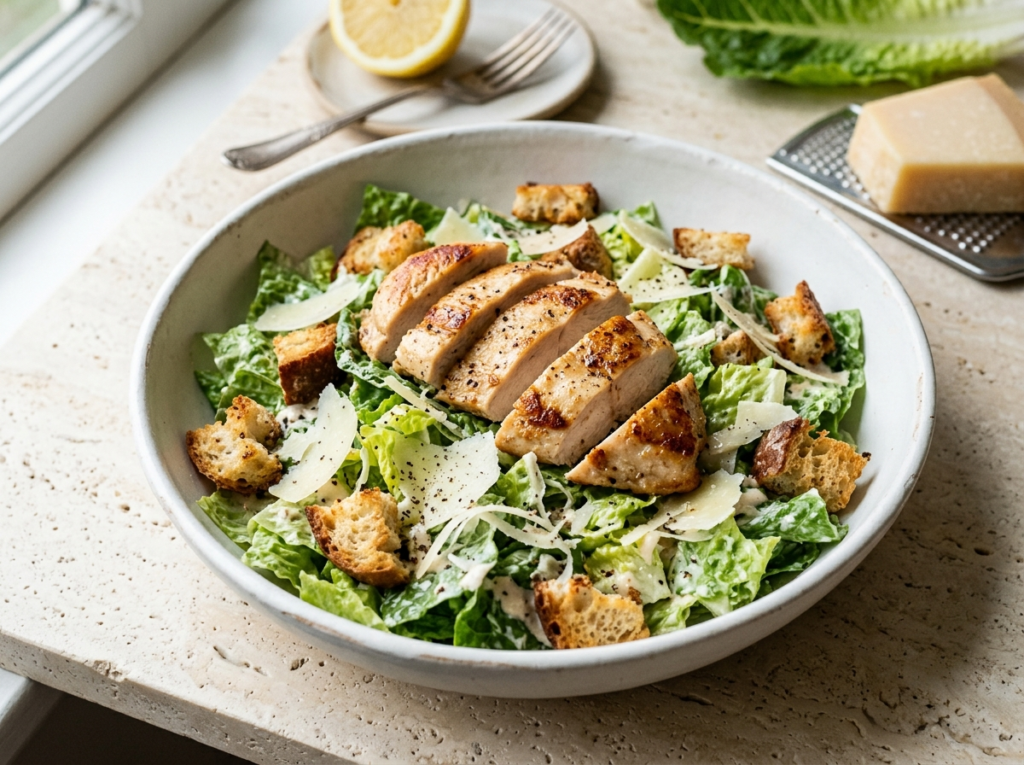
Recipe 10: Chicken Caesar Salad
Serves 4 · Prep 10 min · Cook 15 min
Ingredients
- 2 chicken breasts, pounded even
- Salt, pepper, 1 tbsp olive oil
- 2 heads romaine, chopped
- ½ cup grated parmesan
- 1 cup croutons (store-bought is fine)
- ⅔ cup Caesar dressing
Method
- Season and sear the chicken 6–7 minutes per side until 165°F. Rest 5 minutes, then slice.
- Toss romaine with dressing, parmesan, and croutons.
- Top with the sliced, tender chicken.
Nutrition (per serving, estimated): ~360 calories | 33g protein | 12g carbs | 20g fat
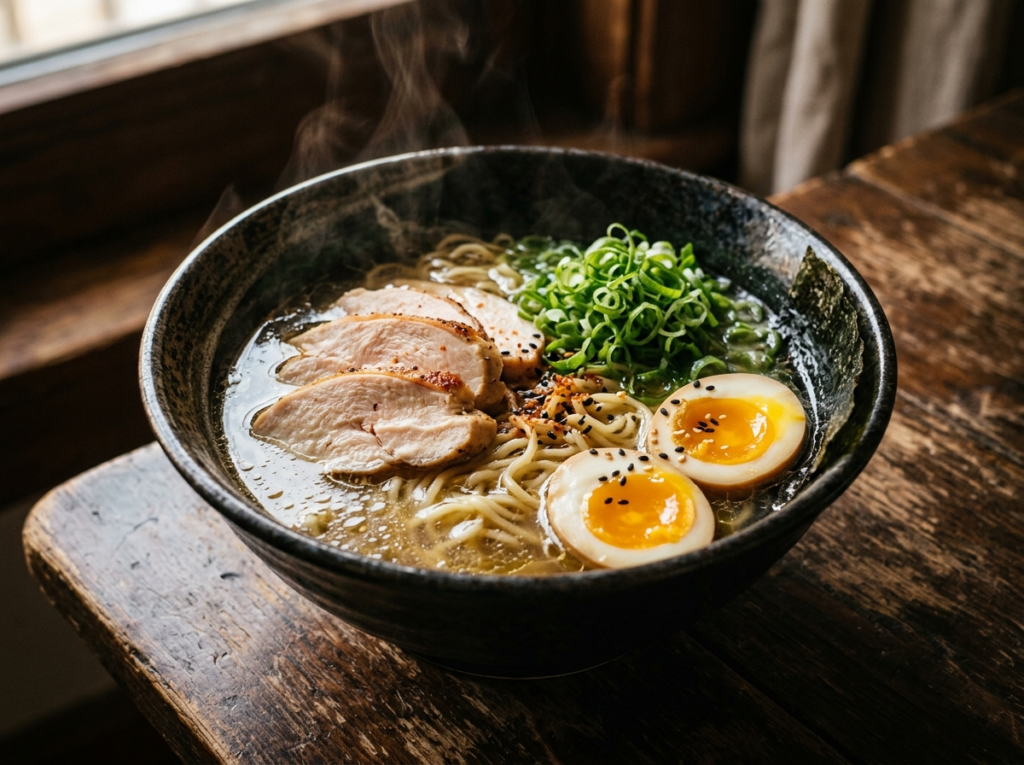
Recipe 11: Chicken Ramen
Serves 2 · Prep 10 min · Cook 20 min
Ingredients
- 1 chicken breast, thinly sliced
- 2 packs ramen noodles (seasoning packet discarded, or use store-bought broth base)
- 4 cups chicken broth
- 2 tbsp soy sauce
- 1 tbsp miso paste (optional)
- 1 tsp grated ginger, 1 clove garlic, minced
- 2 soft-boiled eggs
- Green onions, sliced, to finish
Method
- Sear the sliced chicken in a splash of oil, 3–4 minutes, until cooked through. Set aside.
- In a pot, sauté ginger and garlic 30 seconds. Add broth, soy sauce, and miso if using. Simmer 10 minutes.
- Cook noodles separately per package instructions, divide into bowls.
- Ladle hot broth over noodles, top with chicken, halved soft-boiled eggs, and green onions.
Nutrition (per serving, estimated): ~430 calories | 36g protein | 38g carbs | 14g fat
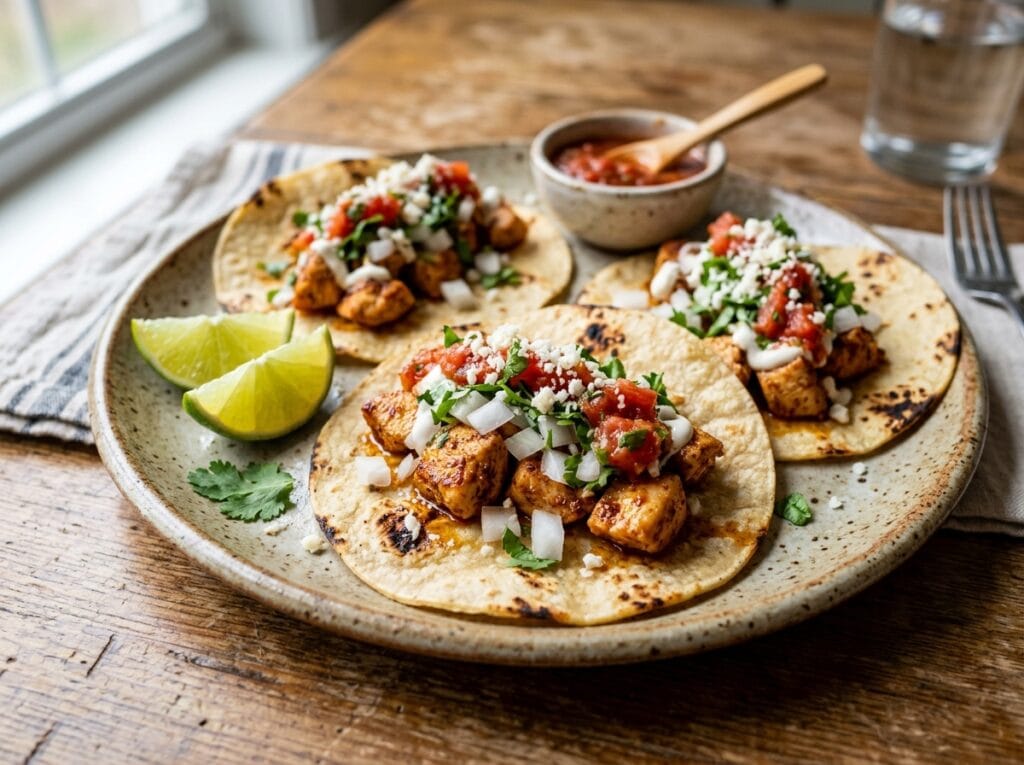
Recipe 12: Chicken Tacos
Serves 4 · Prep 10 min · Cook 15 min
Ingredients
- 2 chicken breasts, diced
- 1 tbsp olive oil
- 1 tsp cumin, 1 tsp chili powder, ½ tsp smoked paprika
- Salt and pepper
- 8 small tortillas
- Toppings: diced onion, cilantro, lime, salsa, shredded cheese
Method
- Season the diced chicken. Sear in oil over medium-high, 6–7 minutes, stirring occasionally, until browned and 165°F.
- Warm the tortillas in a dry skillet.
- Fill with chicken and toppings of choice.
Nutrition (per serving, estimated): ~310 calories | 30g protein | 22g carbs | 10g fat
5 Ways to Use Leftover Cooked Chicken
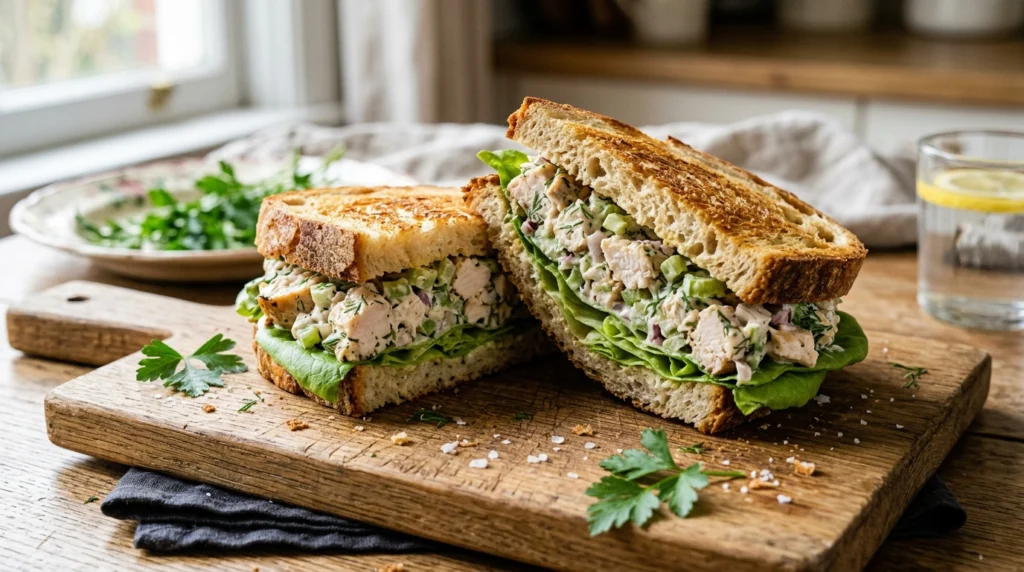
Chicken salad sandwiches (5 min). 2 cups shredded chicken, 3 tbsp mayo, 2 tbsp diced celery, 1 tbsp lemon juice, salt and pepper. Mix, pile onto toasted sourdough or into lettuce cups. Dried cranberries and toasted pecans turn it into something worth making on purpose, not just using up leftovers.
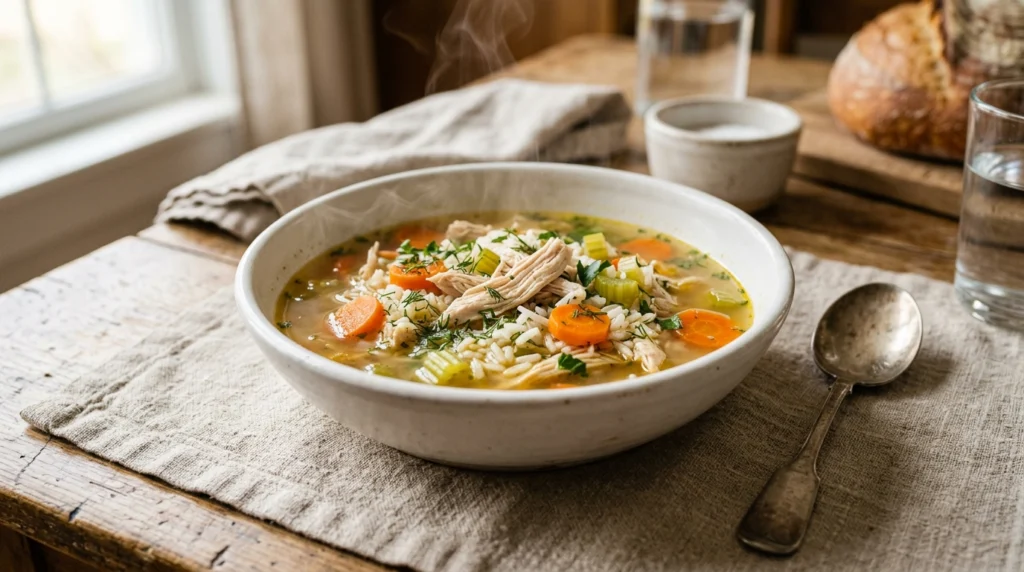
Chicken and rice soup (20 min). 2 cups shredded chicken, 6 cups chicken broth, 1 cup cooked rice, 2 carrots and 2 celery stalks (diced), 1/2 onion (diced), thyme. Sauté vegetables 5 minutes, broth and thyme in, simmer 10 minutes, stir in chicken and rice at the end to warm through without overcooking them further.
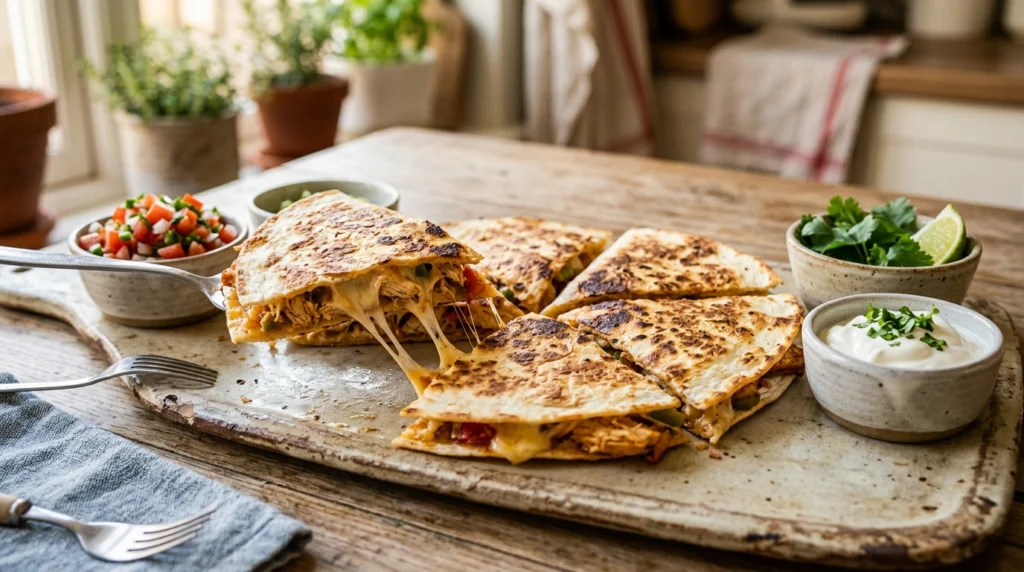
Chicken quesadillas (8 min). 1 cup shredded chicken, 2 flour tortillas, 60g shredded Monterey Jack, handful of chopped spinach. Chicken and cheese on one tortilla half, fold, dry skillet 2–3 minutes per side until golden.
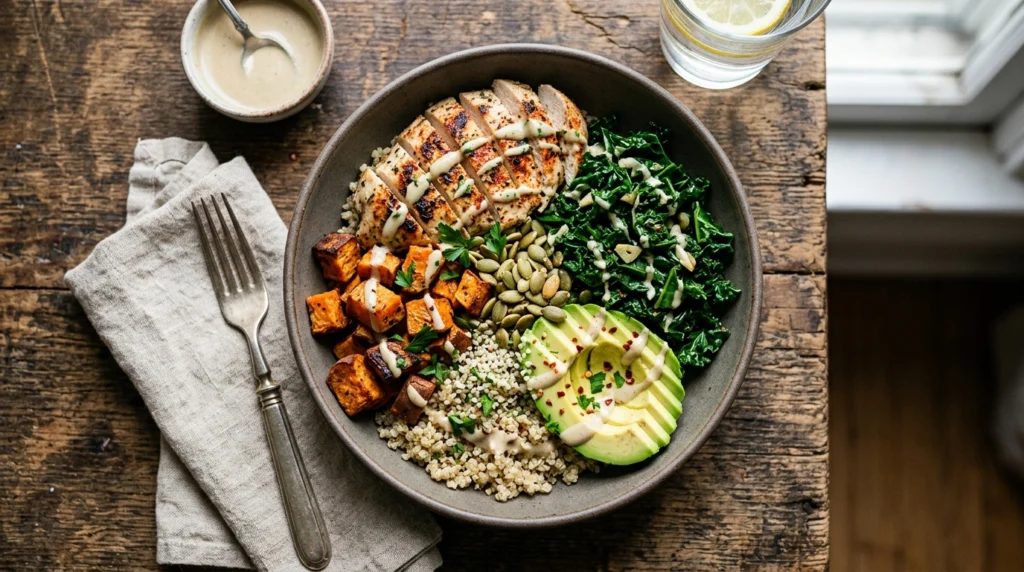
Grain bowl (10 min). 1 cup shredded or sliced chicken, 1 cup cooked quinoa or farro, roasted sweet potato, sautéed kale, drizzle of tahini. Assemble in a bowl. Genuinely different meal from the one the chicken started in, which is the whole point of good leftovers.
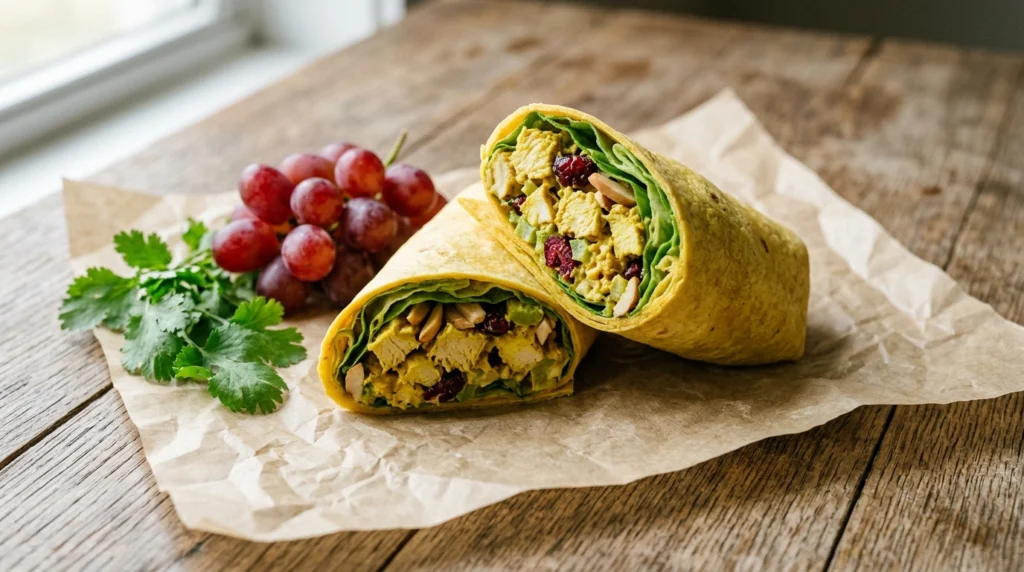
Curried chicken salad wraps (5 min). 2 cups shredded chicken, 3 tbsp mayo or Greek yogurt, 1 tsp curry powder, 1 tbsp chutney, handful of raisins. Mix, wrap in a large tortilla with lettuce. A completely different flavor direction from the classic version above.
Looking for more ideas with Leftover Cooked Chicken? Check out these easy leftover rotisserie chicken recipes for more simple and delicious ways to use up leftover chicken.
Sides That Actually Pair Well
For a cozy meal: roasted carrots and parsnips with honey and thyme · garlic mashed potatoes or roasted sweet potato wedges · farro or quinoa with fresh herbs.
For something lighter: apple and cabbage slaw with cider vinegar · mixed greens with toasted nuts and a light vinaigrette · cucumber and radish salad with lemon-dill dressing.
Common Mistakes (And Why They Happen)
| Problem | Cause | Fix |
|---|---|---|
| Dry, chalky texture | Cooked past 165°F | Thermometer, pulled immediately — see technique section |
| One end dry, one end underdone | Uneven thickness | Pound to even thickness before cooking |
| Bland even with seasoning | Salted right before cooking, not ahead | Salt 30 min ahead (or overnight) — see technique section |
| Pale, no crust | Pan not hot enough, or chicken wet on the surface | Pat dry thoroughly; make sure the pan is properly preheated before the chicken goes in |
| Tough exterior, dry interior | Heat too high, cooked too fast from cold | Medium-high, not high; let chicken come toward room temp for 10–15 min before cooking if time allows |
Storage
The short version, consistent with our other chicken guides: cool within 2 hours, refrigerate airtight 3–4 days, freeze up to 4 months, per USDA guidance .
For meal prep, this Crock Pot chicken breast method is an easy way to cook several chicken breasts at once.
FAQ
Why does my chicken breast always come out dry? Almost always one of three things: cooked past 165°F, uneven thickness, or no advance salting. All three are covered in the technique section above — fixing all three at once is what actually solves it.
Is dry-brining (salting ahead) really worth the extra step? Yes, and it’s the single highest-impact change in this article. Even 30 minutes makes a real difference; overnight (uncovered, in the fridge) is even better and also dries the surface slightly for a better sear.
Can chicken breast be slightly pink and still be safe? Sometimes, yes. Color isn’t a reliable doneness test — factors like the bird’s age, diet, and even the cooking method can leave a pink tinge in fully cooked meat, particularly near the bone. Temperature is the only real test: 165°F in the thickest part means it’s done, pink tinge or not.
Is 160°F safe if I let it rest? Carryover cooking (the temperature continuing to rise after you pull the meat from heat) is real and often adds a few degrees during a 5-minute rest — which is why some experienced cooks pull slightly under 165°F on purpose. That said, USDA’s stated safe minimum is 165°F measured directly, and carryover isn’t guaranteed to be consistent. The straightforward, no-guesswork version: pull at 165°F. If you want to use carryover intentionally, confirm the final resting temperature with your thermometer rather than assuming it got there.
Why does restaurant chicken always seem juicier than homemade? A few compounding factors: many restaurants brine or velvet the chicken (a Chinese technique using a light cornstarch-and-egg-white coating that seals in moisture), baste with butter over high heat, and are working with commercial equipment that holds heat more consistently than a home stove. The dry-brine method in this article gets you most of the way there without special equipment.
Should I cover chicken while it bakes? Depends on the result you want. Covering with foil traps steam and keeps the chicken more moist, but limits browning. Uncovered browns and crisps better (important for the herb-crust recipe above) but can dry out faster if left too long. For a plain bake that’s browning too fast before it’s cooked through, tenting loosely with foil partway through is a reasonable middle ground.
Is brining better than marinating? They do different jobs. A wet brine (salt dissolved in water) works primarily through osmosis to help the meat hold onto moisture — good for juiciness, but can dilute flavor if the brine itself isn’t well seasoned. A marinade (usually acid, oil, and aromatics) mainly adds surface flavor and only lightly tenderizes; too much acid for too long can actually toughen the exterior. The dry-brine method used throughout this article — salt directly on the meat, no added liquid — gets much of brining’s moisture benefit without the dilution, which is why it’s the default technique here.
Can I cook chicken breast in butter only, no oil? Not at full searing heat — butter’s milk solids burn well before oil reaches searing temperature, so straight butter over medium-high will blacken before the chicken browns properly. Either use clarified butter/ghee (the milk solids are removed, so it can take the heat), or do what Recipe 1 does: oil for the sear, butter added afterward for flavor.
Can I bake chicken breast from frozen? Yes, unlike a slow cooker — oven baking is fast enough that USDA guidance allows cooking chicken from frozen safely, though it takes roughly 50% longer and you should always confirm 165°F rather than trusting a time estimate. Pan-searing from frozen isn’t recommended; it won’t cook evenly.
What’s the difference between poaching and boiling chicken? Poaching keeps the liquid at a bare simmer — small occasional bubbles, not a rolling boil. Boiling agitates the meat and toughens it; poaching is what actually produces tender, easy-to-shred chicken for salads and soups.
How do I meal prep chicken breast for the week? Cook a large batch using the oven method (easiest to scale), pounded to even thickness for consistent timing. Portion into containers once cooled. Plain cooked chicken reheats better with a splash of broth — see the mistakes table above for why it dries out otherwise.
Can I use this timing for chicken thighs instead? Thighs are more forgiving due to higher fat content and can handle a few extra minutes without drying out — but they’re a different cut with their own best techniques, not just a swap into these exact times.
If You Remember Only Three Things
- Salt it 30 minutes ahead. The single biggest, most-skipped improvement.
- Pound it even. Fixes the “one end dry” problem before it starts.
- Pull it at exactly 165°F. Not by the clock, not by cutting in to check — by thermometer.
Everything else in this article — which recipe, which sauce, which sides — is just picking the version that fits tonight.
More chicken in your rotation? Our Ground Chicken Recipes guide , Easy Chicken and Rice methods , and Crock Pot Chicken Breast guide cover the same protein with different cuts and cooking methods.