
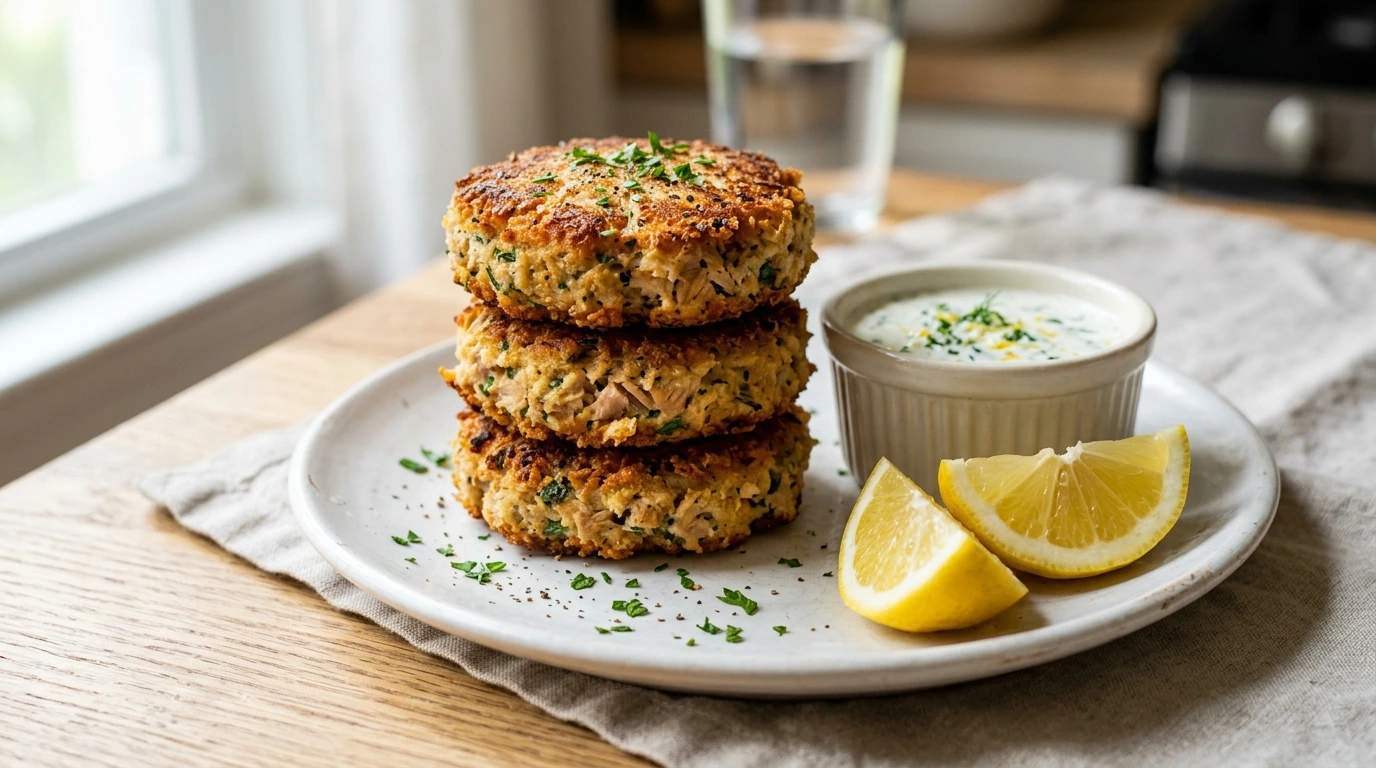
What to Make With Canned Tuna: 20 Ideas (+ 4 Real Recipes and the Mercury Question Nobody Answers)
Table of Contents
I probably keep more canned tuna in my pantry than any other single ingredient — it’s the protein I reach for when dinner has to happen in under 15 minutes and there’s nothing thawed. Over time I’ve landed on the four recipes below through a fair amount of trial and error: tuna cakes that actually hold together in the pan, a Greek yogurt tuna salad that doesn’t taste like a compromise, and the buying and storage questions I get asked most. Everything here is what’s actually in my rotation, not a theoretical list.
Canned tuna solves the “I have 10 minutes and need real protein” problem better than almost anything else in the pantry. Below: four complete recipes with real measurements, an honest answer on Greek yogurt vs. mayo, the mercury guidance most tuna articles skip entirely, and 20 more ideas organized by craving.
Greek Yogurt vs. Mayo in Tuna Salad: An Honest Comparison
Every “healthy tuna salad” post tells you to swap in Greek yogurt. Here’s what that swap actually changes, so you can decide instead of just being told:
| Mayo | Plain Greek Yogurt | Half-and-Half | |
|---|---|---|---|
| Protein per 2 tbsp | ~0g | ~5–6g | ~3g |
| Flavor | Rich, neutral | Tangy — needs balancing | Balanced |
| Texture | Silky, holds shape well | Looser, slightly wetter | Best of both |
| Best for | Classic flavor, kids | Lightest option, meal prep | Most people, most days |
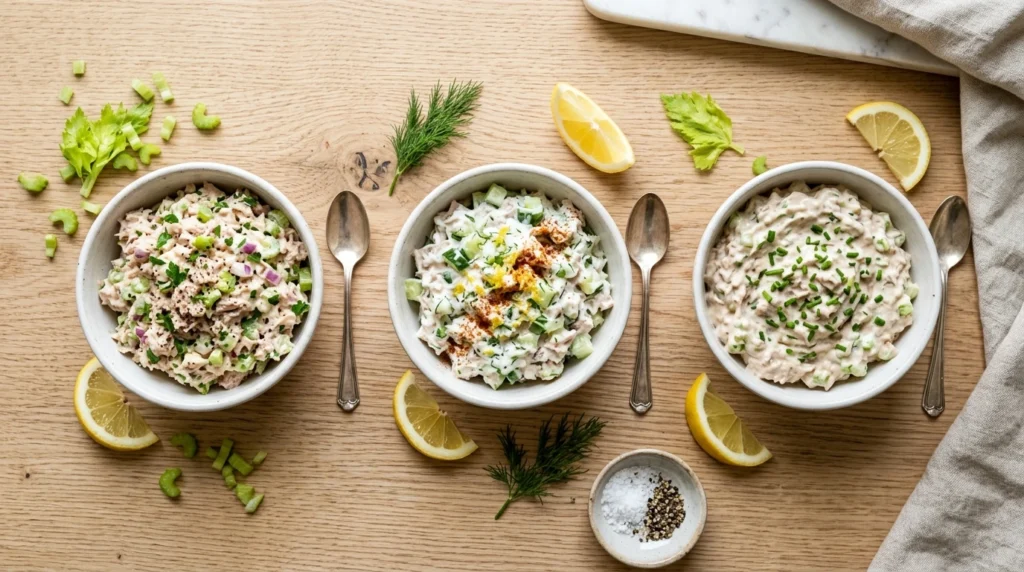
The honest take: straight Greek yogurt is genuinely fine and does taste different — tangier, lighter, less “classic tuna salad.” If you’ve tried straight yogurt once and didn’t love it, 50/50 with mayo plus a squeeze of lemon and a small spoon of Dijon balances the tang without losing all the protein benefit. This ratio is in the base recipe below.
Making the switch for breakfast too? Our protein yogurt bowl recipes use the same yogurt base in a completely different direction.
The Mercury Question Nobody Answers
Most tuna content talks about protein and omega-3s and never mentions the one thing worth actually knowing: not all canned tuna carries the same mercury level, and it affects how often it’s sensible to eat it.
General FDA/EPA guidance (verify current figures before publishing — this chart is periodically updated):
- Light/skipjack tuna is lower in mercury and generally fine several times a week for most adults.
- Albacore/white tuna runs higher in mercury and guidance typically recommends limiting it to about once a week.
- Pregnant or breastfeeding women, and young children have specific, lower limits — don’t guess; direct readers to the actual chart rather than restating numbers that could be outdated.
Practical takeaway for most healthy adults: light tuna a few times a week is unremarkable; if you’re eating tuna daily, favor light over albacore, or check the current chart for your situation.
The 4 Complete Recipes
The Base Tuna Salad (5 minutes, use it everywhere below)
Serves 2 | Prep 5 min
Why You’ll Love This
- Ready before the toaster finishes
- 26g protein, no cooking required
- The base for six other recipes in this post
Ingredients
- 2 cans (about 140g each, drained) light tuna in water
- 2 tbsp mayonnaise + 2 tbsp plain Greek yogurt (or all one or the other — see the comparison above)
- 1/2 tsp Dijon mustard — a small amount sharpens the whole thing without tasting mustardy; don’t skip it thinking it’s optional flavor, it’s doing real work
- 2 tbsp finely diced celery — the crunch matters more than people expect; without it the salad reads as flat texturally, even with good seasoning
- 2 tbsp finely diced red onion
- Juice of 1/2 lemon
- Salt and pepper to taste
Method: Drain tuna well, flake with a fork. Stir in everything else. Taste — Greek yogurt versions usually want an extra squeeze of lemon.
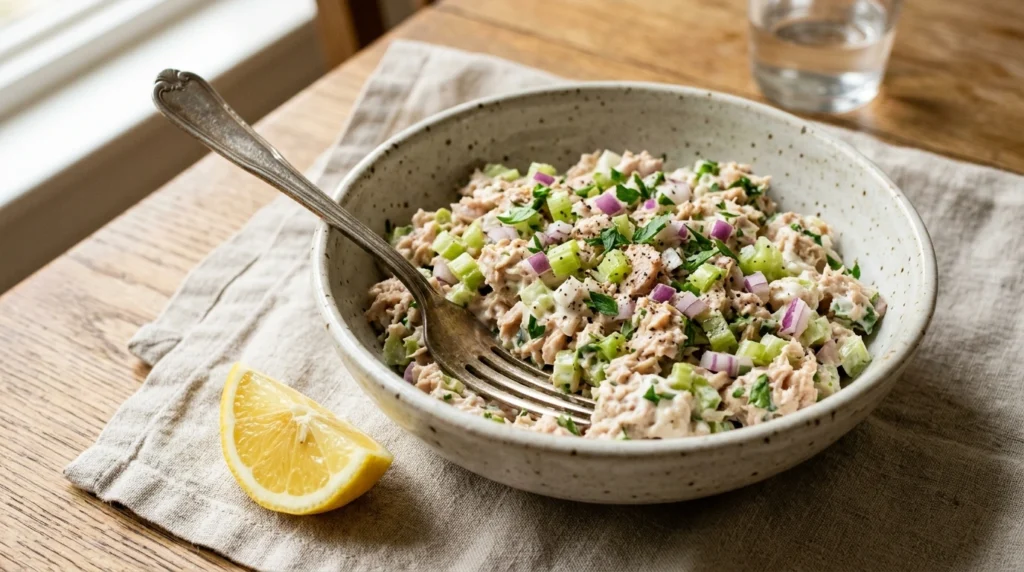
Nutrition (estimated, per serving): ~220 calories | 26g protein | 4g carbs | 10g fat
Classic Tuna Melt
Serves 2 | Prep 5 min | Cook 5 min
Why You’ll Love This
- Hot, melty comfort food from pantry ingredients
- Ready in 10 minutes total
- Kid-approved even when the rest of the meal isn’t
Ingredients
- 1 batch Base Tuna Salad (above)
- 4 slices whole grain bread, lightly toasted — toasting first, not after, is the one non-negotiable step (see below)
- 4 slices sharp cheddar (or 60g shredded) — sharp cheddar specifically; mild cheddar melts fine but gets lost against the tuna
- Sliced tomato (optional)
Method:
- Broiler on high, rack in the upper third.
- Toast the bread first — assembling on untoasted bread is the #1 reason tuna melts turn soggy. Toast it enough that it can hold up under the broiler.
- Spread tuna salad on toast, tomato slice if using, cheese on top.
- Broil 1–2 minutes, watching closely, until cheese is bubbling and just golden.
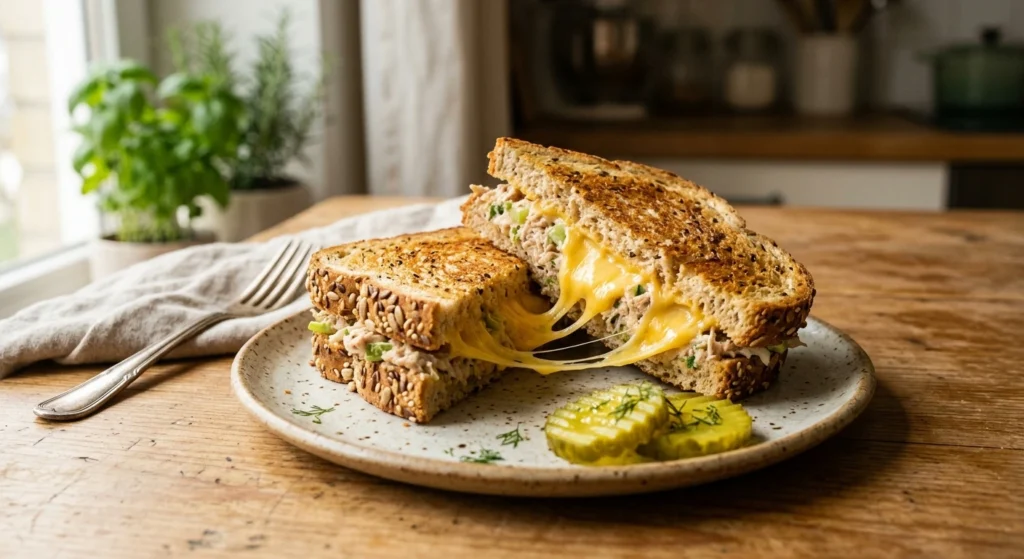
Nutrition (estimated, per serving): ~430 calories | 33g protein | 24g carbs | 22g fat
Tuna Cakes recipe with Lemon-Dill Yogurt Sauce
Makes 6 cakes (3 servings) | Prep 15 min | Chill 20 min | Cook 8 min
Why You’ll Love This
- Crispy outside, tender inside — doesn’t taste like “diet food”
- 34g protein per serving
- Freezer-friendly; make a double batch
Ingredients — cakes
- 3 cans (about 140g each, drained well) tuna in water — water-packed specifically; it’s easier to control the final moisture than oil-packed, which is why I use it here even though I don’t always default to water-packed elsewhere
- 1/2 cup (30g) panko breadcrumbs — panko over regular breadcrumbs for a lighter, less dense crumb
- 1 large egg
- 2 tbsp finely diced red onion
- 1 tbsp Dijon mustard
- 2 tbsp chopped fresh parsley
- Zest of 1 lemon — zest, not juice, goes in the mixture; juice would add moisture you’re trying to avoid, zest adds the flavor without it
- Salt and pepper
- 2 tbsp olive oil, for the pan
Ingredients — sauce
- 1/2 cup (120g) plain Greek yogurt
- 1 tbsp chopped fresh dill
- 1 tbsp lemon juice
- Pinch of salt
Method:
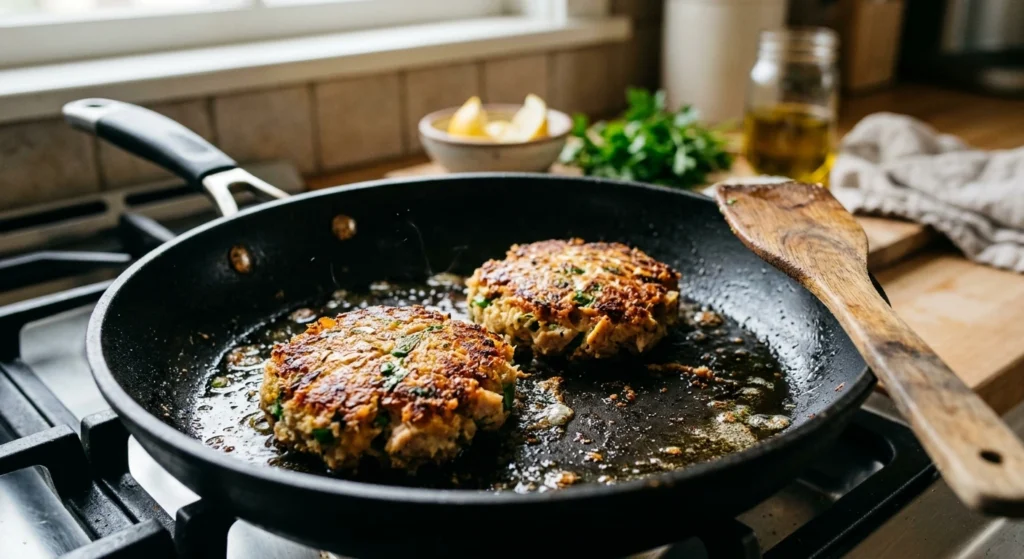
- Drain tuna very well — press it in a fine-mesh strainer with the back of a spoon. Excess moisture is the #1 reason tuna cakes fall apart in the pan.
- Mix cakes ingredients (except oil) gently until just combined. Form into 6 patties. Chill 20 minutes. This step firms the mixture and is what actually prevents falling apart.
- Whisk the sauce ingredients; refrigerate until serving.
- Heat oil in a nonstick skillet over medium. Cook cakes 3–4 minutes per side, until golden and heated through.
- Serve with the sauce.
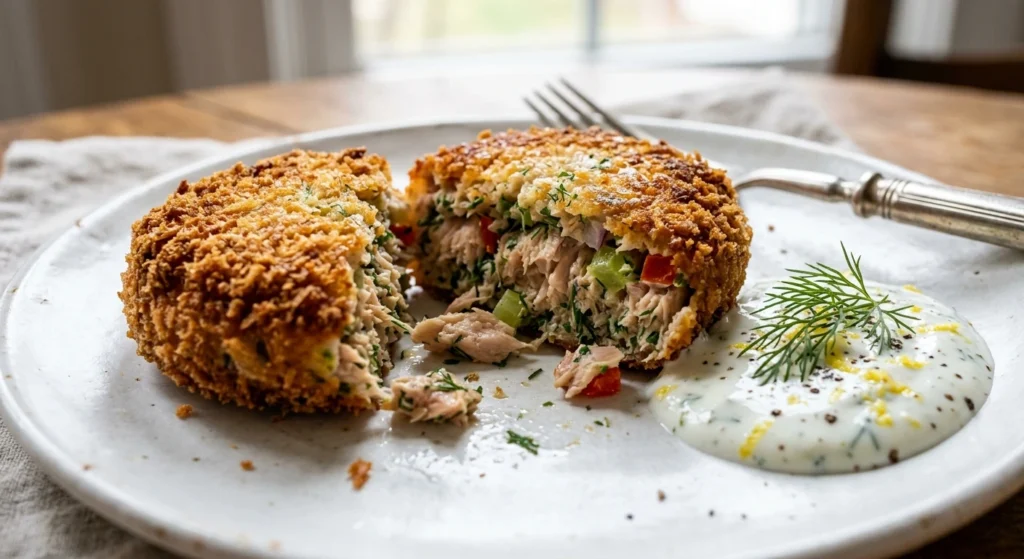
Nutrition (estimated, per serving, 2 cakes + sauce): ~310 calories | 34g protein | 14g carbs | 13g fat
One-Pot Tuna and Rice Skillet
Serves 3 | Prep 5 min | Cook 20 min
Uses the same liquid-to-rice ratio principle as our One-Pot Chicken and Rice , if you’ve made that one, this will feel familiar.
Why You’ll Love This
- One pan, minimal cleanup
- Pantry staples only — no last-minute grocery run
- 28g protein per serving
Ingredients
- 1 tbsp olive oil
- 1/2 onion, diced
- 1 cup (185g) long-grain white rice, rinsed
- 2 cups (475ml) low-sodium vegetable or chicken broth
- 2 cans (about 140g each, drained) tuna in water
- 1 cup (150g) frozen peas
- 1/2 tsp dried thyme, salt and pepper
- Squeeze of lemon, to finish
Method:
- Heat oil, cook onion 3 minutes.
- Add rinsed rice, stir 1 minute to coat.
- Pour in broth and thyme. Bring to a boil, then drop to the lowest simmer, cover, 18 minutes — don’t stir, don’t lift the lid.
- Off heat, rest covered 10 minutes. Fold in tuna and frozen peas. Lemon juice, fluff, serve.
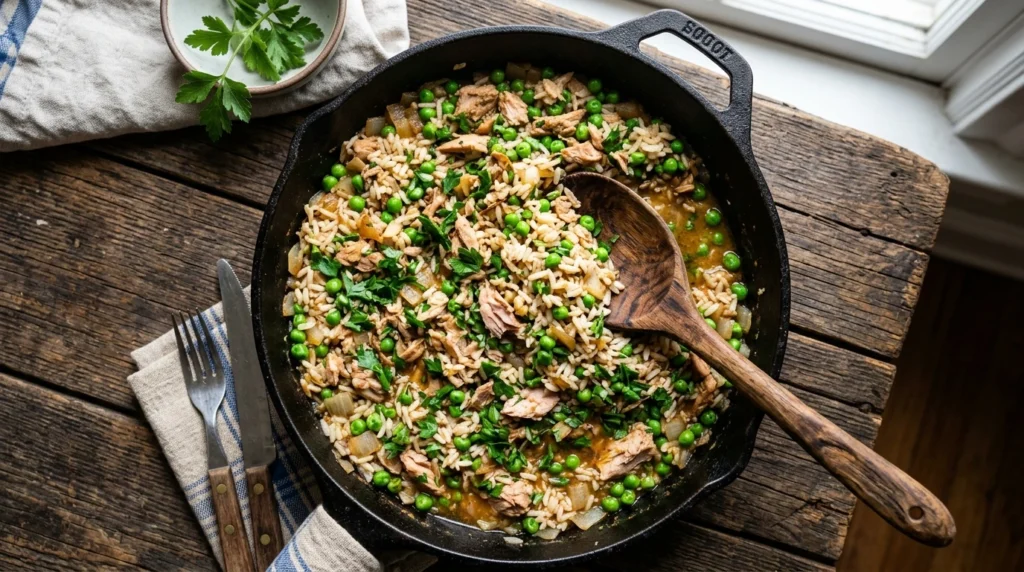
Nutrition (estimated, per serving): ~370 calories | 28g protein | 46g carbs | 6g fat
20 More Ideas, Organized by Craving
Fast / no-cook: Tuna avocado boats — halved avocado, tuna, lime, hot sauce · Tuna crackers — tuna salad on whole-grain crackers with cucumber · Tuna hummus wrap — hummus instead of mayo, spinach, tortilla · Tuna lettuce wraps — base salad in butter lettuce cups with cucumber.
Comfort food: Tuna casserole with crushed potato chip topping — classic, freezes well · Tuna stuffed bell peppers with quinoa · Tuna melts on English muffins — mini version, great for kids · Tuna mac and cheese — stir flaked tuna into your usual mac and cheese off heat.
Light / low-carb: Tuna Niçoise-style salad — greens, green beans, hard-boiled egg, olives · Tuna cucumber bites — cucumber rounds instead of crackers · Tuna zucchini boats — hollowed zucchini, tuna, tomato, baked 15 minutes · Tuna-stuffed tomatoes — hollowed tomatoes filled with base salad, a genuinely good way to get kids to eat something that looks fun.
Global flavors: Mediterranean tuna salad — kalamata olives, capers, red onion, olive oil and lemon instead of mayo · Spicy tuna salad — jalapeño, cilantro, lime, a little sriracha in the yogurt version · Tuna fried rice — leftover rice, egg, soy sauce, tuna folded in at the end · Curried tuna salad — curry powder, a spoon of chutney, raisins.
Meal prep / portable: Tuna and white bean salad — 1 can tuna, 1 can cannellini beans, red onion, parsley, olive oil, lemon; filling enough to be dinner · Quick tuna pasta salad — cooked pasta, tuna, cherry tomatoes, oil and vinegar; holds up better overnight than a mayo version · Tuna and vegetable quesadillas — tuna, cheese, spinach, folded tortilla · Mini tuna sliders — base salad on slider buns with cheese, broiled.
Buying Guide
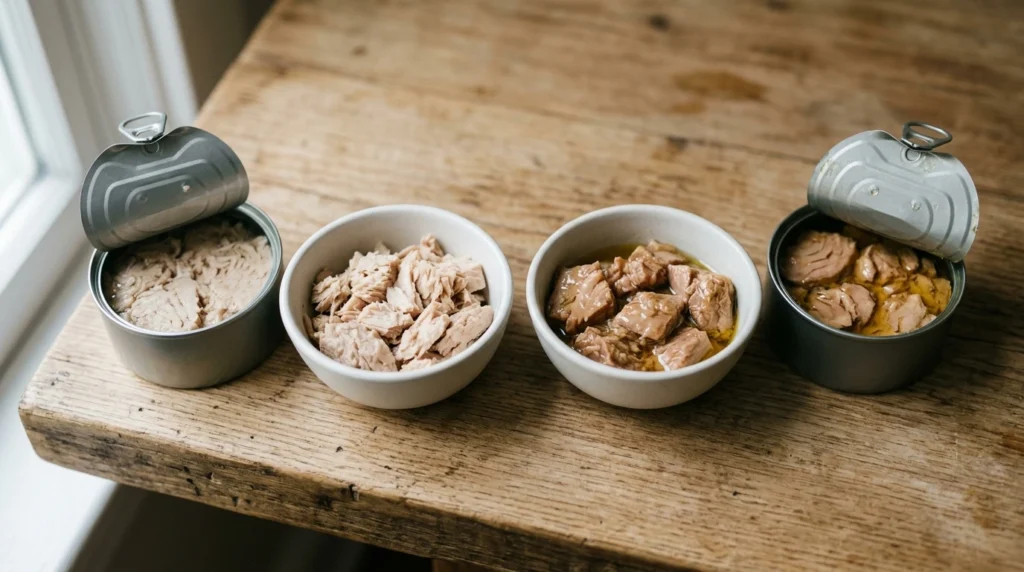
Water-Packed vs. Oil-Packed
| Water-Packed | Oil-Packed | |
|---|---|---|
| Calories | Lower | Higher (absorbs some oil) |
| Texture | Firmer, flakier | Softer, richer |
| Best for | Salads, anything with its own dressing | Pasta, crostini, anywhere you want richness without adding fat separately |
Chunk Light vs. Chunk White (Albacore)
| Chunk Light | Chunk White / Albacore | |
|---|---|---|
| Species | Usually skipjack | Albacore |
| Texture | Smaller flakes, softer | Firmer, larger pieces |
| Flavor | Milder | Richer, more pronounced |
| Mercury | Lower — see mercury section above | Higher — see mercury section above |
| Price | Usually cheaper | Usually pricier |
| Best for | Everyday tuna salad, casual eating | When texture and flavor matter more, e.g. tuna cakes or a salad where tuna is the star |
What to look for on the label
“Pole-and-line caught” or Marine Stewardship Council (MSC) certification both indicate lower-bycatch fishing methods, if that matters to you.
Can You Eat Canned Tuna Straight From the Can?
Yes — it’s fully cooked during canning, so there’s no food-safety reason not to eat it directly, drained, with nothing added. It’s just fairly bland and salty on its own; most people prefer at least a squeeze of lemon and some salt/pepper even for the fastest possible version.
Protein Comparison: Tuna vs. Other Common Proteins
| Protein (100g, cooked/drained) | Protein | Calories |
|---|---|---|
| Canned tuna (light, water) | ~26g | ~110 |
| Chicken breast | ~31g | ~165 |
| Ground chicken (see our [ground chicken guide — internal link]) | ~24g | ~170–190 |
| Canned salmon | ~22g | ~150 |
| Sardines | ~25g | ~210 |
Common Mistakes (And Why They Happen)
| Problem | Cause | Fix |
|---|---|---|
| Soggy tuna melt | Untoasted bread, or too much wet dressing | Toast the bread properly first; drain tuna well |
| Tuna cakes fall apart | Not drained enough, or skipped the chill | Press-drain in a strainer; don’t skip the 20-minute chill |
| Bland tuna salad | Under-seasoned, or tuna not well-drained (dilutes flavor) | Salt to taste at the end; drain tuna thoroughly before mixing |
| Watery pasta salad | Dressed too early, or wet tuna | Dress just before serving if possible; drain tuna hard |
| Overpowering yogurt tang | Straight Greek yogurt, no balancing | Use the half-and-half ratio in the base recipe, add a little Dijon |
Storage and Freezing
Once opened, move tuna out of the metal can — the can itself can affect flavor over time. Store in an airtight container in the fridge and use within 3–4 days . Prepared tuna salad (with mayo or yogurt) follows the same window, since dairy and egg-based dressings spoil faster than the tuna itself.
Can you freeze tuna? Plain flaked tuna with no dressing freezes acceptably for about a month. Dressed tuna salad — mayo or yogurt based — does not freeze well; both separate badly on thawing and the texture doesn’t recover. If you want to prep ahead, freeze the plain tuna and mix the dressing fresh when you’re ready to eat.
FAQ
Is it safe to eat canned tuna every day? Depends which kind. Light tuna, most guidance says it’s fine several times a week for most healthy adults. Albacore/white tuna runs higher in mercury and is usually recommended at about once a week. Pregnant women, breastfeeding women, and young children have their own specific limits — check the current FDA/EPA advice directly.
Is water-packed or oil-packed tuna healthier? Water-packed is lower in calories and fat; oil-packed has more calories from the absorbed oil but a richer flavor and texture. Neither is “unhealthy” — it’s a texture and calorie preference, not a safety question.
Can I substitute Greek yogurt for all the mayo in tuna salad? Yes — lower in fat, higher in protein, tangier. If you don’t love the flavor straight, the 50/50 ratio in the base recipe balances it.
How long does tuna salad last in the fridge? 3–4 days, whether it’s mayo- or yogurt-based, kept airtight and cold.
Can I freeze tuna salad? Not the dressed version. See the Storage and Freezing section above.
Why did my tuna cakes fall apart in the pan? Almost always excess moisture — drain the tuna hard before mixing, and don’t skip the 20-minute chill.
What’s the difference between chunk light and solid white tuna? See the full comparison table in the Buying Guide above — species, texture, flavor, mercury, and price all differ.
Can you eat canned tuna straight from the can? Yes — see the Buying Guide section above.
The Takeaway
Canned tuna is one of the few pantry staples that can become lunch, dinner, or a quick snack in minutes. Whether you reach for the classic tuna salad, crispy tuna cakes, or the one-pot rice skillet, keeping a few cans on hand means you’re never far from a real, high-protein meal. Start with the base tuna salad, then branch out into whichever recipe fits your week.
Building a pantry-protein rotation? Our Ground Chicken Recipes guide and Easy Chicken and Rice methods cover the same fast-dinner territory with different proteins, and our high-protein breakfast bowls put the same Greek yogurt base to work at the start of the day instead of lunch.