
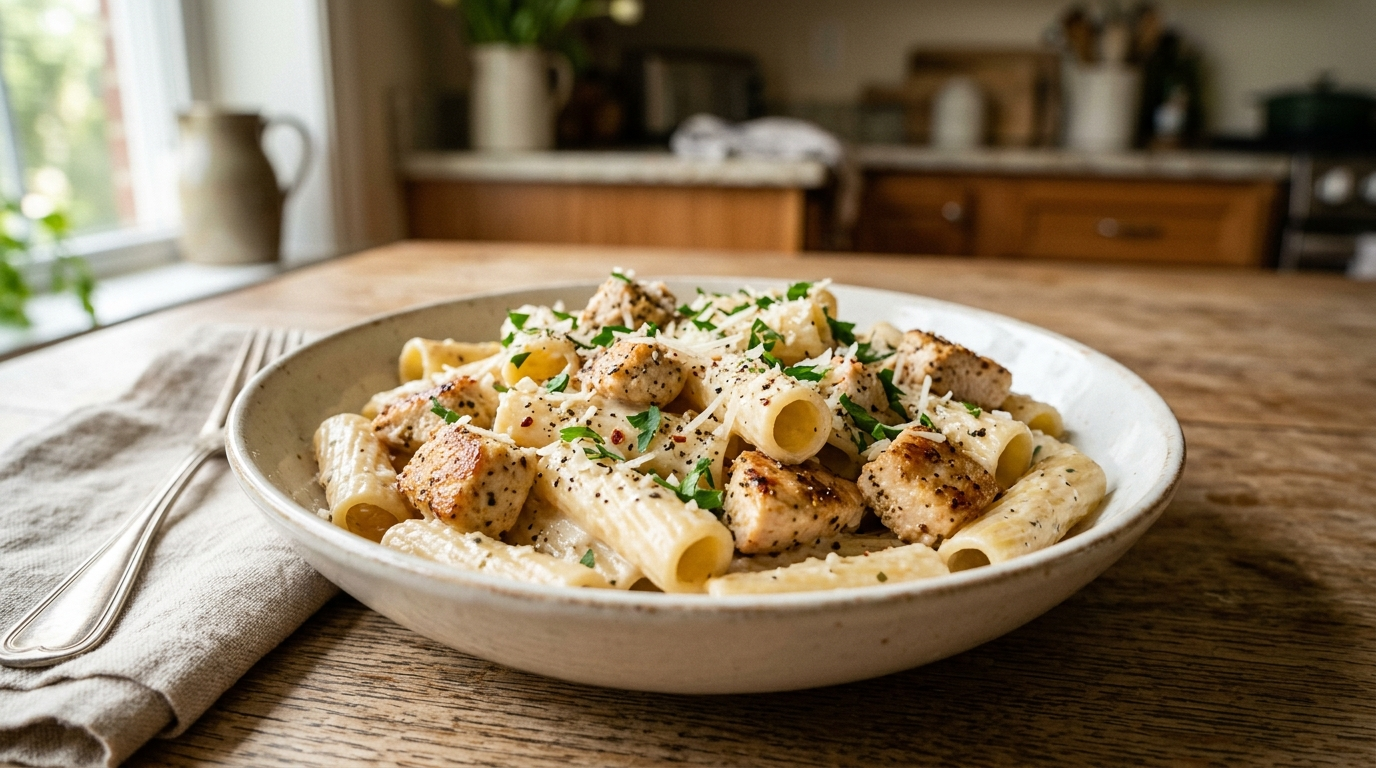
Greek Yogurt Chicken Pasta
Table of Contents
This creamy Greek yogurt chicken pasta gets its rich and creamy texture from Greek yogurt instead of heavy cream. It makes a tangy, protein-rich sauce that coats the pasta perfectly. The trick is to mix the yogurt with a little warm pasta water first, then add it to the pan to keep the sauce smooth and creamy.
Why This Greek Yogurt Chicken Pasta Works
Greek yogurt instead of heavy cream. Greek yogurt gives the sauce a creamy texture and gentle tang while also contributing protein to the dish.
If you like using Greek yogurt in creamy chicken recipes, try my healthy chicken salad with Greek yogurt and Healthy Tuna Salad with Greek Yogurt too.
Tempering helps prevent the yogurt from curdling. Mix it with a little warm liquid first, then add it to the pan over low heat. This keeps the sauce smooth and creamy.
Full-fat vs. low-fat yogurt. Full-fat Greek yogurt gives the sauce a richer, creamier texture. You can use 2% or non-fat Greek yogurt too, but whichever you choose, temper it with warm pasta water and avoid boiling the sauce after adding it.
Recipe
Prep time: 15 minutes | Cook time: 20 minutes | Serves: 4
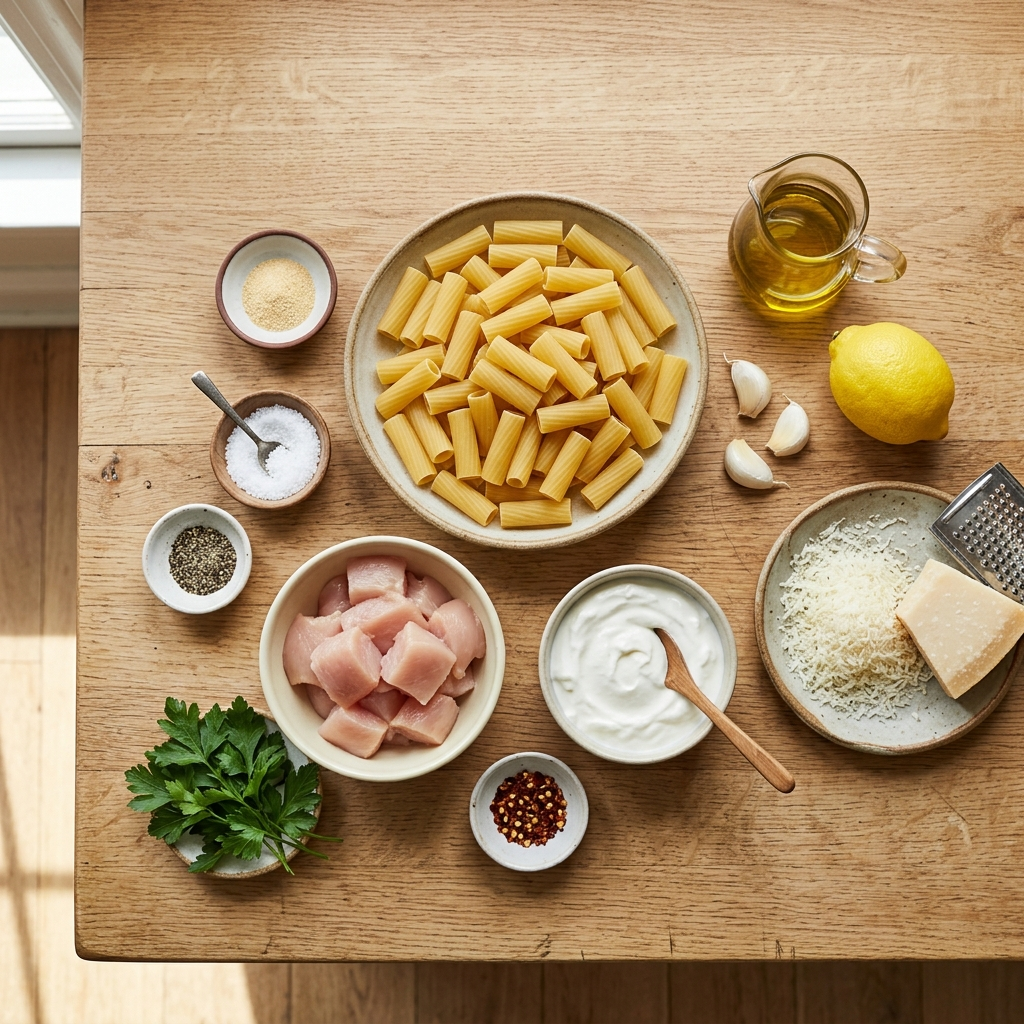
Ingredients
- 12 oz pasta (penne, fusilli, or rigatoni — a ridged or hollow shape holds the sauce best)
- 1 lb boneless, skinless chicken breast, cut into bite-sized pieces
- Salt, black pepper, and ½ tsp garlic powder
- 1 tbsp olive oil
- 2 garlic cloves, minced
- 1 cup plain Greek yogurt (full-fat recommended)
- ½ cup reserved pasta water, divided
- ½ cup freshly grated Parmesan, plus more for serving
- 1 tbsp fresh lemon juice
- Fresh parsley or basil, chopped, for garnish
- Red pepper flakes, optional
Instructions
- Bring a large pot of well-salted water to a boil. Cook the pasta until al dente. Before draining, reserve ½ cup of the starchy pasta water.
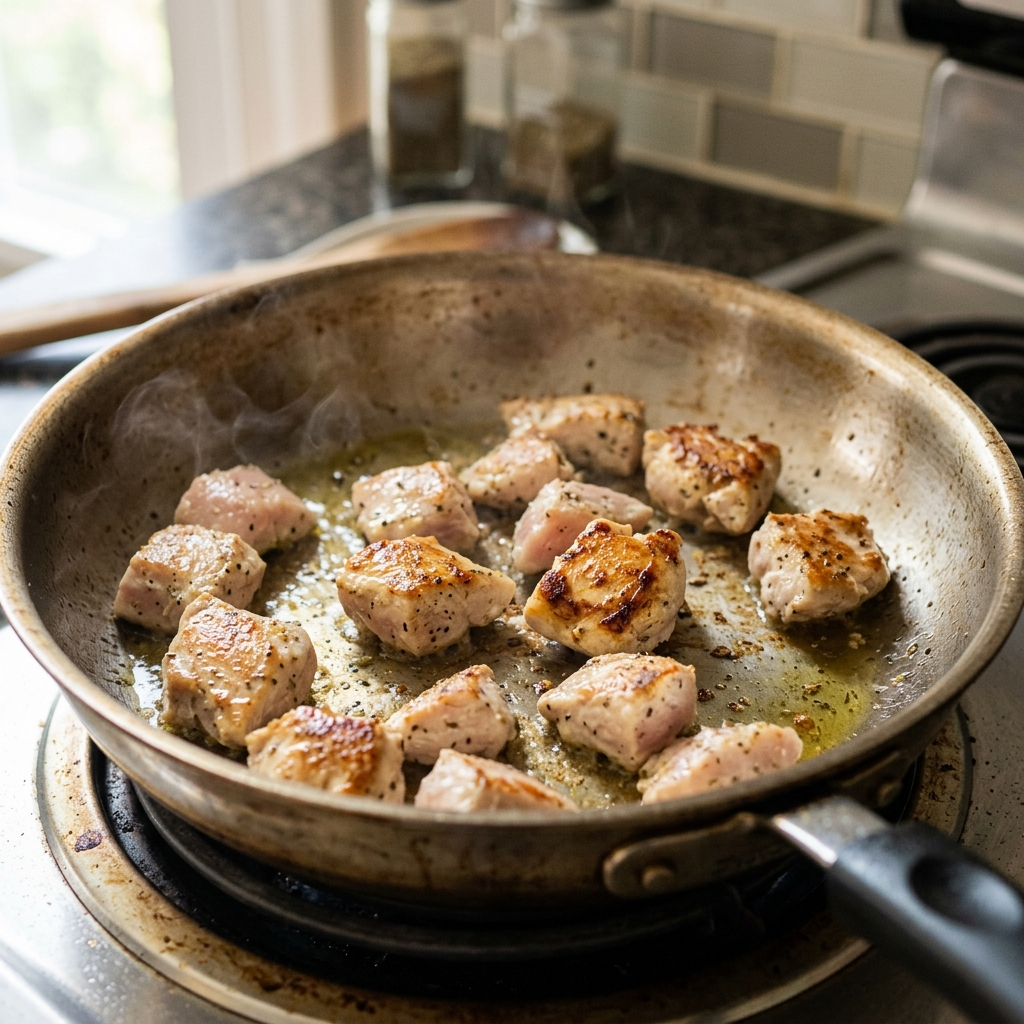
- While the pasta cooks, pat the chicken dry and season with salt, pepper, and garlic powder. Heat the olive oil in a large skillet over medium-high heat. Add the chicken in a single layer and cook until golden and the thickest pieces reach 165°F on an instant-read thermometer. If your skillet isn’t large enough to fit the chicken in a single layer, cook it in two batches to avoid overcrowding the pan. Transfer to a plate while you make the sauce.
An instant-read thermometer makes it easy to check the chicken without cutting into it.
A 12-inch skillet gives the chicken enough room to brown and makes it easier to toss everything together later.
3. Reduce the heat to medium-low. Add the garlic to the same skillet and cook, stirring, for about 30 seconds, until fragrant — don’t let it brown, or it turns bitter.
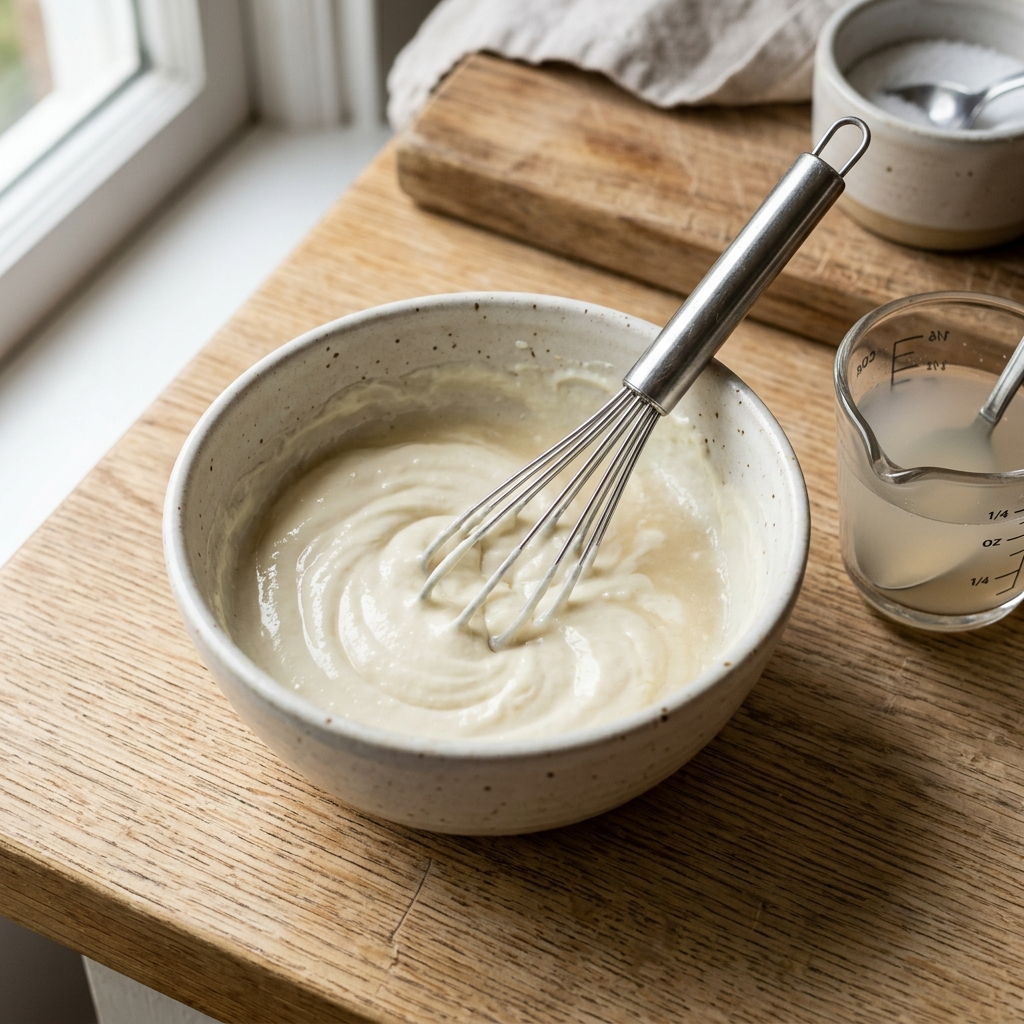
4. Remove the skillet from direct heat. In a small bowl, whisk the Greek yogurt with a few tablespoons of the warm reserved pasta water until smooth — this tempers the yogurt so it won’t seize when it meets the pan. Stir the tempered yogurt into the skillet.
5. Stir in the Parmesan and lemon juice, then season with salt and pepper. If the sauce seems too thick, add the remaining pasta water a tablespoon at a time until it reaches a smooth, glossy consistency.
6. Add the drained pasta and cooked chicken to the skillet and toss gently until evenly coated. If needed, return the skillet to very low heat briefly, stirring constantly, just until everything is warmed through. Avoid bringing the sauce to a boil.
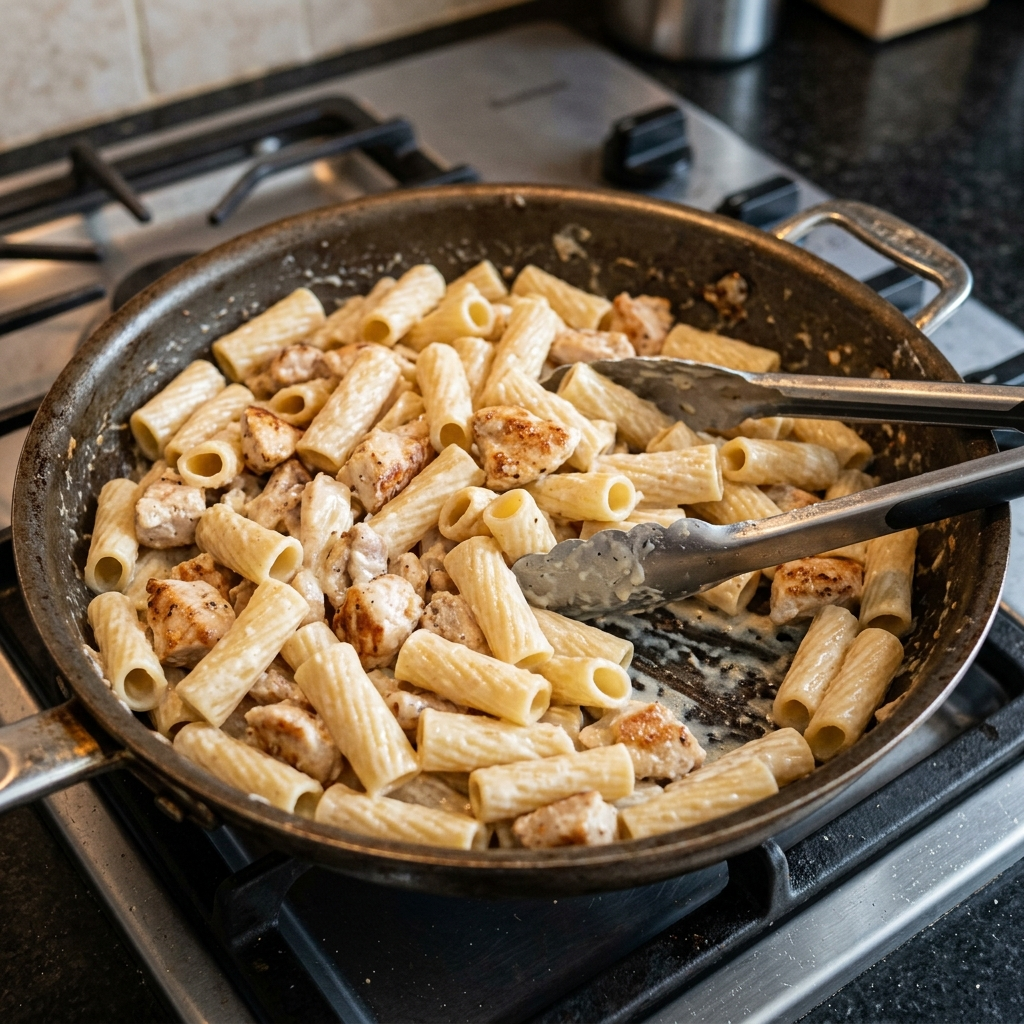
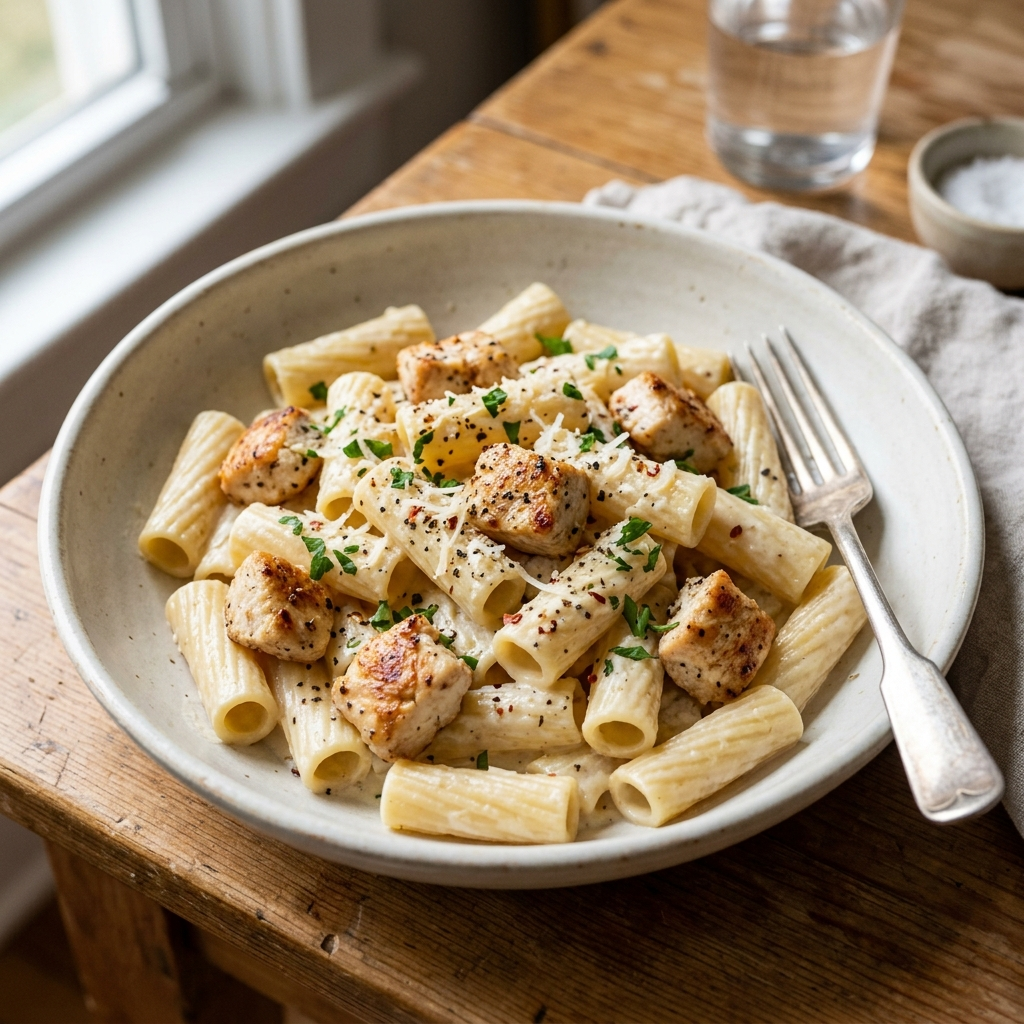
7. Serve immediately, topped with fresh herbs, extra Parmesan, and red pepper flakes if you’d like some heat.
Variations
Add vegetables: Stir in baby spinach during the last minute of cooking, until it wilts into the sauce. Broccoli florets or peas can be blanched briefly and added at the same point. Chopped sun-dried tomatoes can be stirred in with the pasta for a concentrated, tangy flavor.
Use chicken thighs: Boneless, skinless chicken thighs have a richer flavor and stay juicy during cooking. Cut them into bite-sized pieces and cook until they reach 165°F in the center.
Adjust the flavor: For more garlic flavor, add extra minced garlic or a pinch of garlic powder. For heat, add red pepper flakes or a pinch of cayenne. For more brightness, add extra lemon juice or zest.
Swap the pasta or cheese: Whole-wheat pasta adds fiber but may need a couple of extra minutes to cook. Chickpea or lentil-based pasta adds protein but can go from al dente to mushy quickly, so watch it closely. In place of Parmesan, Pecorino Romano gives a sharper, saltier finish; Grana Padano or aged Asiago both work well too.
Looking for more meat-free pasta ideas? Discover easy vegetarian pasta recipes that are perfect for quick and delicious weeknight meals.
Storage and Reheating
Let leftovers cool briefly, then transfer to an airtight container and refrigerate within 2 hours of cooking. Stored properly, it keeps for up to 3 days.
Reheat gently — high heat can cause the yogurt sauce to separate and turn watery. Warm it on the stovetop over low heat, or in the microwave at reduced power, stirring occasionally. The sauce will have thickened in the fridge, so add a splash of milk, chicken broth, or water as you reheat to bring it back to a smooth, glossy texture.
FAQ
How do I prevent the Greek yogurt from curdling in the sauce? Temper it first — whisk the yogurt with a little warm liquid (like reserved pasta water) in a separate bowl before adding it to the pan, and make sure the pan isn’t on direct high heat when the yogurt goes in. Cold yogurt hitting a hot pan directly is the most common cause of a grainy, separated sauce.
Can I use non-fat Greek yogurt? Yes. Full-fat or 2% Greek yogurt will give you a richer, creamier sauce, but non-fat Greek yogurt can work too. Temper it with warm pasta water and keep the heat gentle after adding it to the skillet.
How do I reheat leftovers without the sauce breaking? Use low, gentle heat rather than a high microwave setting, and add a splash of milk, broth, or water as you go to loosen the sauce back to its original texture.
How can I tell the chicken is cooked through without drying it out? Use an instant-read thermometer to check one of the thickest pieces. The chicken should reach 165°F in the center. Cooking the pieces in a single layer and avoiding overcrowding the skillet will also help them brown without overcooking.
What pasta shapes work best with a yogurt-based sauce? Shapes with ridges or hollow centers — penne, fusilli, rigatoni — hold onto a creamy sauce better than smooth, thin noodles.
Can I add vegetables to make this a more complete meal? Yes — baby spinach wilted in at the end, or sautéed broccoli, peas, or sun-dried tomatoes, all work well and add color and nutrients without changing the technique.