
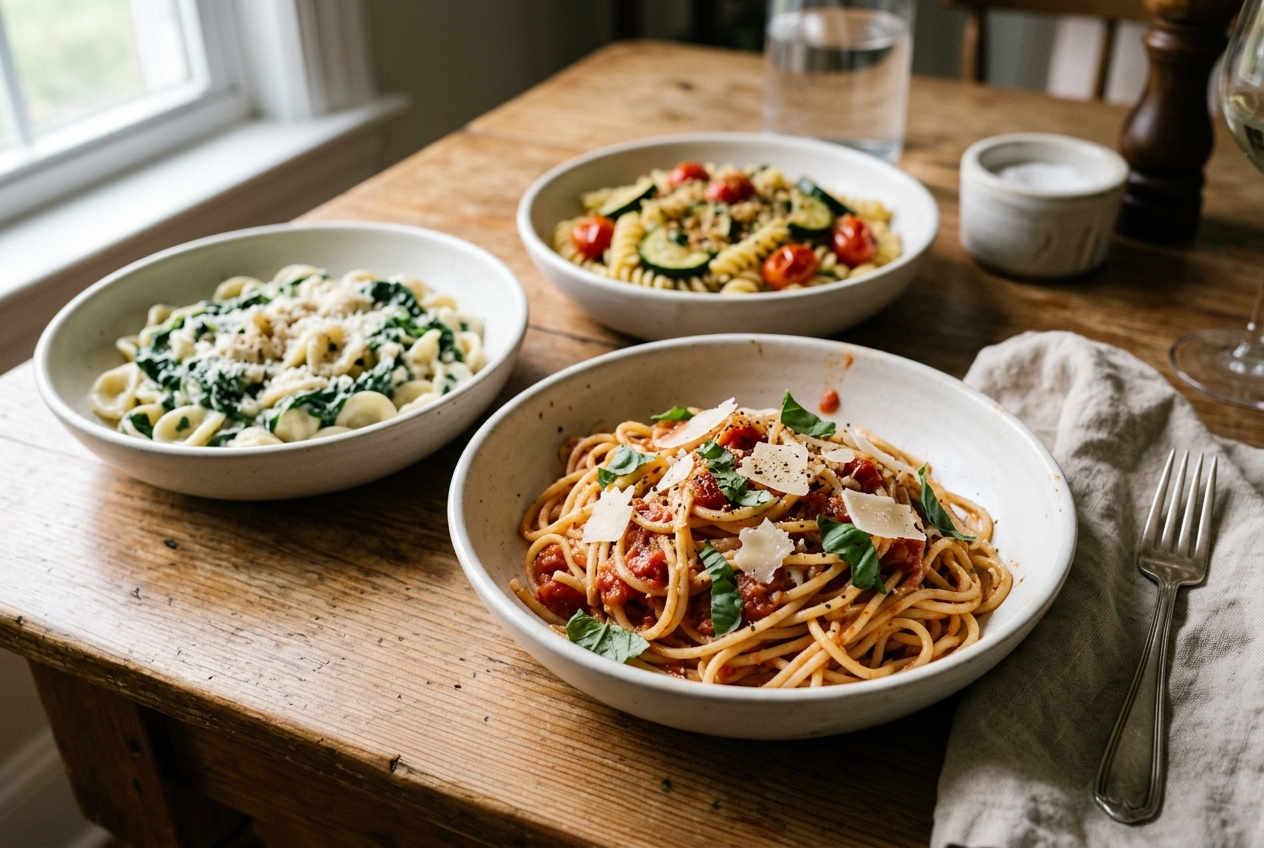
Vegetarian Pasta Recipes for Easy Weeknight Meals
Table of Contents
These easy vegetarian pasta recipes are perfect for weeknight dinners when you want something simple, flavorful, and meat-free. Pasta cooks quickly, works with almost any vegetables, herbs, or cheese you have on hand, and can be adapted into everything from tomato-based pasta to creamy one-pan dinners.
Below are two full recipes worth keeping in regular rotation, followed by a roundup of other vegetarian pasta ideas — organized by style, from quick tomato sauces to make-ahead bakes to cold pasta salads — so you can find whatever fits your night.
How to Match Pasta Shape to Saucesa
Before you get to any specific recipe, one habit will improve almost every pasta dish you make: matching the noodle shape to the sauce.
| Pasta Shape | Best Sauce Type | Why It Works |
|---|---|---|
| Spaghetti, linguine | Light, oil-based | Thin strands let a light sauce coat evenly without weighing it down |
| Penne, rigatoni | Chunky vegetable or thick ragù | Ridges and hollow centers catch bigger pieces |
| Fusilli, farfalle | Creamy or pesto | Spirals and folds trap sauce in every bite |
| Orzo, small shapes | Broths and light skillet dishes | Cooks quickly and blends into the dish rather than sitting on top |
Two Recipes Worth Knowing by Heart
Garlic Tomato Pasta with Basil and Parmesan
A fast, pantry-friendly sauce that works with either fresh or canned tomatoes, depending on the season.
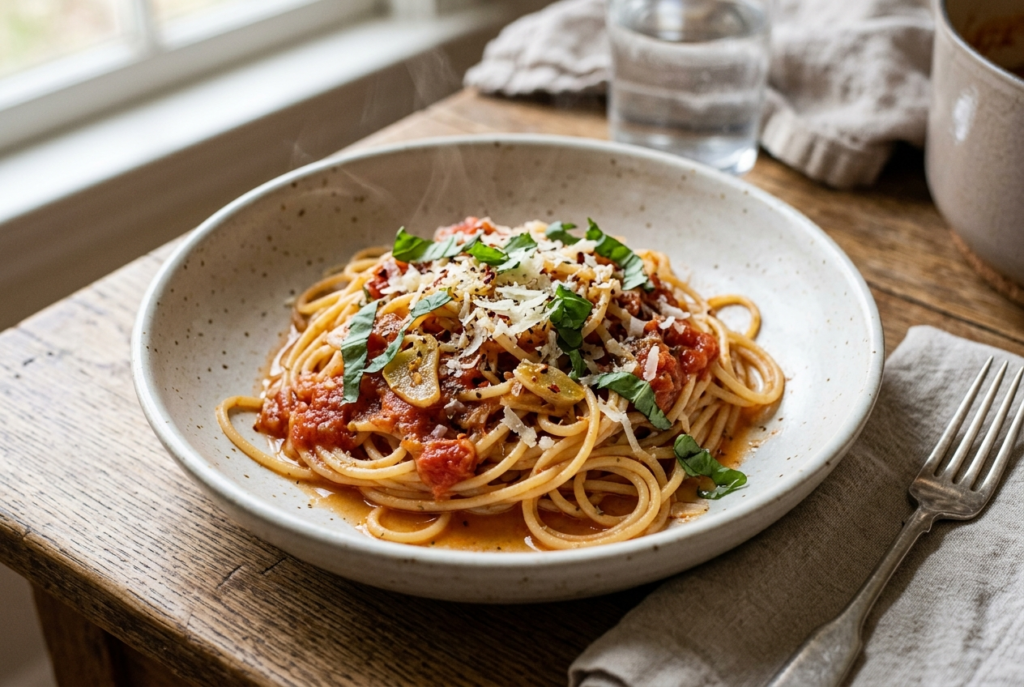
Prep time: 5 minutes | Cook time: 20 minutes | Serves: 4
Ingredients
- 12 oz spaghetti or linguine
- ¼ cup olive oil
- 6 garlic cloves, thinly sliced
- 1 (28 oz) can crushed tomatoes (or 2 lbs fresh, chopped, in season)
- ½ tsp red pepper flakes (optional)
- Salt and black pepper, to taste
- ½ cup fresh basil, torn
- ½ cup freshly grated Parmesan, plus more for serving
Instructions
- Bring a large pot of salted water to a boil and cook the pasta until al dente. Reserve 1 cup of pasta water before draining.
- While the pasta cooks, heat the olive oil in a large skillet over medium-low heat. Add the garlic and cook gently until golden, about 2 minutes — watch closely, since it burns fast.
- Add the tomatoes immediately to stop the garlic from browning further. Add red pepper flakes if using, season with salt and pepper, and simmer for 10–12 minutes, until slightly thickened.
- Add the drained pasta to the skillet along with a splash of the reserved pasta water. Toss to coat, adding more pasta water as needed for a glossy sauce.
- Remove from heat and stir in the basil and Parmesan. Serve immediately with extra Parmesan on top.
One-Pan Spinach and Ricotta Pasta
A creamy sauce built without heavy cream — starchy pasta water does the work instead.

Prep time: 5 minutes | Cook time: 20 minutes | Serves: 4
Ingredients
- 12 oz short pasta (shells or fusilli work well)
- 2 tbsp olive oil
- 2 garlic cloves, minced
- 3 cups vegetable broth, plus more as needed
- 4 oz baby spinach
- 1 cup ricotta
- ½ cup freshly grated Parmesan
- Salt and black pepper, to taste
- Zest of 1 lemon
Instructions
- Heat the olive oil in a large, wide skillet over medium heat. Add the garlic and cook for 30 seconds, until fragrant.
- Add the dry pasta and vegetable broth. Bring to a simmer, stirring frequently so the pasta doesn’t stick, and cook according to the package time, adding more broth or water if the pan dries out before the pasta is tender.
- Once the pasta is al dente, stir in the spinach and let it wilt, about 1 minute.
- Remove the skillet from the heat — this step matters, since ricotta can turn grainy if it hits high heat directly. Fold in the ricotta and Parmesan until the sauce turns smooth and glossy.
- Season with salt, pepper, and lemon zest. Serve right away.
Equipment tip: A large, wide skillet makes this one-pan pasta easier to cook because the pasta has enough room to simmer evenly. I recommend using a 12-inch nonstick skillet for recipes like this.
More Vegetarian Pasta Ideas to Try
Quick Tomato-Based
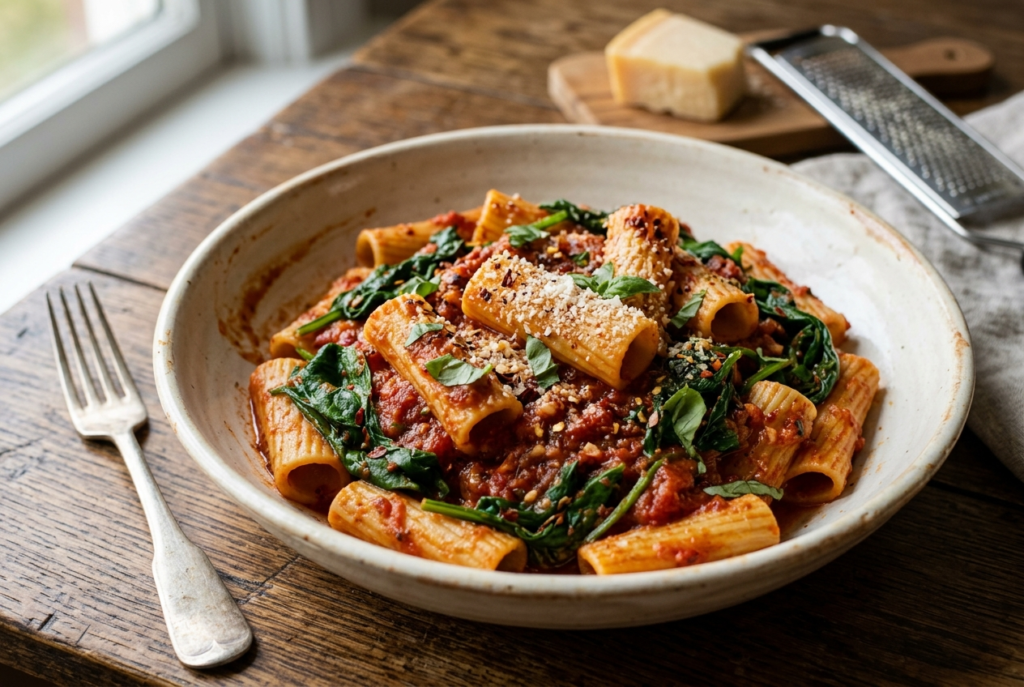
Spicy Arrabbiata with Wilted Greens — A fiery tomato sauce built on dried red chili flakes, finished with a handful of spinach or kale stirred in at the end. Start with a small pinch of chili and taste before adding more; a splash of pasta water tames the heat if it goes too far.
Roasted Red Pepper and Tomato Pasta — Blended roasted red peppers give this sauce a velvety, almost creamy texture without any dairy. Blend the peppers and tomatoes together, then reheat gently before tossing with pasta.
Creamy, No Heavy Cream
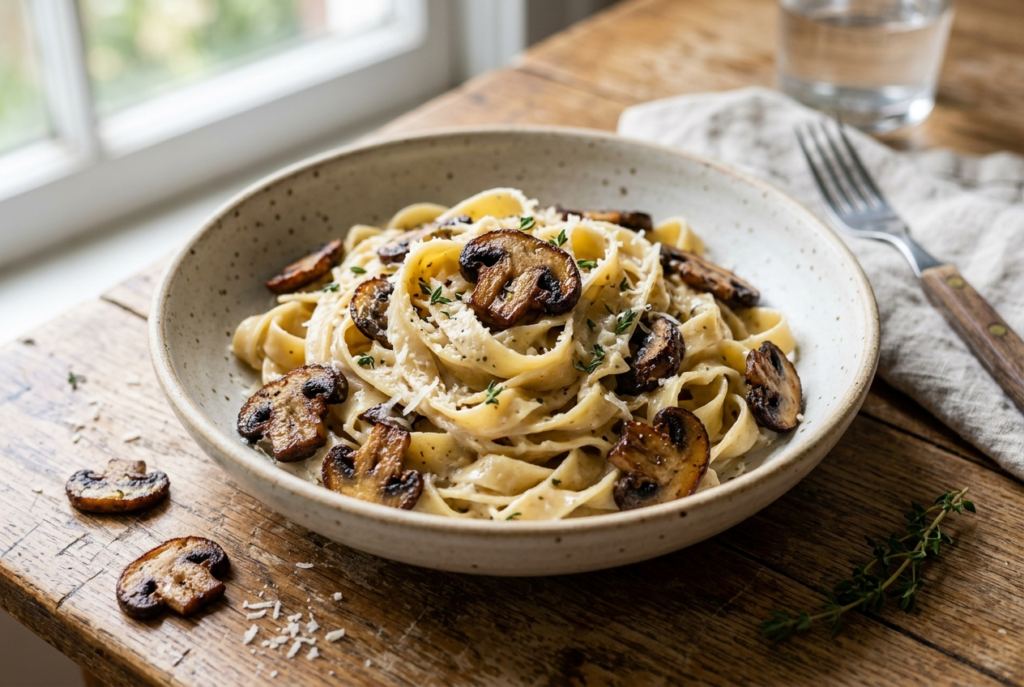
Creamy Mushroom Pasta with Garlic and Thyme — The key is patience: don’t crowd the mushrooms in the pan, or they’ll steam instead of browning. Let them sit undisturbed until deeply golden for the best flavor.
Lemon Parmesan Pasta with Peas — Parmesan and fresh lemon juice create a bright, light sauce that doesn’t need cream at all. Good for a lighter night after a heavier week.
Pesto-Based
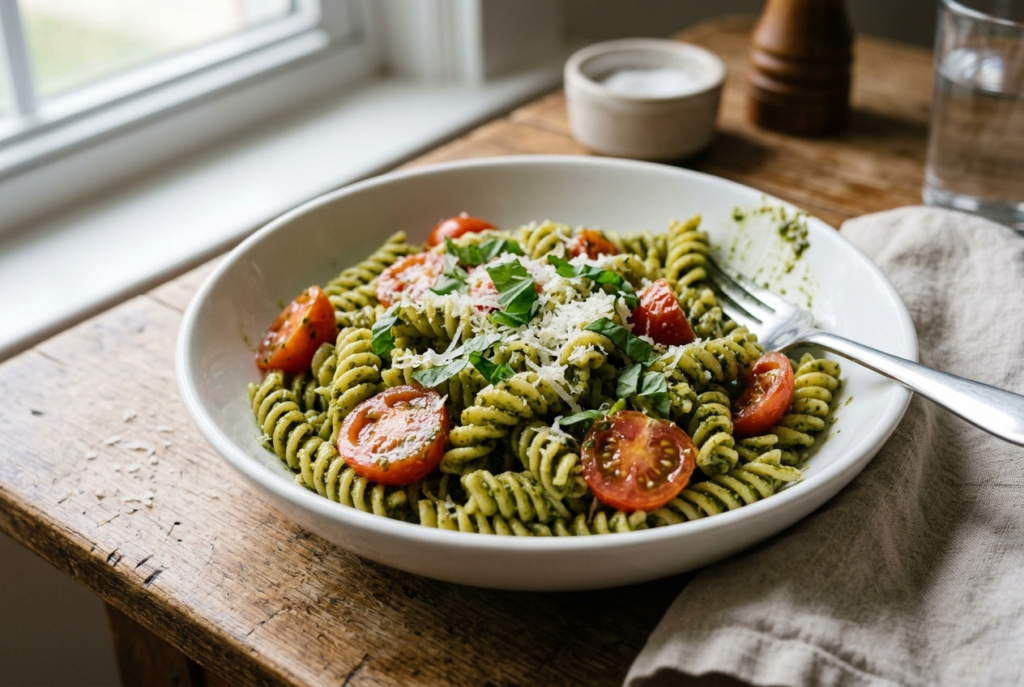
Basil Pesto Pasta with Cherry Tomatoes — Stir pesto in off the heat so it keeps its bright color and sharp flavor; high heat dulls basil and can separate the oil.
Spinach-Walnut Pesto with Roasted Vegetables — A heartier, nut-based pesto that pairs well with roasted zucchini, bell peppers, or broccoli. Swap walnuts for sunflower or pumpkin seeds for a nut-free version, and nutritional yeast for a dairy-free one.
Sun-Dried Tomato Pesto Pasta with Mozzarella — A more concentrated, tangy pesto that also works well served cold as a pasta salad.
Vegetable-Forward
Summer Squash Pasta with Corn and Fresh Herbs — Sauté the squash and corn over medium-high heat so they caramelize slightly rather than turning soft and watery.
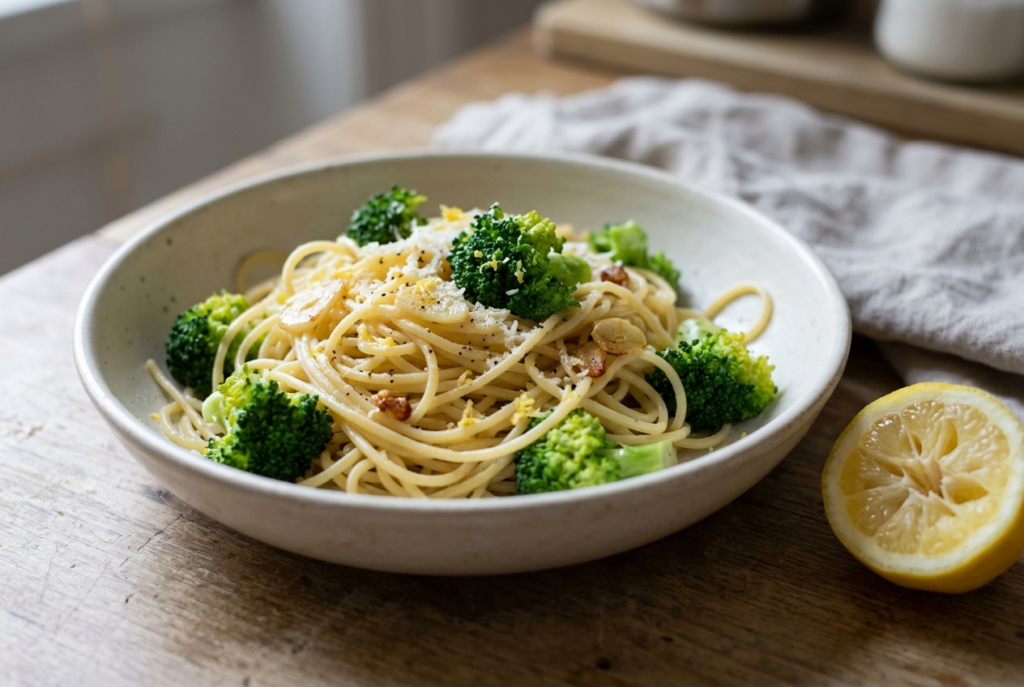
Broccoli and Garlic Spaghetti with Lemon — Blanch the broccoli directly in the pasta water during the last few minutes of cooking — it saves a pot and helps the broccoli pick up starch that helps the sauce cling.
Roasted Cauliflower Pasta with Crispy Breadcrumbs — Roasting brings out a nutty depth in the cauliflower; buttery toasted breadcrumbs on top add the crunch the dish needs.
Eggplant Pasta with Tomatoes and Fresh Basil — Salt the eggplant cubes for about 10 minutes and pat them dry before cooking — this draws out excess moisture so the eggplant browns instead of steaming.
One-Pot and One-Pan
One-Pot Creamy Tomato Pasta — The pasta cooks directly in tomato broth, so the starch thickens the sauce as it goes. Stir often so the noodles don’t clump at the bottom of the pot.
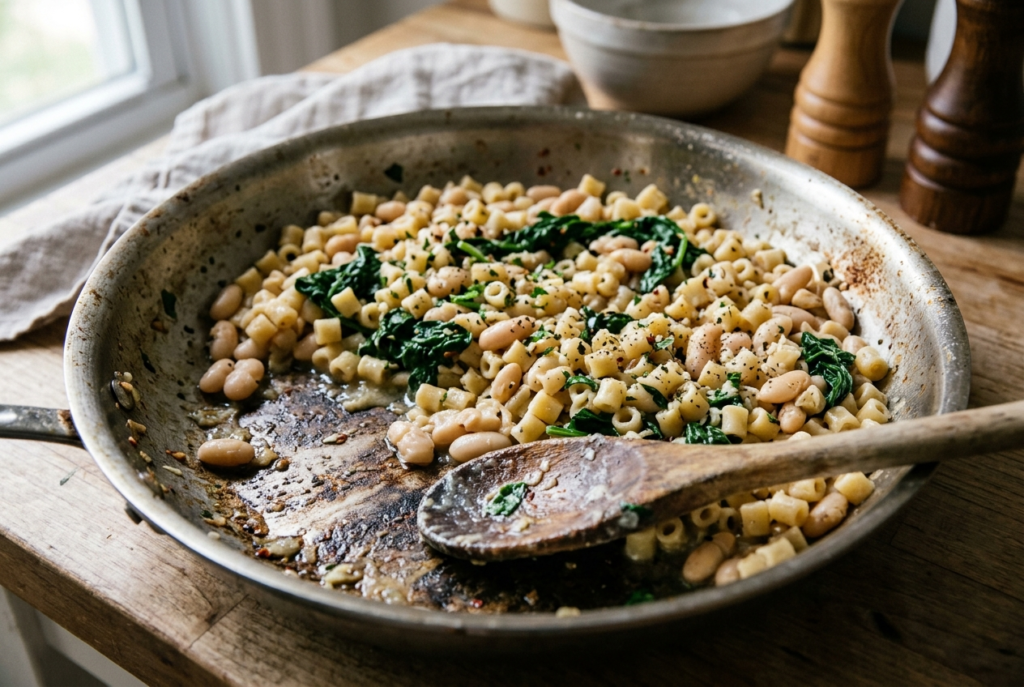
Skillet Pasta with White Beans and Spinach — Canned white beans add protein and a creamy texture without meat. Add them in the last few minutes so they warm through without breaking apart.
One-Pan Orzo with Zucchini and Feta — Orzo cooks fast and can go from al dente to mushy in under a minute, so start checking it a couple of minutes before the package time suggests.
Baked and Make-Ahead
Vegetable Baked Ziti with Ricotta and Mozzarella — Spread a thin layer of sauce on the bottom of the dish first so the pasta doesn’t stick or burn, then layer ziti, ricotta, and mozzarella so the cheese melts evenly throughout.
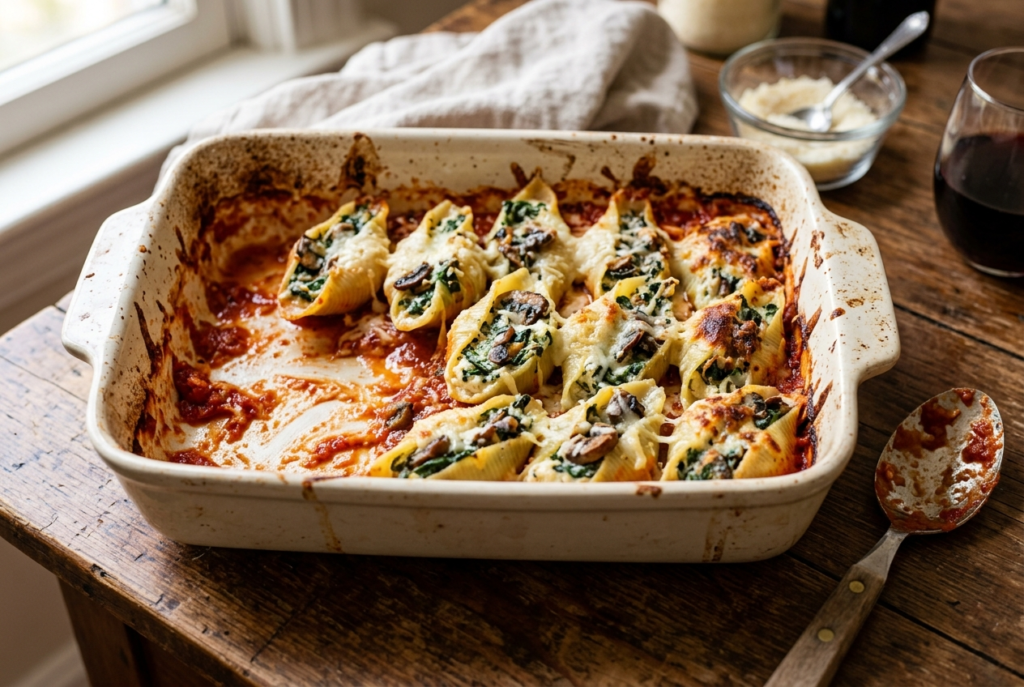
Spinach and Mushroom Stuffed Shells — A piping bag (or a sturdy plastic bag with the corner snipped off) fills the shells faster and cleaner than a spoon.
Both can be assembled up to 24 hours ahead and refrigerated, tightly covered, until you’re ready to bake. If baking straight from the fridge, add 10–15 minutes to the bake time, and cover with foil for the first half if the top is browning too quickly.
Pasta Salads
Italian Pasta Salad with Vegetables and Mozzarella — Bell peppers, cherry tomatoes, and pearl mozzarella tossed in a red wine vinaigrette. Choose a ridged shape like rotini or fusilli so the dressing has somewhere to hold on.
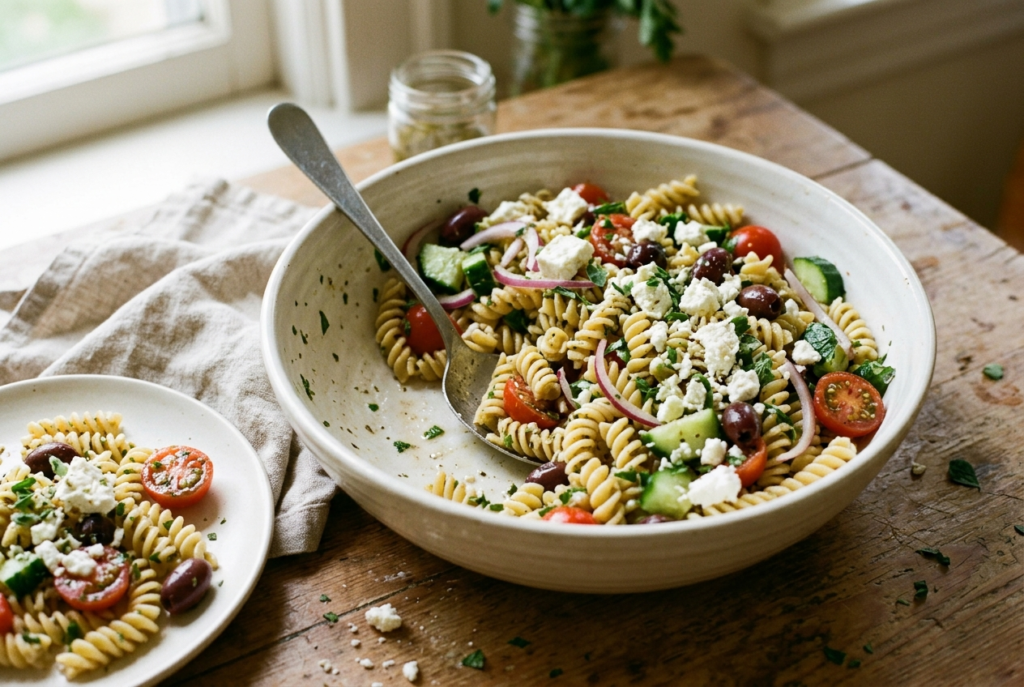
Greek-Inspired Pasta Salad with Feta and Cucumber — Keep vegetables crisp by rinsing the cooked pasta under cold water right after draining, and add the cucumber and dressing just before serving rather than in advance.
Creamy Avocado Pasta Salad with Corn — An avocado-based dressing with corn and black beans for a plant-based, richer alternative to a vinaigrette. A generous squeeze of lime keeps the avocado from browning.
For best texture, most of these pasta salads can be prepared ahead, but keep the dressing separately when possible and toss everything together just before serving.
How to Customize Your Vegetarian Pasta
Swapping vegetables or herbs: Zucchini can stand in for yellow squash, spinach for kale or chard, and parsley for basil. If you’re out of fresh herbs, use dried at about a third of the amount (1 tsp dried for every 1 tbsp fresh called for).
Adding more protein: Canned white beans or pre-cooked lentils add fiber and heartiness to almost any of these dishes. A soft-boiled egg or a handful of crumbled feta also works well stirred in at the end.
Making a dish dairy-free or vegan: Coconut milk, cashew cream, or pureed white beans can replace heavy cream or ricotta in a creamy sauce. Nutritional yeast adds a savory, cheese-like flavor in place of Parmesan, and blended silken tofu with lemon juice makes a reasonable ricotta substitute.
Looking for more meat-free meal ideas? Browse my 25 Best Vegetarian Recipes for more easy breakfast, lunch, and dinner inspiration.
FAQ
What pantry staples are worth keeping on hand for vegetarian pasta night? A good dried pasta, canned crushed or fire-roasted tomatoes, canned white beans, and a jar of good olive oil cover most of the recipes above. A jar of quality pesto is a useful backup for nights when you don’t have time to make your own.
How do I keep vegetables from turning mushy in a one-pot dish? Timing matters more than the cooking method. Blanch hardier vegetables like broccoli directly in the pasta water during the last couple of minutes, or sauté vegetables separately, remove them from the pan, and stir them back in at the very end so they don’t overcook alongside the pasta.
Can I make a creamy pasta sauce without heavy cream? Yes — reserved starchy pasta water, blended with ricotta, cottage cheese, or pureed roasted vegetables, creates a similar glossy texture without any cream. Add it gradually off direct heat so the cheese doesn’t separate.
How should I store and reheat baked pasta dishes? Assemble the dish, cover tightly, and refrigerate for up to 24 hours before baking. If baking cold from the fridge, add 10–15 minutes to the bake time and cover with foil for the first half of baking to keep the top from browning too fast.
Can I add protein to these recipes without using meat? Yes — canned beans, cooked lentils, a poached or soft-boiled egg, or extra cheese all work well stirred into most of the recipes above.
Have a favorite vegetarian pasta combination? Share it in the comments — always looking for the next weeknight regular.