
Easy Vegetarian Lasagna (The Weeknight Version)
Table of Contents
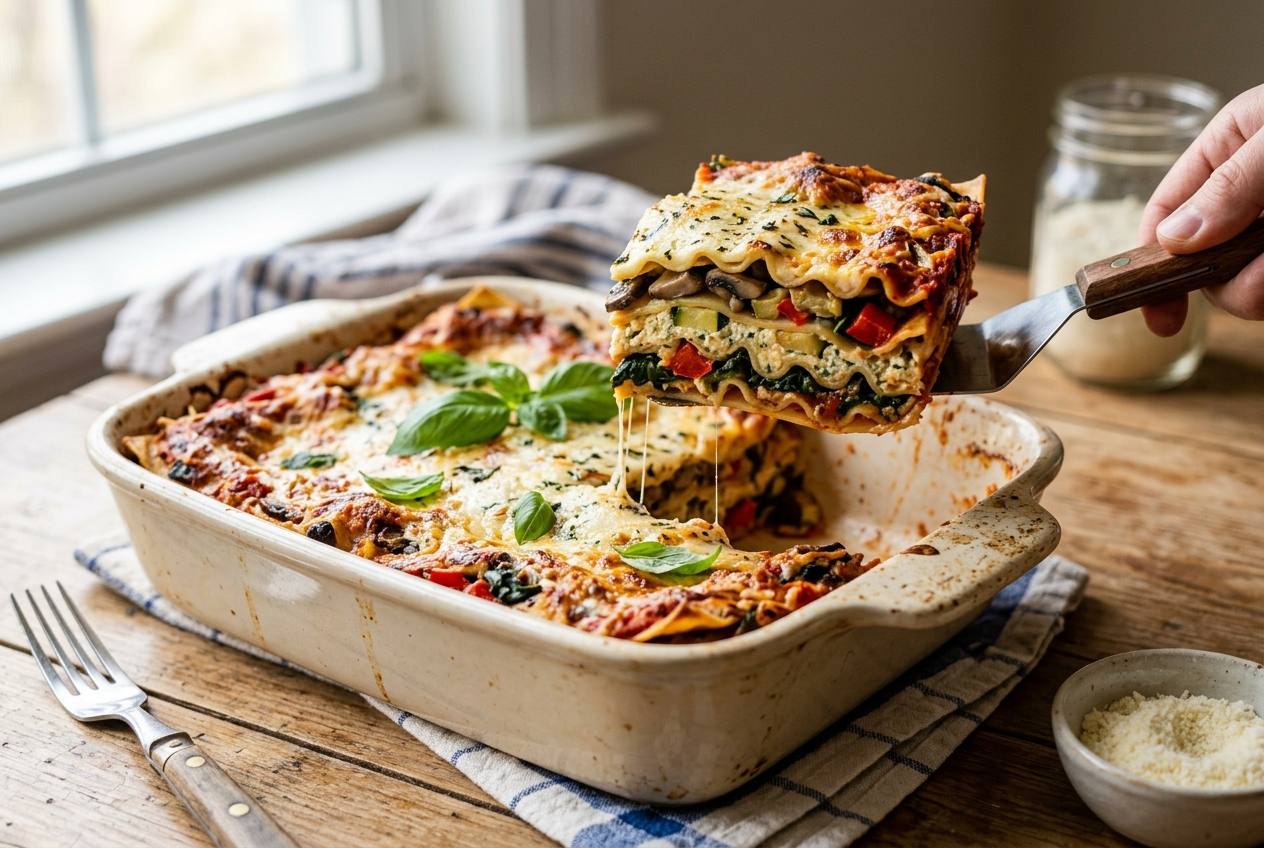
Mushrooms give this lasagna real savory depth, zucchini keeps the layers tender, and spinach adds color without much flavor of its own — three cheeses hold it all together. The one thing that makes or breaks a vegetable lasagna is water: cook the vegetables properly first, and it slices clean. Skip that step, and you end up with soup between the noodles. It’s one of the recipes I come back to most from our healthy vegetarian recipes collection — filling enough that nobody asks where the meat is.
Recipe at a glance
- Prep: 30 min · Bake: 45 min · Rest: 15 min · Total: about 1 hr 30 min
- Servings: 8
- Pan: 9×13-inch glass or ceramic baking dish
The Secret to a Vegetarian Lasagna That Isn’t Watery
Vegetables release water as they cook — that’s just what happens to mushrooms, zucchini, and spinach in a hot pan. The fix isn’t complicated, but it does need to happen in the right order:
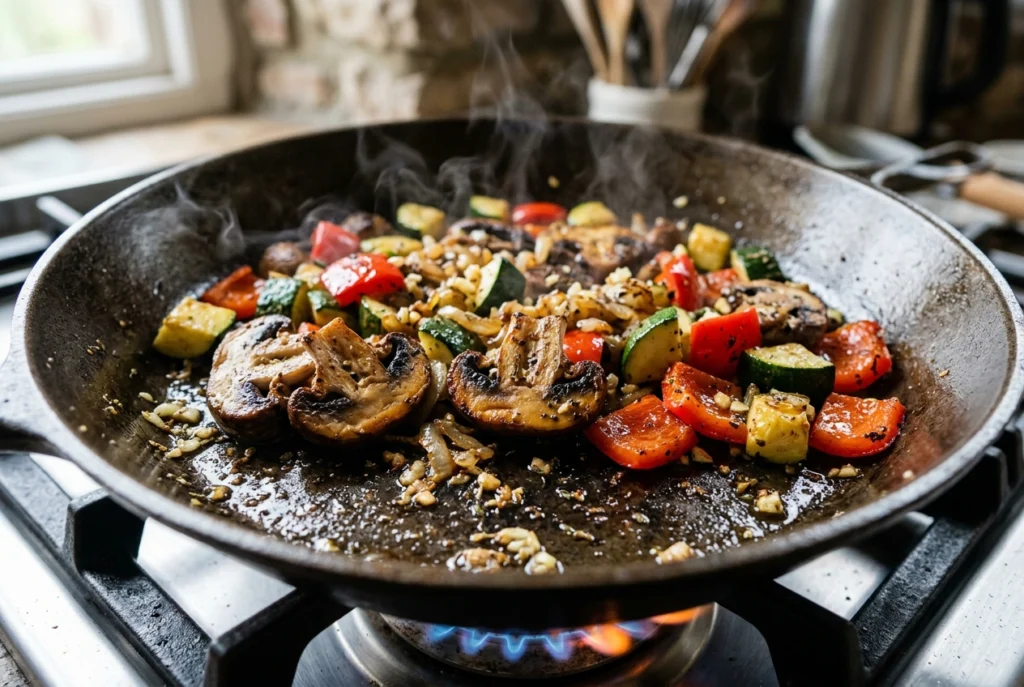
- Cook the mushrooms first, alone. They hold the most water of anything in this filling, and they need the longest time in the pan before that water cooks off and they actually start to brown.
- Add the rest of the vegetables after, so they cook in a mostly dry pan instead of steaming in mushroom liquid.
- Squeeze the spinach hard before it goes anywhere near the filling. Thawed frozen spinach holds an enormous amount of water — squeeze it in a clean towel or a fine-mesh strainer until it stops dripping, then stir it in at the very end.
- Let the cooked vegetables cool for about 10 minutes before you start layering. I used to skip this step, straight from pan to lasagna, and the cheese would start going soft and greasy before the dish even hit the oven.
Do those four things and the “why is my lasagna watery” problem mostly solves itself.
Ingredients
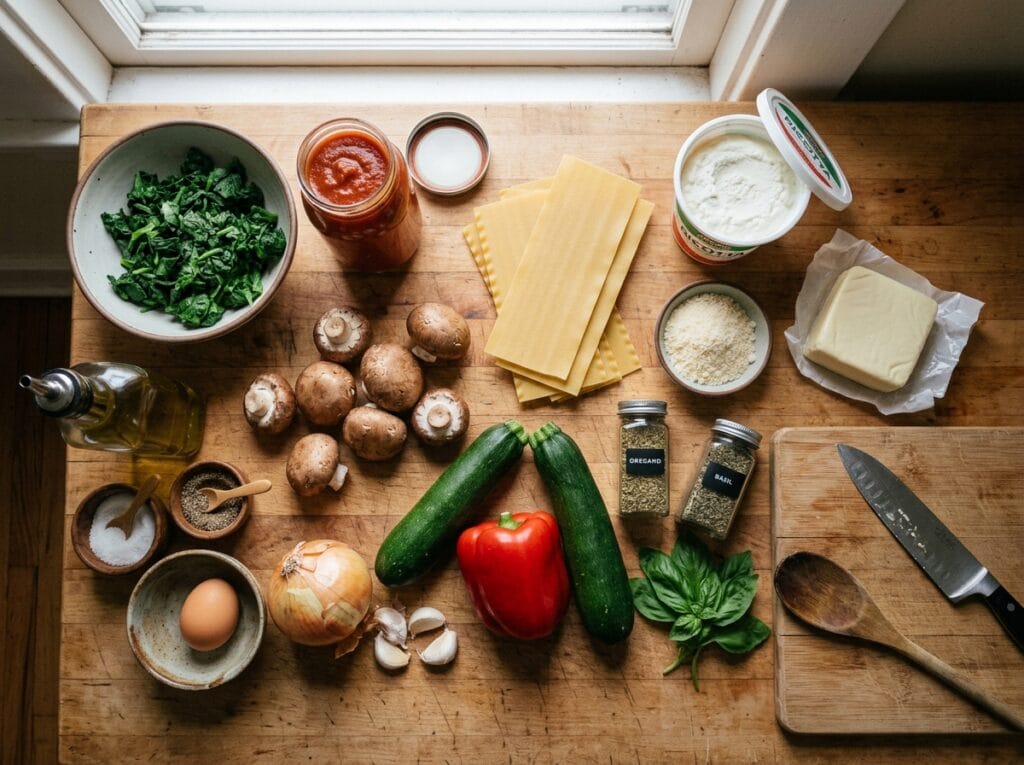
For the vegetables:
- 2 tbsp olive oil
- 8 oz mushrooms, sliced
- 2 zucchini, diced
- 1 bell pepper, diced
- 1 onion, diced
- 3 cloves garlic, minced
- 10 oz frozen spinach, thawed and squeezed dry (or 5 oz fresh spinach, wilted)
- 1 tsp dried oregano, 1 tsp dried basil
- Salt and black pepper, to taste
For the cheese layer:
- 15 oz ricotta cheese
- 1 egg
- ½ cup parmesan, grated, plus extra for the top
- Pinch of nutmeg
- Salt and pepper
Everything else:
- 12 lasagna noodles (regular or no-boil — see note below)
- 24–25 oz jar marinara sauce (about 3 cups)
- 2 cups mozzarella, shredded
- Fresh basil or parsley, to finish
How to Make Vegetarian Lasagna
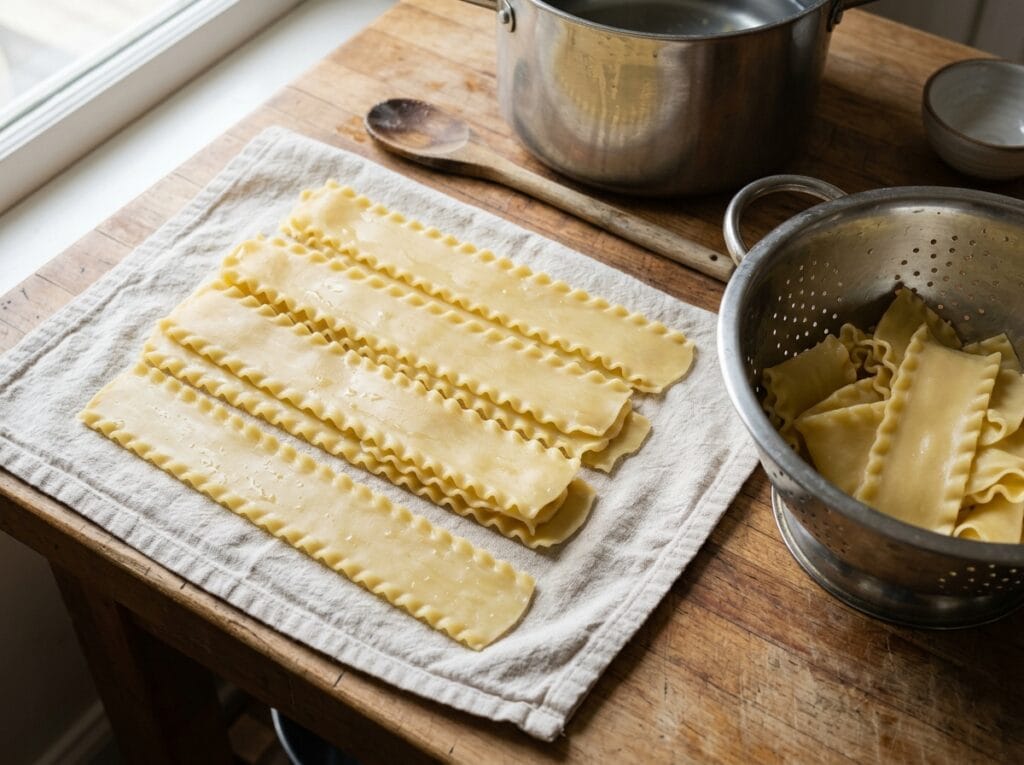
1. Cook the noodles, if using regular ones. Boil according to the package while you prep the vegetables. No-boil noodles skip this entirely and soften in the oven.
2. Cook the vegetables. Heat olive oil in a large skillet over medium-high. Mushrooms in first, cooked alone for about 5 minutes until their liquid has cooked off and they’re starting to brown. Add zucchini and bell pepper, cook 5–6 minutes until tender but not mushy. Add onion, cook 3 minutes, then garlic for the last 30 seconds. Stir in the oregano and basil partway through, and season with salt and pepper. Stir in the squeezed-dry spinach off the heat, right at the end. Spread the mixture on a sheet pan to cool for about 10 minutes.
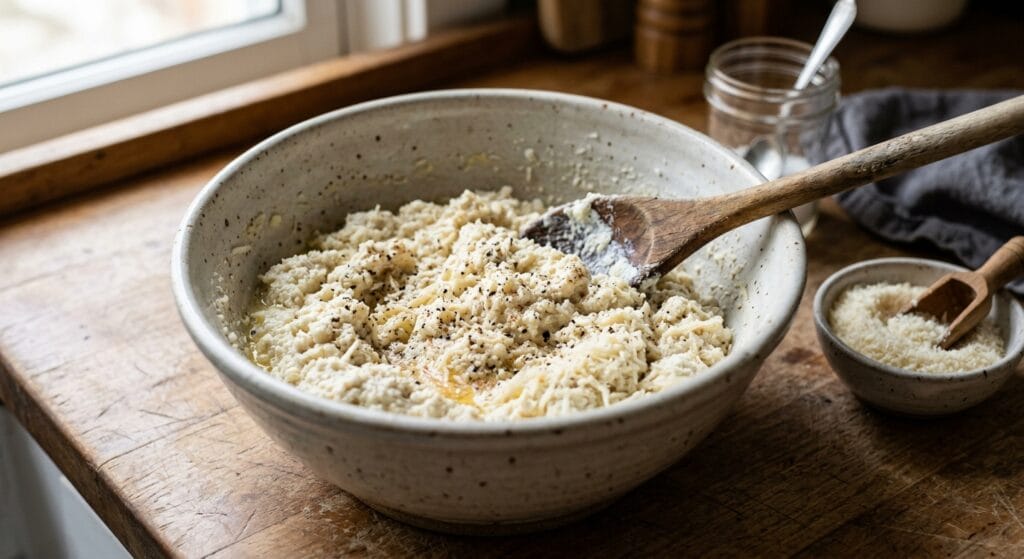
3. Make the ricotta filling. In a bowl, combine ricotta, egg, ½ cup parmesan, nutmeg, salt, and pepper.
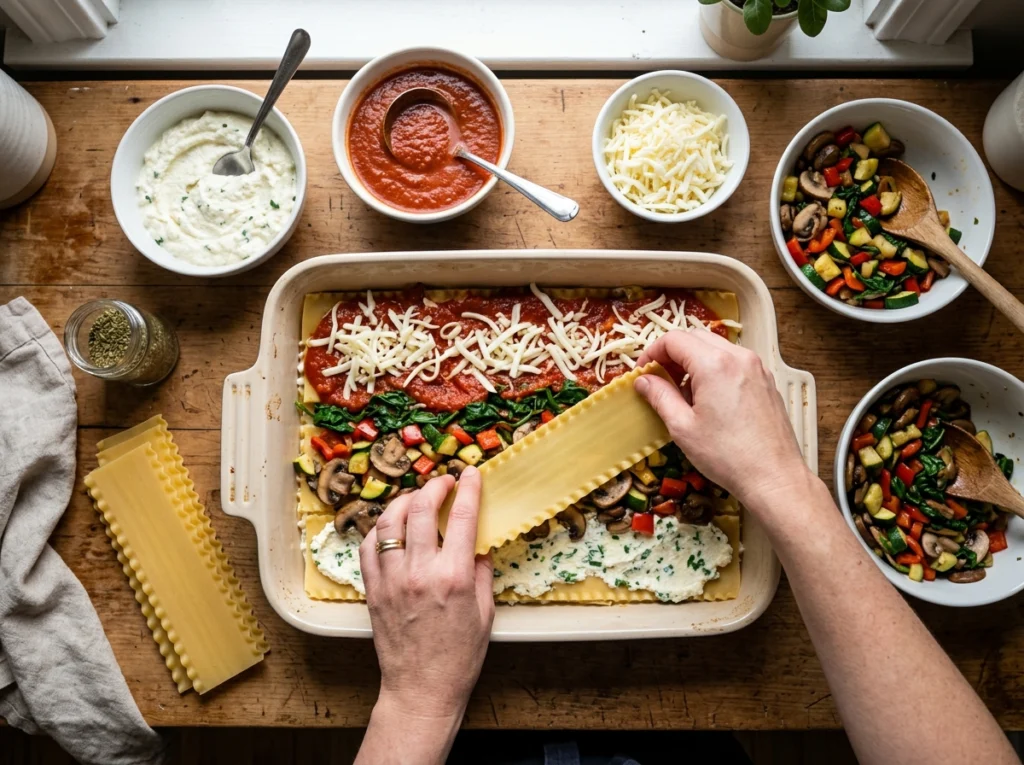
4. Assemble. In a 9×13-inch dish:
- Spread a thin layer of marinara on the bottom (this keeps the first noodles from sticking).
- Layer 1: 4 noodles → half the ricotta mixture → half the vegetables → ½ cup mozzarella → a ladle of marinara.
- Layer 2: 4 noodles → the remaining ricotta mixture → the remaining vegetables → ½ cup mozzarella → a ladle of marinara.
- Layer 3 (top): 4 noodles → the rest of the marinara → the rest of the mozzarella → a scatter of parmesan.
That’s 12 noodles across three layers, all the ricotta and vegetables split evenly between the first two, and the top layer finished with just sauce and cheese.
5. Bake covered. Cover tightly with foil, bake at 375°F (190°C) for 30 minutes. The foil traps the steam that actually cooks no-boil noodles through.
6. Bake uncovered. Remove the foil and bake 15–20 minutes more, until the top is golden and the sauce is bubbling at the edges. That visual cue — bubbling around the sides, melted and starting to brown on top — is the real test. If you want extra reassurance on a dish with egg in it, an instant-read thermometer reading 165°F (74°C) at the center confirms it, but it’s not something you need to check every time once you know your oven.
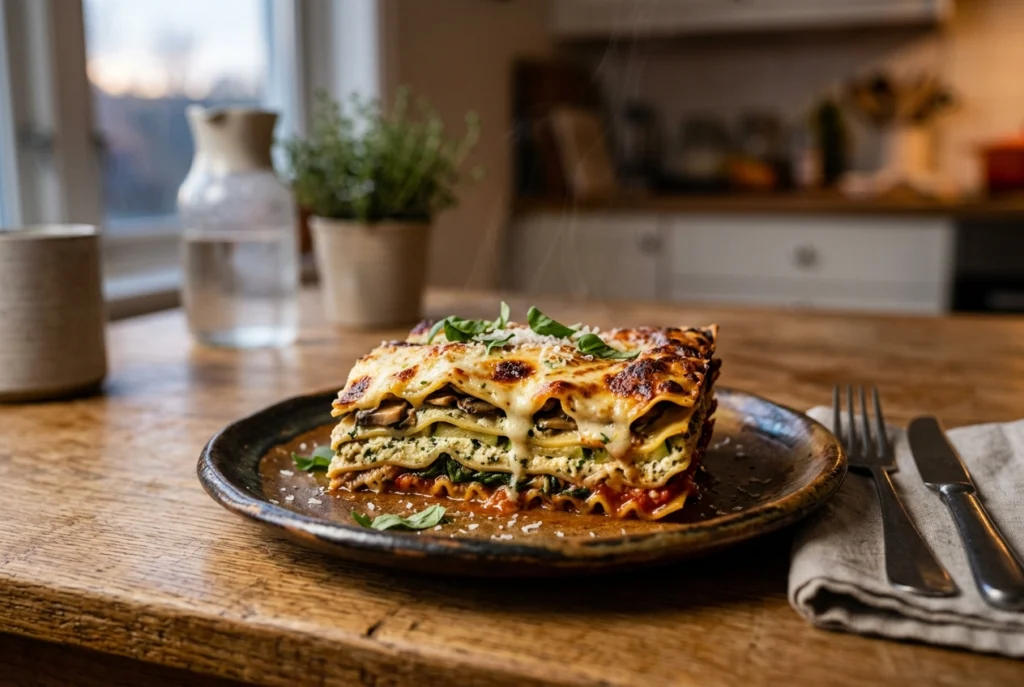
7. Rest 10–15 minutes before slicing. I used to cut into it straight from the oven and watch the layers slide apart on the plate. The short rest lets the cheese firm back up, and that’s the actual difference between a clean slice and a pile.
8. Finish with basil or parsley and a little extra parmesan.
Note on noodles: no-boil (oven-ready) noodles are the faster option and work fine with this recipe’s amount of sauce. Regular noodles give a slightly more classic texture if you don’t mind the extra 10 minutes of boiling.
Nutrition (per serving, 1 of 8, rough estimate): ~410 kcal · 23g protein · 34g carbs · 20g fat · 4g fiber. This is a manual estimate based on the ingredients above, not a calculated lab value — run it through a nutrition calculator against your exact brands if you need precise numbers.
Make-Ahead and Freezing
For the best texture, assemble the lasagna but don’t bake it, wrap it tightly, and freeze it raw. Thaw overnight in the fridge, then bake as directed. This is the method I’d actually recommend if you’re planning ahead — the noodles and vegetables hold their texture better than a baked-then-frozen-then-reheated version.
Baking now and freezing the leftovers works too, and it’s more convenient if you just want individual portions ready to reheat — cool completely, wrap tightly in plastic then foil, and freeze up to 2–3 months either way. Label it with the date.
Assembling the night before and refrigerating (unbaked, covered) is a good middle option if you’re just getting ahead by a day rather than freezing — bake it straight from the fridge, adding about 10 extra minutes covered.
Refrigerated leftovers keep 3 to 4 days in an airtight container. Reheat individual slices in a 350°F oven until the cheese is bubbling again, or in the microwave in 1-minute intervals.
A Few Substitutions Worth Knowing
No ricotta on hand? Blended cottage cheese, pulsed smooth in a food processor, works well and has a slightly tangier flavor.
Gluten-free: swap in gluten-free lasagna noodles (brown rice or corn-based both work) and check your marinara’s label — most don’t use wheat as a thickener, but a few do.
Vegan: a cashew or tofu-based ricotta substitute, a vegan mozzarella labeled as melting well (not all of them do), and skip the egg — the filling holds together fine without it in a vegan version, since the plant-based ricotta substitutes are usually firmer to begin with.
More protein: stir ½ cup cooked lentils or mashed white beans into the ricotta mixture.
What to Serve With It
A simple arugula salad with lemon vinaigrette cuts through the richness well. Garlic bread, if you want something to mop up extra marinara. One square per person is a reasonable portion — for a bigger group, two smaller dishes are easier to manage than one giant pan.
FAQ
Why is my vegetarian lasagna watery? Almost always under-cooked vegetables — mushrooms and zucchini especially need to cook until their released liquid has evaporated, not just until they’re soft. Frozen spinach not squeezed dry enough is the other common cause. See the technique section above.
Can I use fresh spinach instead of frozen? Yes — about 5 oz fresh, wilted in the pan and drained well, works in place of the frozen. It has less water to begin with, so squeezing is quicker but still worth doing.
Do I need to boil regular lasagna noodles first? Yes, if you’re using regular (not no-boil) noodles. No-boil noodles skip this step and soften in the oven using the moisture from the sauce.
Can I assemble this the night before? Yes — assemble it fully, cover, and refrigerate unbaked. Bake straight from the fridge the next day, adding about 10 minutes to the covered bake time since it’s starting cold.
Can I substitute the ricotta? Yes — blended cottage cheese is the closest swap. See the substitutions section above for a vegan option too.
How long should it rest before slicing? 10 to 15 minutes. Skipping this is the most common reason a slice falls apart on the plate instead of holding together.