This post contains affiliate links. As an Amazon Associate I earn from qualifying purchases.
Table of Contents
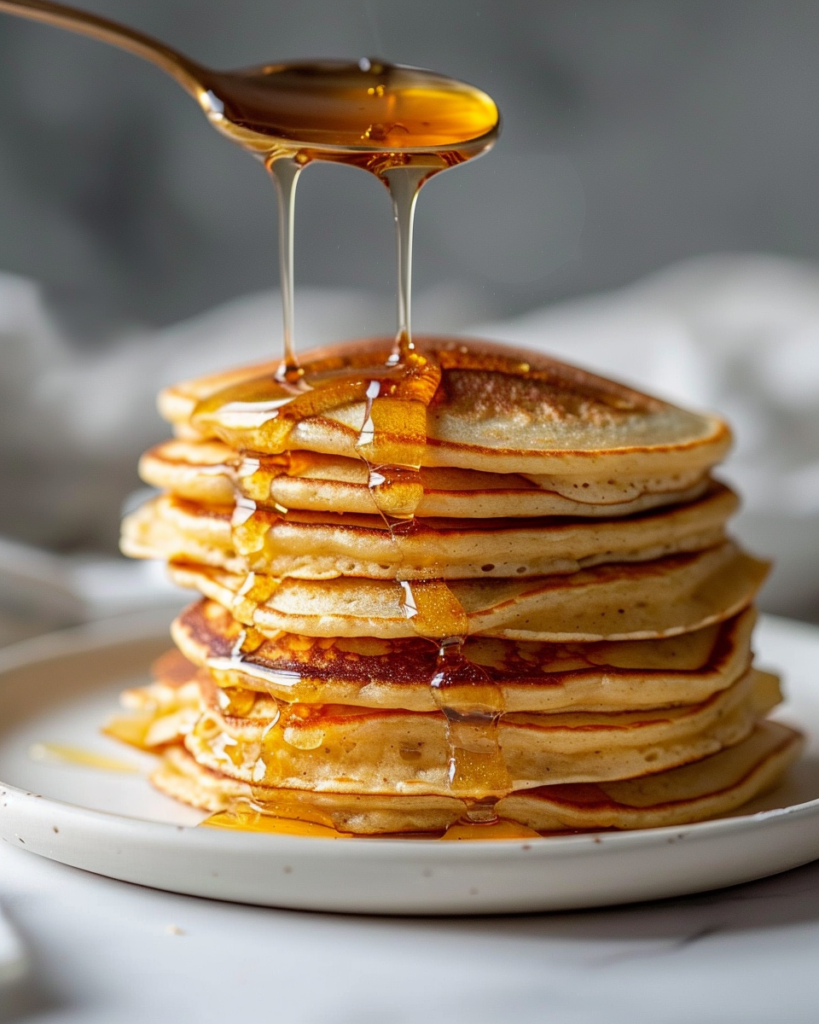
For a long time, Sunday mornings in my house meant one thing: a stack of classic buttermilk pancakes that left me feeling heavy and craving sugar again by noon.
I loved them. I also felt awful after eating them. That specific combination of fluffy, buttery, maple-syrup-soaked pancakes that taste incredible going down and then sit in your stomach like a brick for two hours — you know exactly what I’m talking about.
I started trying to fix it. First I reduced the sugar. Then I swapped the flour. Then I tried protein powder, which turned everything rubbery and chalky in a way I genuinely couldn’t get past. Three failed experiments, two wasted Sundays, and one very unimpressed husband later — nothing worked.
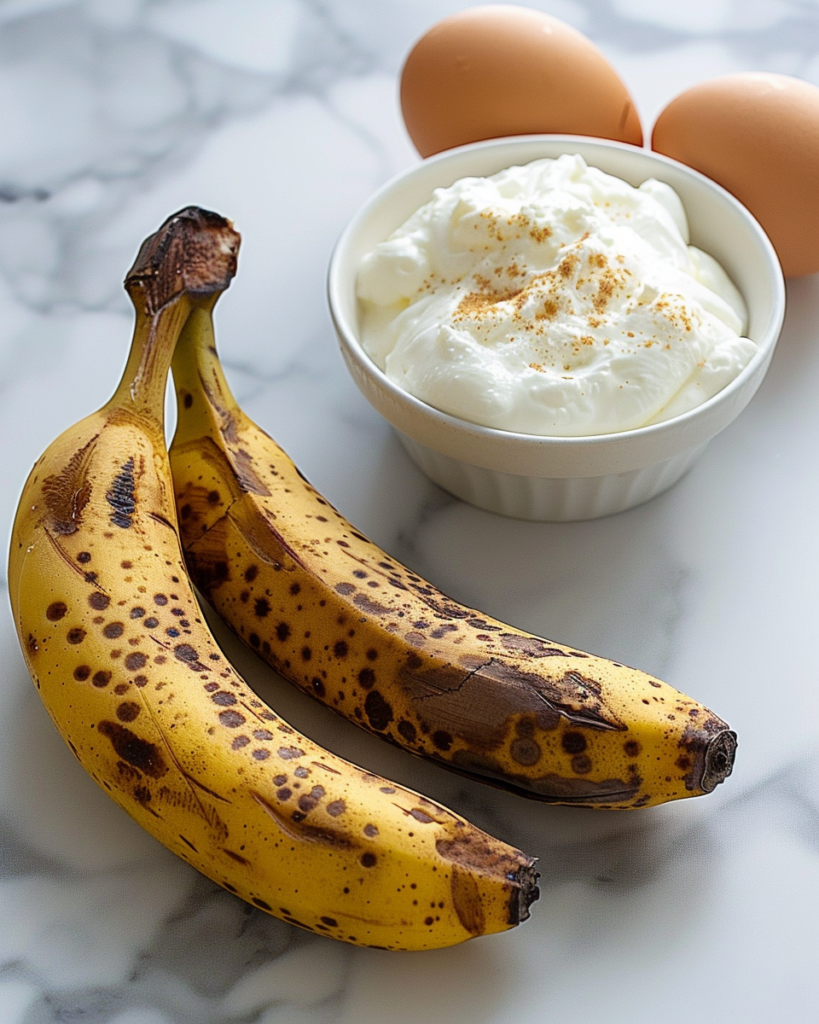
Then one morning I had two overripe bananas on the counter — the kind with black spots nobody wants to eat plain — and a thought: what if the banana was the sweetener, the binder, and part of the structure, all at once?
That was 18 months ago. I’ve made these every Sunday since. On my stove, medium-low (setting 4 out of 10) works best — at setting 6, the bottoms brown before the centers cook through. That detail took me three burnt batches to figure out. I’m giving it to you for free.
Why These Banana Protein Pancakes Don’t Need Protein Powder
Most “protein pancake” recipes online either rely on protein powder (which wrecks the texture) or claim high protein from two eggs alone and call it a day.
This recipe gets protein from three real ingredients — nothing from a tub:
2 eggs → ~12g protein for the whole recipe
½ cup Greek yogurt → ~10g protein for the whole recipe
¼ cup cottage cheese → ~7g protein for the whole recipe
Total recipe: ~29–30g protein. Per serving (3 pancakes): ~15–17g protein.
It’s not bodybuilder-level protein, but you’ll actually feel the difference by 11am — no fridge staring, no mid-morning handful of crackers. Compared to classic buttermilk pancakes sitting at 6–8g total for the whole plate, that’s a real shift.
Honest note on protein: Some banana protein pancake recipes online claim 25–30g per serving. Most are calculating incorrectly or counting the full batch as one serving. The numbers above are verified against USDA FoodData Central for the exact quantities used. What you see is what you get.
Banana Protein Pancakes vs Regular Pancakes
This Recipe
Classic Buttermilk Pancakes
Protein per serving
~17g
~6–8g
Calories
~340 kcal
~400–500 kcal
Added sugar
0g
8–15g
Flour
Oat flour (½ cup)
All-purpose flour (1+ cup)
Protein powder
None
Sometimes
Texture
Fluffy, slightly dense
Very fluffy, light
Prep time
15 minutes
15 minutes
Keeps you full
3–4 hours
1.5–2 hours
My Testing Notes (18 Months of Sundays)
Here’s what I figured out the hard way so you don’t have to:
Fat-free Greek yogurt: The batter goes too thin and the pancakes spread into sad flat discs.Full-fat Greek yogurt: My preferred choice. It produces the richest, creamiest batter.
2% Greek yogurt: Works well too. The pancakes are slightly less rich, but the difference is small.
Regular flour instead of oat flour: Lighter, more classic texture. Less filling. Nothing wrong with it — just not what I come back to.
Oat flour: Every single time, better. Slightly denser, more satisfying, and the flavor with banana is just warmer somehow. This is the version I’ve been making for 18 months.
Blended vs. whole cottage cheese: If you add it whole, you’ll find small curds in the batter. Most people don’t notice once it’s cooked, but if cottage cheese texture is a thing for you, blend it. Twenty seconds and it disappears completely.
Resting the batter 5 minutes vs. cooking immediately: I did this side by side once just to see. The rested batch was fluffier every time. The oat flour needs a few minutes to absorb the moisture. Don’t skip it.
Ingredients
For the batter:
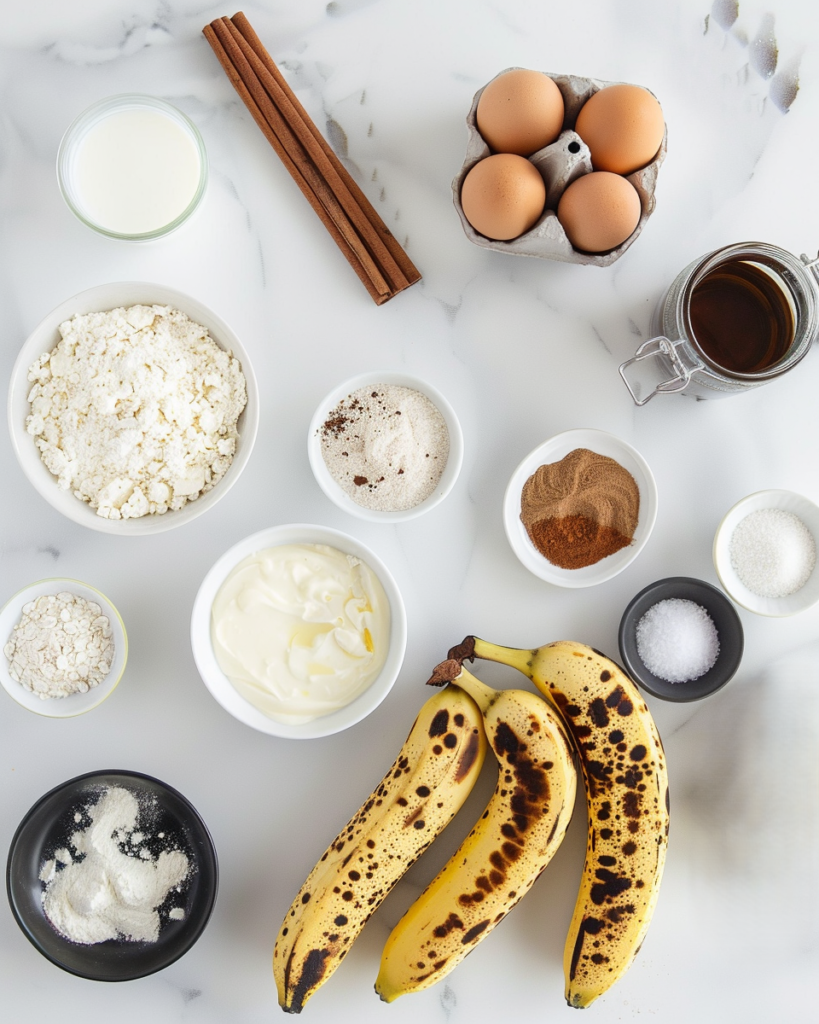
2 very ripe bananas (black-spotted — this matters more than you think)
2 large eggs
½ cup plain full-fat Greek yogurt (Fage Total 5%)
¼ cup cottage cheese, blended smooth
½ cup oat flour (or blend ½ cup rolled oats until fine)
1 tsp baking powder
1 tsp pure vanilla extract
½ tsp cinnamon
Pinch of sea salt
Coconut oil or butter for the pan
Optional toppings:
Fresh banana slices
Drizzle of honey or maple syrup
Natural peanut butter or almond butter
Fresh berries
Why oat flour? It gives these pancakes a slightly nutty flavor and a heartier texture than all-purpose flour. I also prefer it here because it pairs particularly well with ripe banana.
Want something you can fully prep the night before? Try my 40g high-protein overnight oats— they’re a no-cook option you can prepare the night before and grab in the morning.
Equipment
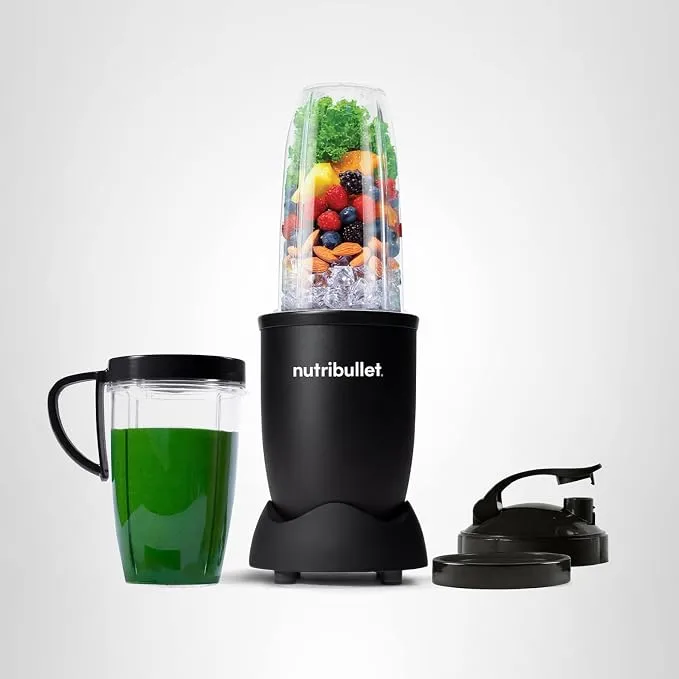
Blender — for the cottage cheese and homemade oat flour. I use the Nutribullet Pro for both in under a minute.
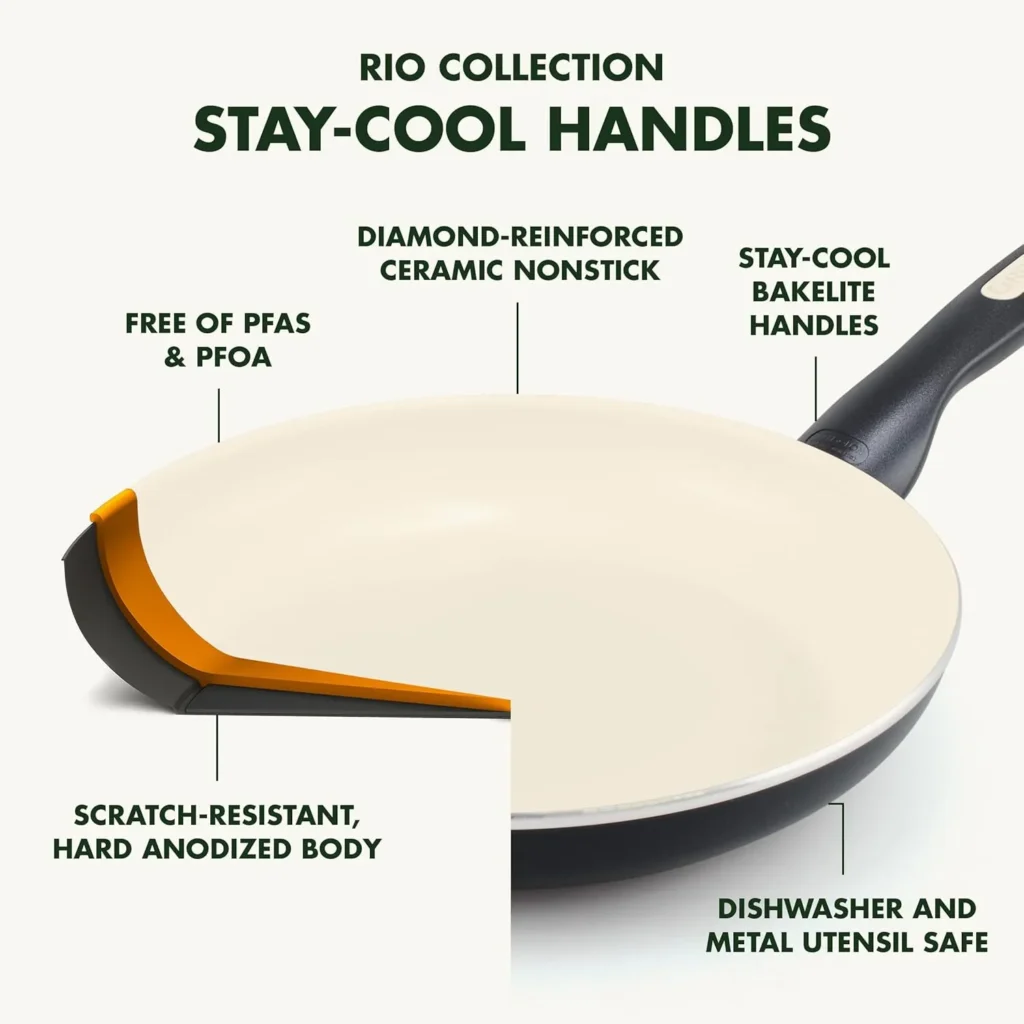
Non-stick pan: Banana pancakes are more prone to sticking because of their natural sugars, so a good non-stick surface makes flipping much easier. I use this GreenPan ceramic non-stick skillet and it’s been flawless.
Wide spatula — thin and flexible. You need to get under the pancake cleanly or it tears. This OXO Good Grips Pancake Turner is what I reach for every time.
Add ¼ cup cottage cheese to your blender with 1 tbsp Greek yogurt. Blend 15–20 seconds until smooth. It disappears completely into the batter. If cottage cheese doesn’t bother you texture-wise, skip it — but try it blended once first. The creaminess is noticeably different.
Step 2 — Mash the bananas
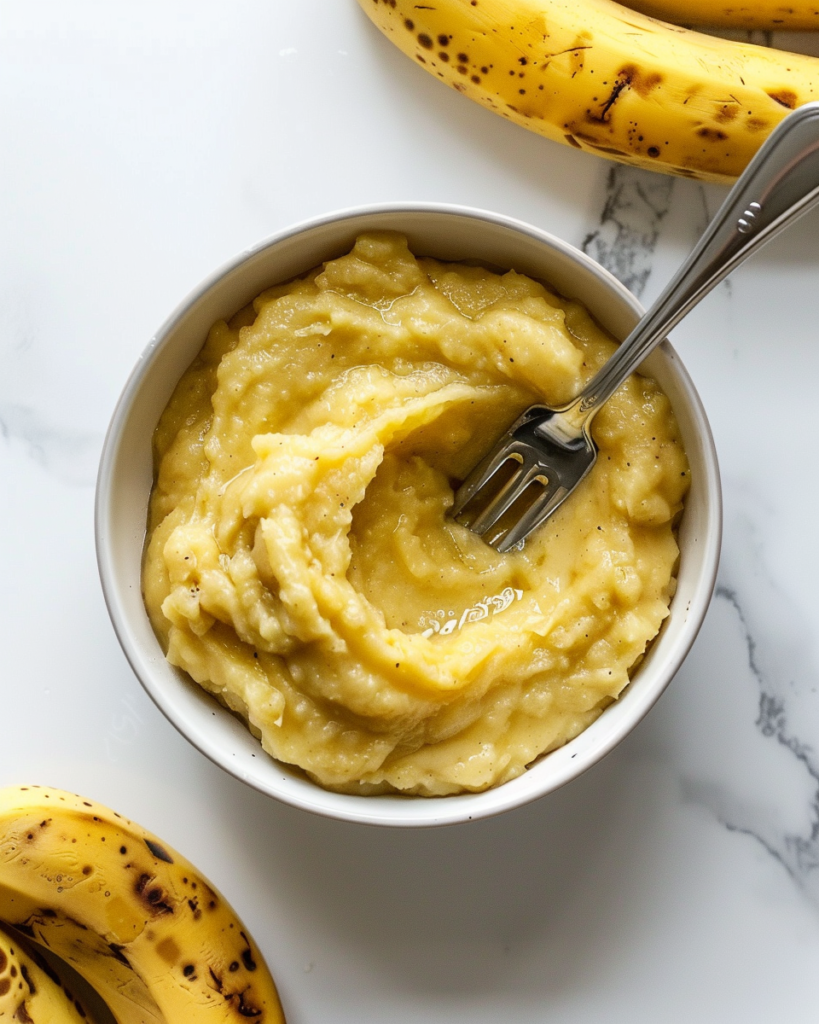
Mash both bananas in a large bowl with a fork until almost smooth. A few lumps are fine — they actually give the finished pancake a little texture. The bananas need to be genuinely ripe: soft, fragrant, spotted. A firm yellow banana makes flat, bland batter that you’ll want to fix with sugar. Don’t bother — just wait for the right banana.
Step 3 — Mix the wet ingredients
Add eggs, Greek yogurt, blended cottage cheese, and vanilla to the mashed banana. Whisk until combined. The batter will look thicker than regular pancake batter. That’s exactly right.
Step 4 — Add the dry ingredients
Add oat flour, baking powder, cinnamon, and salt. Fold gently with a spatula and stop the moment you can’t see flour streaks. Overmixing is how you end up with dense, chewy pancakes. A few small lumps in the batter are fine and won’t show up in the final result.
💡 Quick check: The batter should hold its shape when you pour it — thick like yogurt, not runny like milk. Too thin: add 1 tbsp oat flour and wait 2 minutes. Too thick: add 1 tbsp milk.
Step 5 — Rest the batter (5 minutes)
Walk away. Set a timer. The oat flour absorbs the moisture, the baking powder activates, and the whole thing comes together into a batter that produces a fluffier pancake than if you’d cooked it immediately. I tested this. It makes a difference.
Step 6 — Cook low and slow
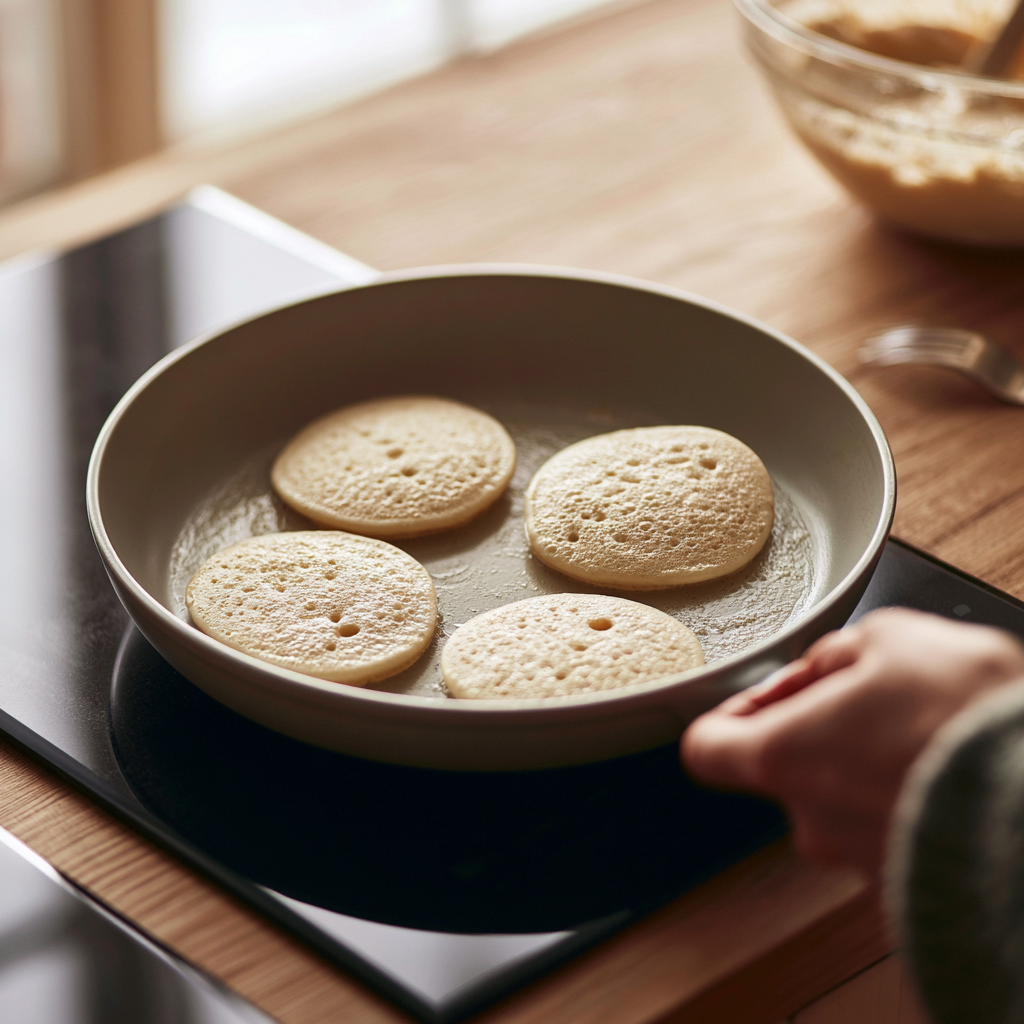
Heat your non-stick pan over medium-low — setting 4 out of 10 on my stove. This is the part most people get wrong. The natural banana sugar in the batter browns faster than refined sugar, so what feels like a normal pancake heat will burn the outside before the inside is cooked. Lower than you think, slower than you think.
Add a small amount of coconut oil or butter. Pour about ¼ cup batter per pancake. Cook 2.5–3 minutes — wait until bubbles appear all the way across the surface, not just around the edges.
Flip once. Cook another 1.5–2 minutes. Don’t press down with the spatula — that squashes the air out. Don’t flip twice.
Step 7 — Stack and serve
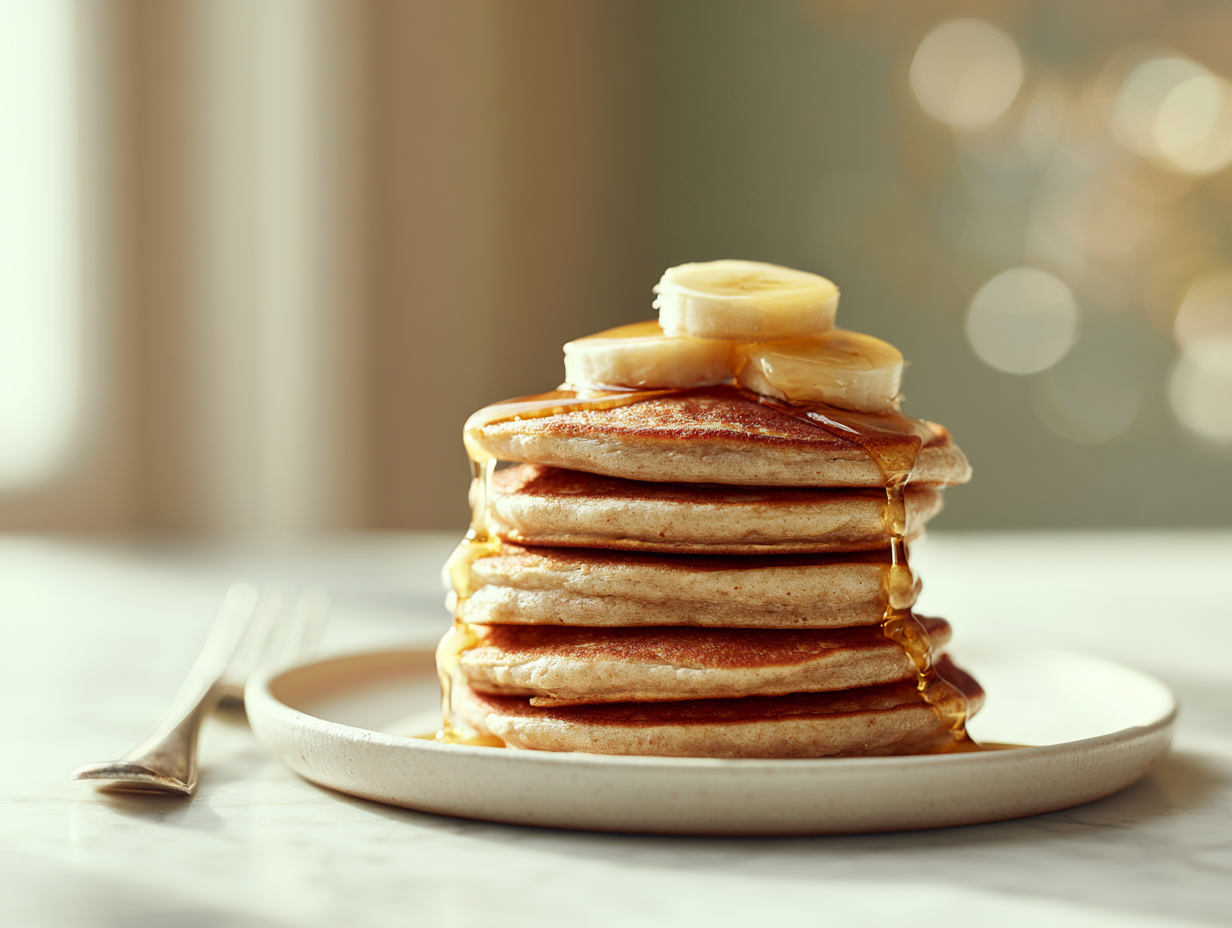
Stack 3 pancakes per serving. Add whatever you like on top and eat while they’re hot.
Nutrition Information (Per Serving — 3 pancakes)
Calculated using USDA FoodData Central. Values vary by brand and banana size.
Nutrient
Per Serving
Calories
~340 kcal
Protein
~17g
Carbohydrates
~42g
Total Fat
~10g
Saturated Fat
~3g
Fiber
~5g
Sugar
~18g (all natural)
Sodium
~280mg
Why 0g added sugar matters: The pancakes get their sweetness from ripe bananas and vanilla, so there’s no added sugar in the batter. Keep in mind that toppings like maple syrup, honey, anverified against USDAd nut butter will change the nutrition.
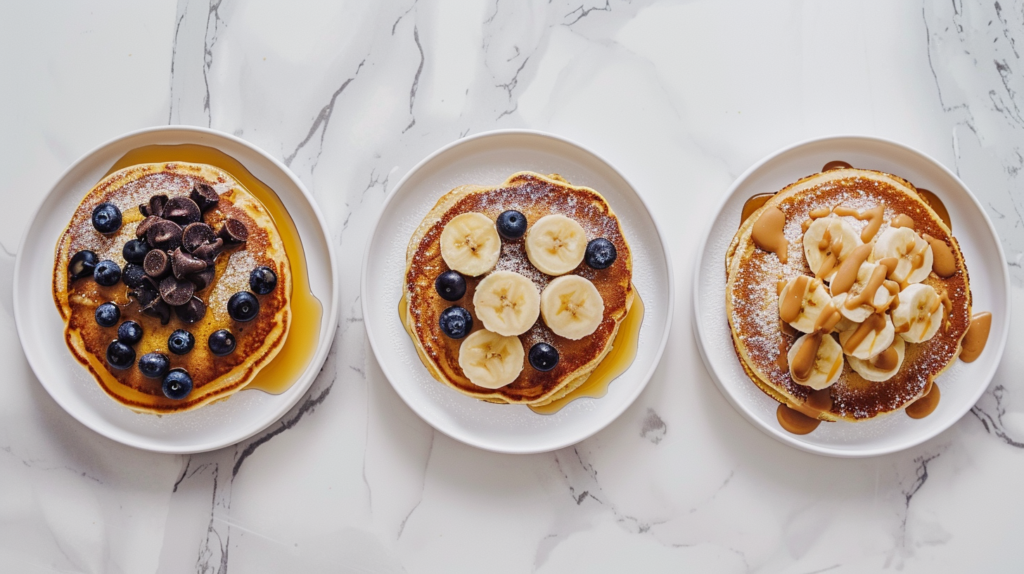
5 Banana Protein Pancakes Variations
Variation
What to add to batter
Topping
Chocolate Chip
2 tbsp dark chocolate chips folded in at end
Extra chips + honey
Blueberry
¼ cup fresh blueberries folded in gently
Fresh blueberries + lemon zest
PB Banana
1 tbsp peanut butter blended into wet ingredients
PB drizzle + banana slices
Spiced Apple
½ tsp nutmeg + ¼ tsp cardamom
Sautéed cinnamon apple slices
Coconut Mango
2 tbsp shredded coconut in batter
Fresh mango + coconut flakes
The Mistakes That Ruin Banana Protein Pancakes
❌ Using underripe bananas. A yellow banana has more starch and almost no natural sweetness. The batter tastes like nothing and you end up reaching for sugar to fix it. Just wait for the spots — it’s genuinely worth it.
❌ Cooking too hot. I know it feels slow. It is slow. But banana sugar burns at a lower temperature than refined sugar, and there’s no recovering from a batch that’s black on the outside and raw in the middle. Medium-low, every single time.
❌ Flipping too early. The pancake isn’t ready to flip until bubbles have formed all the way across the top — not just the edges, the whole surface. Flip early and it tears straight down the middle.
❌ Overmixing. Fold, don’t whisk. Stop when the flour disappears. Every extra stir after that point makes the pancakes chewier and denser. Less is genuinely more here.
❌ Skipping the 5-minute rest. I know it’s annoying when you’re hungry. Do it anyway. The texture difference is real.
Frequently Asked Questions
Can I make banana protein pancakes without cottage cheese? Yes — swap it for an extra 2 tbsp Greek yogurt. You’ll lose a few grams of protein per serving and the batter will be slightly less creamy, but it still works well. If you’ve never liked cottage cheese, you won’t taste it here either way — blended, it completely disappears.
Can I make the batter the night before? The short answer is no. Baking powder loses most of its lift overnight, and you end up with flat dense pancakes in the morning. What you can do: mash the bananas and mix the dry ingredients in separate containers the night before. In the morning, combine everything and cook. Adds maybe 3 minutes and makes a real difference.
Why are my banana protein pancakes falling apart when I flip them? Either the batter is too thin or you’re flipping too early — usually both. Check the consistency before cooking (thick, not pourable), and wait for bubbles across the whole surface before flipping. If your pan isn’t properly non-stick, that’s the third possible cause.
Can I freeze these? Yes. Let them cool completely on a rack — not stacked, or they stick together. Freeze flat for 1 hour, then bag them. Reheat in a toaster for the best texture (2 cycles), or microwave for 45 seconds if you’re in a hurry. About 85% as good as fresh, which is still pretty good.
How ripe does the banana really need to be? More than you think. At least 30–40% black spots. Fully black bananas are fine too — they’re sweeter and softer, which makes the batter slightly thinner (add 1 extra tbsp oat flour to compensate). A firm yellow banana will give you bland batter that needs sugar to taste like anything.
Can I use regular flour instead of oat flour? Same quantity (½ cup), works fine. The texture is lighter and more classic. You lose the slower digestion benefit, but if that’s what you have, use it.
Are these good for weight loss? At ~340 kcal and 17g protein with zero added sugar, they fit easily into a calorie-controlled day. The thing to watch is toppings — a generous maple syrup pour adds 50–100 kcal fast. Almond butter and fresh fruit are better choices if you’re tracking.
Can I meal prep these? Yes — make a double batch, cool completely, and refrigerate for up to 3 days or freeze for 2 months. Reheat in a dry pan over low heat (1 minute per side) rather than the microwave — it keeps the outside from going soft and sad.
Storage Guide
Same day: Best straight off the pan. After about 20 minutes they start to compress and lose some of the fluffiness — still good, just different.
Refrigerator: Airtight container, up to 3 days. Reheat in a dry non-stick pan over low heat, 1 minute per side. The microwave makes them soft on the outside; the pan keeps them a little crisp.
Freezer: Up to 2 months. Toaster works best from frozen — run two cycles. Microwave works in a pinch (45–60 seconds).
Made these on a Sunday? Tell me in the comments what you topped them with. The peanut butter version gets requested in my house more than any other variation — which I genuinely did not see coming.
For more high protein breakfast ideas without protein powder, check out my Breakfast recipes