
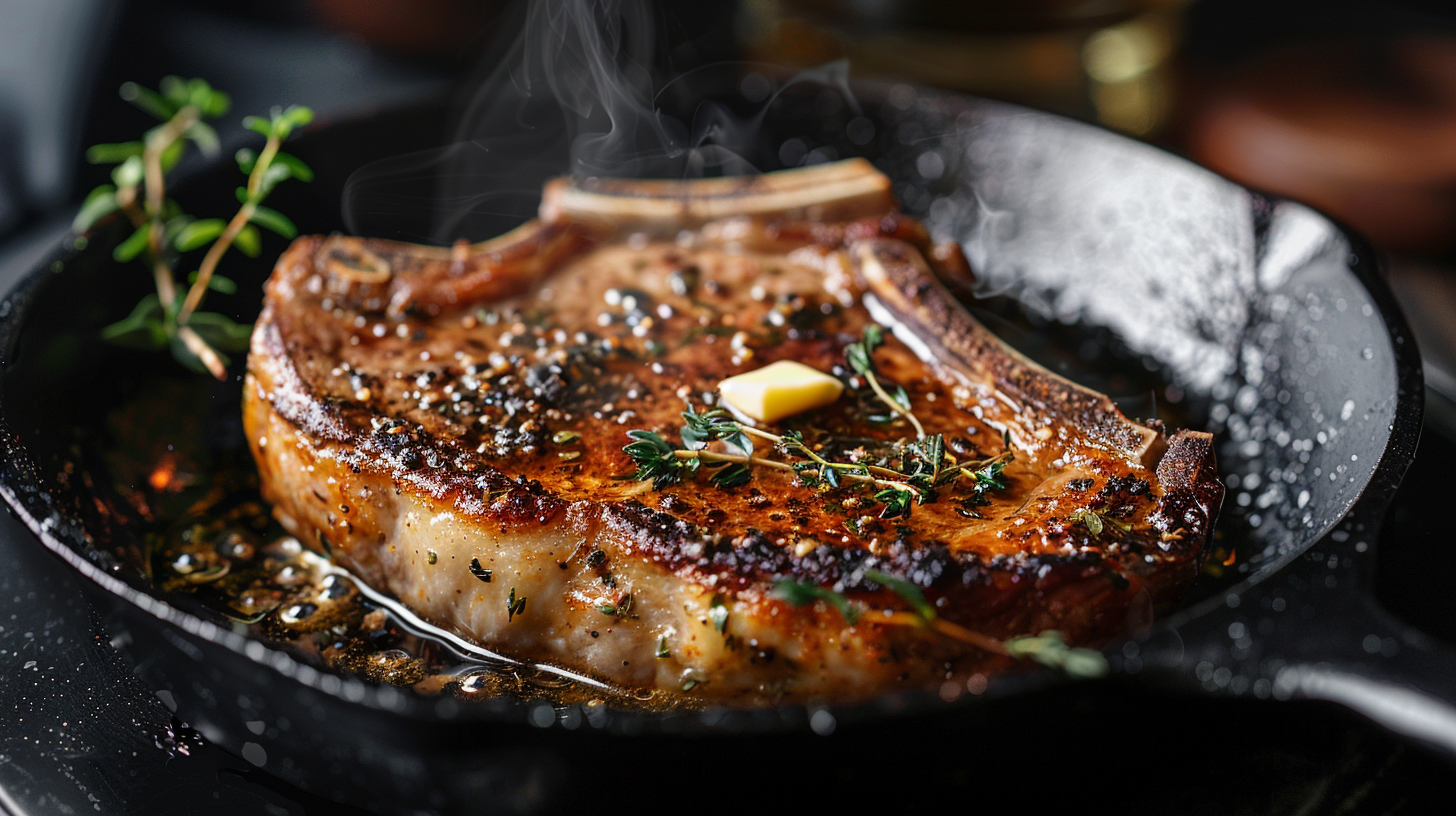
Pork Chop Recipes Skillet · Cast Iron · 25 Minutes
⏱ Prep: 10 min🔥 Cook: 15 min🍽 Serves: 2⭐ 145°F · USDA Safe
Table of Contents
I used to ruin pork chops every single time. Gray outside, raw inside — or the reverse. After years of testing every pork chop recipes skillet method I could find, the turning point was simple: treat them like a steak, not like chicken. One pan, high heat, and a thermometer. That’s it.
25Total Minutes 145°FUSDA Safe Temp 1″Ideal Thickness 5 minRest Time
Why This Pork Chop Recipes Skillet Method Actually Works
A regular non-stick pan can’t get hot enough, and it loses heat the moment cold meat touches it. A cast iron skillet does the opposite — it holds heat aggressively, and when a dry, seasoned chop hits that surface, you get the Maillard reaction: proteins and natural sugars caramelizing into a crust that no oven can replicate alone.
Most pork chop recipes skillet guides skip the science and go straight to the steps. But understanding why the technique works is what separates cooks who get consistent results from those who get lucky. You don’t need a $200 pan — a well-seasoned Lodge 10-inch cast iron skillet is all you need for results that rival a steakhouse.
What Cut to Buy (And What to Skip)
hoose bone-in rib chops that are at least 1 inch thick. The bone slows heat transfer near the center, giving you a wider window between perfectly cooked and overdone. The marbling — those thin white threads of fat threading through the meat — melts during cooking and bastes the flesh from within.
Thin chops (under ½ inch) cook through before any meaningful browning can happen. That’s a structural problem no technique can fully fix. If you only have thin cuts available, check the FAQ below.
💡Pro tip: Ask your butcher to cut chops to order. Request 1.25-inch rib chops. Most butchers will do this for free, and the difference in the final result is significant.
Juicy Cast Iron Pork Chops with Dijon Pan Sauce
The only pan-seared pork chop method you’ll ever need. Golden crust, juicy center, restaurant-quality sauce.
⏱ Prep: 10 min🔥 Cook: 15 min🍽 Serves: 2⭐ 145°F · USDA Safe
Ingredients
- 2 bone-in pork rib chops, 1 to 1.25 inches thick (approx. 300g each)
- 1½ tsp kosher salt
- 1 tsp freshly cracked black pepper
- 1 tsp smoked paprika
- ½ tsp garlic powder
- 1½ tbsp avocado oil (or other high smoke-point oil)
- 2 tbsp unsalted butter
- 3 garlic cloves, lightly crushed
- 3 sprigs fresh thyme
For the Pan Sauce
- 80ml dry white wine or chicken broth
- 1 tsp Dijon mustard
- 1 tbsp cold unsalted butter
- Fresh flat-leaf parsley, roughly chopped
Instructions
- Rest the meat. Remove chops from the fridge 30 minutes before cooking. In a small bowl, mix together salt, pepper, paprika, and garlic powder.
- Dry and season. Pat chops completely dry with paper towels — both sides, thoroughly. Season all over with the spice mix and press gently so it adheres.
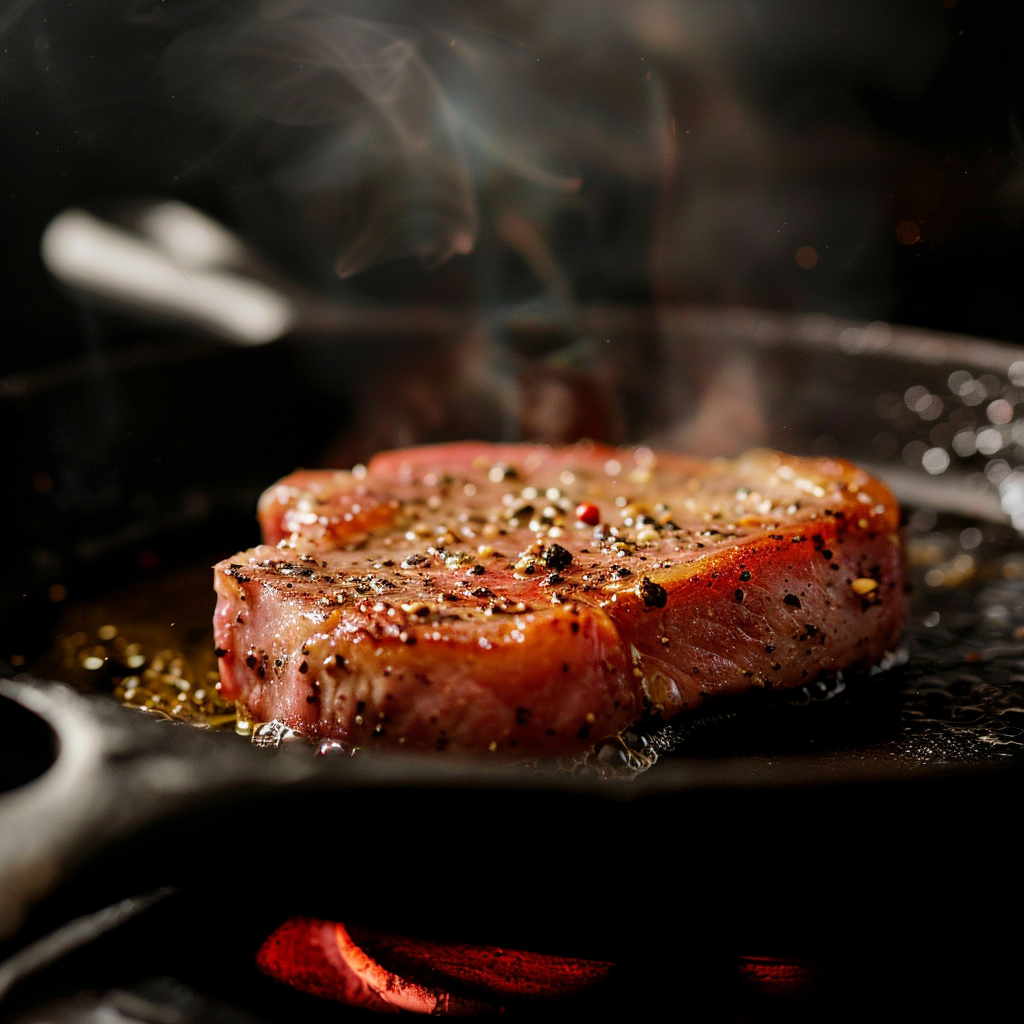
- Preheat the skillet. Heat your cast iron over medium-high for 2 full minutes. Add the oil. It should shimmer immediately and thin out. If it smokes right away, reduce heat slightly.
- Sear undisturbed. Add chops away from you. Press lightly for full contact. Leave completely alone for 3–4 minutes. The chop releases cleanly when the crust is ready — don’t force it.
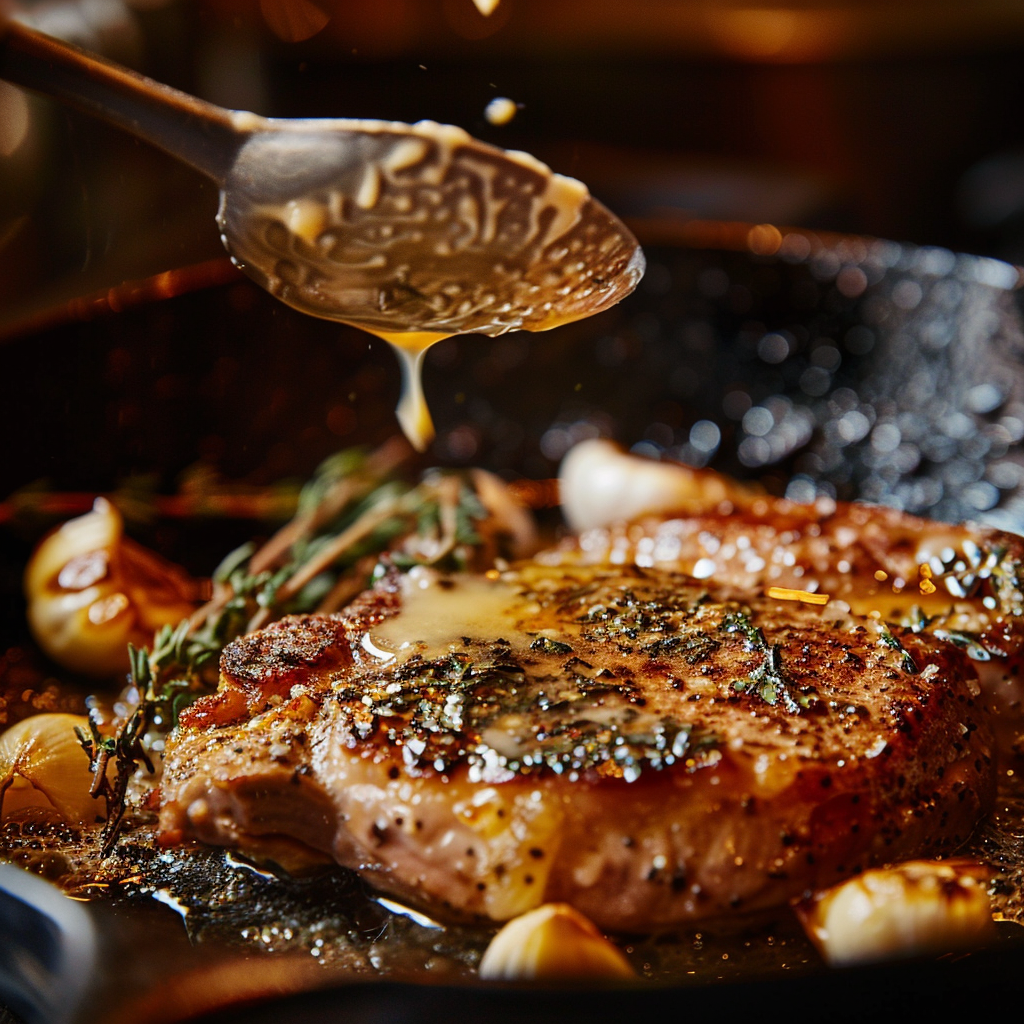
- Flip and baste. Flip once. Add butter, garlic, and thyme. Tilt the pan and spoon the foaming butter over the top of the chops continuously for 2–3 minutes.
- Check temperature. Insert a digital thermometer into the thickest part, avoiding the bone. Target: 145°F / 63°C. For very thick chops, finish in a 190°C / 375°F oven for 4–5 minutes.
- Rest. Transfer to a board. Cover loosely with foil. Rest 5 minutes without cutting.
- Make the pan sauce. Discard garlic and thyme. Return pan to medium heat. Pour in wine or broth — it will hiss. Scrape up every browned bit from the bottom. Reduce by half (about 2 minutes). Whisk in mustard. Off heat, swirl in cold butter until glossy. Add parsley. Taste for salt.
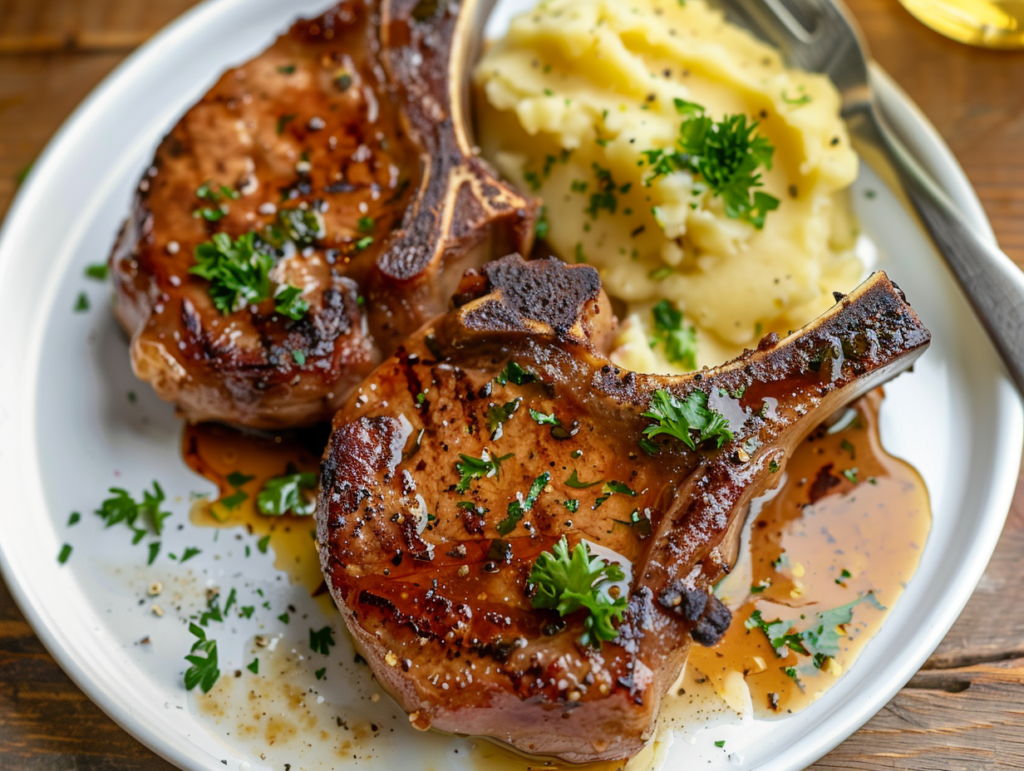
- Serve by plating the chops and spooning the sauce over them.
Temperature note: The USDA safe minimum for pork is 145°F followed by a 3-minute rest. At this temperature, pork chops are slightly pink in the center — this is safe and ideal. Do not cook beyond 155°F or the texture will suffer.🖨 Print Recipe
How to Cook Pork Chops Without Drying Them Out
This is the most-searched question in this topic — and for good reason. Dry pork chops are nearly universal among home cooks, and there are exactly three reasons it happens:
1. You cooked past 145°F. Beyond that threshold, muscle proteins tighten and squeeze out moisture. A thermometer is not optional here — it’s the only reliable way to hit that window consistently.
2. You didn’t rest the meat. Muscle fibers contract during cooking and push moisture toward the center. Cutting immediately lets it pour out onto your board. Five minutes of rest lets those fibers relax and reabsorb the liquid.
3. Your chops were too thin. Thin cuts cook through before any proper browning happens, which means they spend longer in the pan chasing color — and overcook in the process. Thickness is your biggest ally.
Best Internal Temperature for Pork Chops (USDA Guide)
The USDA updated its safe minimum for whole cuts of pork to 145°F / 63°C in 2011 — down from the old 160°F recommendation. This is important, because 160°F produces dry, tough meat. At 145°F with a proper rest, your chops will be slightly rosy in the center, fully safe, and genuinely juicy.
🌡 Target: 145°F / 63°C — then rest 5 minutes
🌡 The thermometer I recommend: The ThermoPro TP19H reads in under 3 seconds and costs under $20. It’s the single highest-impact kitchen tool you can buy. I’ve had mine for three years.
Skillet Pork Chops With No Oven — Does It Work?
Yes — for chops up to 1.25 inches thick, the stovetop-only method works perfectly well. The butter-basting step in this recipe does the work that the oven would otherwise do: it continuously applies hot fat to the top surface of the chop, cooking it from above while the pan handles the bottom.
For chops over 1.5 inches thick, a 4–5 minute oven finish at 375°F / 190°C gives more even results. But for a standard weeknight chop, you don’t need to turn the oven on at all.
Common Mistakes and How to Fix Them
| The Problem | Why It Happened | The Fix |
|---|---|---|
| Gray, not golden crust | Surface was wet, or pan wasn’t hot enough | Dry more aggressively; preheat 2 full minutes |
| Burnt outside, raw inside | Heat too high, chop too thick for stovetop only | Sear on medium-high, finish in 375°F oven |
| Tough and dry throughout | Cooked past 145°F | Use a thermometer every time, no exceptions |
| Stuck to the pan | Flipped too early before crust formed | Wait — it releases when it’s ready |
| Pan sauce too thin | Didn’t reduce enough or skipped cold butter | Reduce by half; finish with cold butter off heat |
4 Quick Glaze Variations for Your Skillet Pork Chop Recipes
Once you’ve nailed the base pork chop recipes skillet technique, the glaze is where you make it your own. Each of these is brushed over the chops in the last 2 minutes of basting, or used as the base for the pan sauce.
| 🍯 Honey Garlic 2 tbsp honey + 1 tbsp soy sauce + 1 tsp rice vinegar. Sticky, lacquered, kid-friendly. | 🍷 Balsamic 60ml balsamic + 1 tsp brown sugar, reduced until syrupy. Rich and elegant. | 🌿 Herb Butter Softened butter + rosemary + lemon zest + garlic. Melts over resting chops. | 🌶 Spicy Mustard Dijon + apple cider vinegar + pinch of chili flakes. Sharp, bold, cuts richness. |
What to Serve Alongside
The pan sauce is rich and savory, so your sides should either lean into that richness or cut through it. Creamy mashed potatoes or soft polenta absorb the sauce beautifully and make the plate feel complete. Quick-sautéed green beans or asparagus — done in the same pan right before making the sauce — offer acidity and freshness that lifts the whole dish. For a lighter weeknight plate, couscous tossed with lemon and olive oil takes the same 5 minutes as the resting time. Whatever side you choose, this pork chop recipes skillet dinner comes together in one pan with minimal cleanup.
Frequently Asked Questions
Can I use a stainless steel pan instead of cast iron?
Yes — a heavy stainless skillet works well and actually releases food more cleanly once the crust forms. Avoid non-stick pans: they can’t reach the temperatures needed for a proper sear, and most are damaged by sustained high heat.
My chops are very thin — do I change the method?
For chops under ½ inch thick, skip any oven time entirely. Sear 90 seconds to 2 minutes per side on medium-high heat and check the temperature immediately. They cook fast and leave almost no margin for error — a thermometer is even more important here.
Can I marinate the chops before this method?
You can, but you must dry them very thoroughly before searing. Marinade moisture on the surface creates steam rather than browning. Pat them aggressively with paper towels and proceed as normal. A dry brine (just salt, 1–4 hours ahead) is actually more effective for juiciness than a wet marinade.
Is it safe if the pork is still slightly pink inside?
Yes. The USDA updated its guidelines in 2011: pork chops cooked to 145°F followed by a 3-minute rest are fully safe. A slight blush of pink at that temperature is expected and ideal — it indicates the chop hasn’t been overcooked. Going higher than 155°F to eliminate the pink is what causes dry, tough meat.
What if I don’t have a meat thermometer?
Buy one — it’s the highest-impact kitchen tool you can own for under $20. Until then: press the center of the chop with a finger. Firm with slight give (like the fleshy pad of your palm with hand relaxed) is roughly 145°F. But this is imprecise. A ThermoPro TP19H pays for itself in the first meal it saves.