
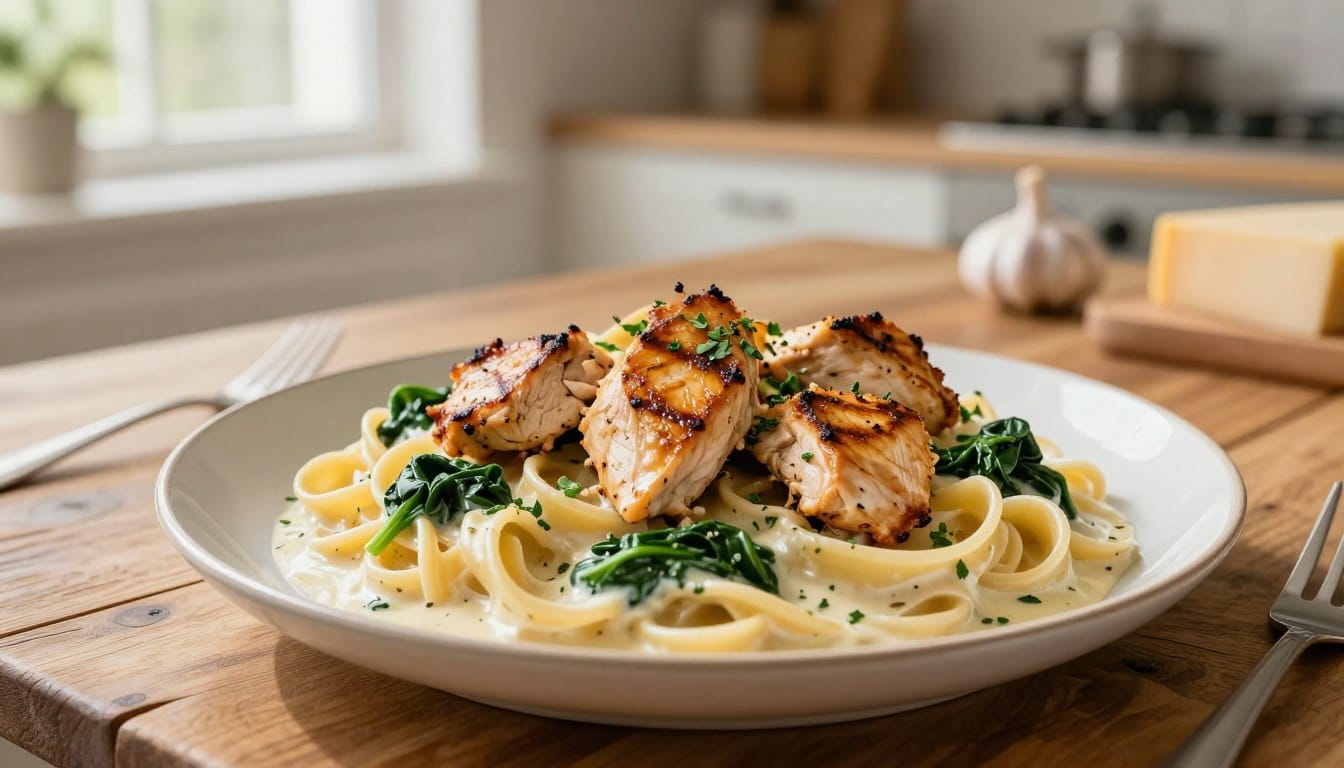
Easy Creamy Chicken Pasta (One Pan, 35-Minute Dinner)
Table of Contents
This is the kind of dinner you make once and then start craving every week. Rich, silky sauce. Tender seared chicken. Everything done in one pan in 35 minutes — including a sauce that actually clings to the pasta instead of pooling at the bottom of the bowl.
Prep: 10 min | Cook: 25 min | Servings: 4 | Calories: ~520 | Protein: ~38g
Quick Summary — What You Need to Know
| 🍳 Method | One pan, stovetop only |
| ⏱ Total time | 35 minutes |
| 💪 Protein | ~38g per serving |
| 🧀 Sauce base | Cream + parmesan + pasta water |
| 🔄 No cream option | Greek yogurt or blended cannellini beans |
| ❄️ Meal prep | Fridge 3 days — reheats perfectly |
| 📊 Difficulty | Beginner friendly |
Why This Easy One Pan Creamy Chicken Pasta Works Every Time
Most creamy chicken pasta recipes fail at the same three points — dry chicken, broken sauce, flat flavor. After years of cooking and testing in this niche, here’s what actually fixes all three permanently:
Sear the chicken first, always. Chicken added raw to a cream sauce never builds flavor — it steams gray and soft. Two minutes of high-heat searing creates a golden crust and leaves behind a layer of caramelized juices on the pan bottom that dissolves into your sauce and adds more depth than any spice blend can.
Use pasta water as your secret emulsifier. The starchy water left after cooking pasta is the single most underused ingredient in home cooking. Two ladles whisked into your cream sauce before the pasta goes in creates a binding emulsion — the sauce grips the pasta instead of sliding off it. This is standard technique in professional kitchens. Most home recipes never mention it.
Pull the pan off the heat before adding parmesan. Parmesan breaks and turns grainy above 85°C. Off the heat, it melts into a perfectly silky sauce in under 30 seconds. This one adjustment eliminates the number one texture complaint in creamy pasta dishes.
This is the kind of dinner that gets added to the weekly rotation after the first bite. You’ll know exactly what we mean when you make it.
What Makes a Pasta Sauce Creamy?
A truly creamy pasta sauce comes from three elements working together: a fat base (heavy cream or a substitute), a protein binder (parmesan or similar aged cheese), and an emulsifier (pasta water). The starch in pasta water holds the fat and protein in suspension, creating a stable, velvety coating that clings to pasta rather than separating into a greasy pool. Heat control is critical — gentle simmering builds the sauce; high heat breaks it.
The Ingredients Behind This Quick Chicken Pasta Dinner
Understanding why each ingredient is here makes you a better cook — and makes this recipe infinitely adaptable.
The Chicken — Why Cut Matters
Boneless skinless chicken breasts are the standard choice for quick chicken pasta dinners because they cook fast and stay lean. But boneless thighs are the professional’s choice for this recipe — higher fat content means they stay juicier through the searing step and never go chalky in a cream sauce.
Both work. Thighs forgive a 30-second overcook. Breasts do not.
The Sauce — A Three-Component System
| Component | Ingredient | Role |
|---|---|---|
| Fat base | 180ml heavy cream | Body and richness |
| Flavor + thickener | 60g freshly grated parmesan | Depth + natural thickening |
| Emulsifier | 120ml pasta water | Binds fat to protein, sauce clings |
On the parmesan: always grate it yourself. Pre-grated parmesan contains anti-caking agents (usually cellulose) that prevent proper melting and create a gritty texture in cream sauces. A good box grater and a wedge of Parmigiano-Reggiano takes 90 seconds and makes a noticeable difference.
The Pan — This One Detail Matters
This entire recipe happens in one wide pan. A 28cm+ sauté pan or straight-sided skillet gives you enough surface area to sear the chicken without steaming it and enough depth to toss the pasta in the sauce without spillage.
👉 A wide stainless or enameled cast iron pan works best here — the fond (browned bits) that sticks to stainless lifts perfectly when you deglaze, adding flavor you can’t get from non-stick. A reliable sauté pan is one of the three pieces of cookware that genuinely changes weeknight cooking.
The Pasta Shape
| Shape | Why It Works | Best Version |
|---|---|---|
| Penne rigate | Ridges grip sauce outside, hollow fills inside | Classic, every-bite-coated |
| Fettuccine | Wide surface, sauce wraps around it | Indulgent, restaurant feel |
| Rigatoni | Large ridged tubes, substantial | Heartiest, most filling |
| Linguine | Thinner, lighter feel | Lighter sauce variation |
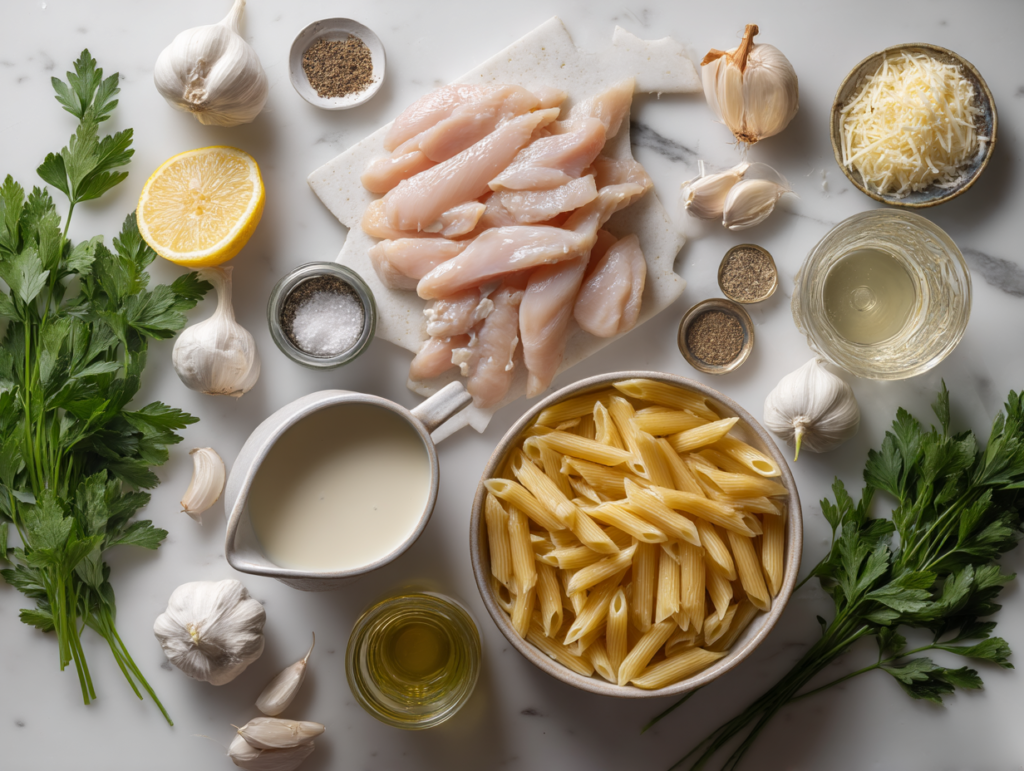
Full Ingredient List
(Serves 4 — doubles well)
Chicken:
- 600g (1.3 lbs) boneless skinless chicken breasts or thighs, cut into 2cm strips
- 1 tsp garlic powder
- 1 tsp smoked paprika
- ½ tsp onion powder
- ½ tsp black pepper + ½ tsp kosher salt
- 1 tbsp olive oil
Pasta:
- 350g (12oz) penne rigate
- Generously salted boiling water
- Reserve 240ml (1 cup) pasta water before draining
Creamy sauce:
- 2 shallots, finely diced
- 4 garlic cloves, minced
- 60ml (¼ cup) dry white wine — Pinot Grigio or Sauvignon Blanc
- 180ml (¾ cup) heavy cream
- 120ml (½ cup) reserved pasta water
- 60g (¾ cup) freshly grated Parmigiano-Reggiano
- 2 tbsp unsalted butter + 1 tbsp olive oil
- 1 tsp Italian seasoning
- Salt and black pepper to taste
To finish:
- 80g (3oz) fresh baby spinach
- Zest of ½ lemon
- Fresh flat-leaf parsley, roughly chopped
- Extra parmesan for serving
Easy One Pan Creamy Chicken Pasta — Step by Step (Beginner Friendly)
Step 1 — Season and Sear the Chicken (10 min)
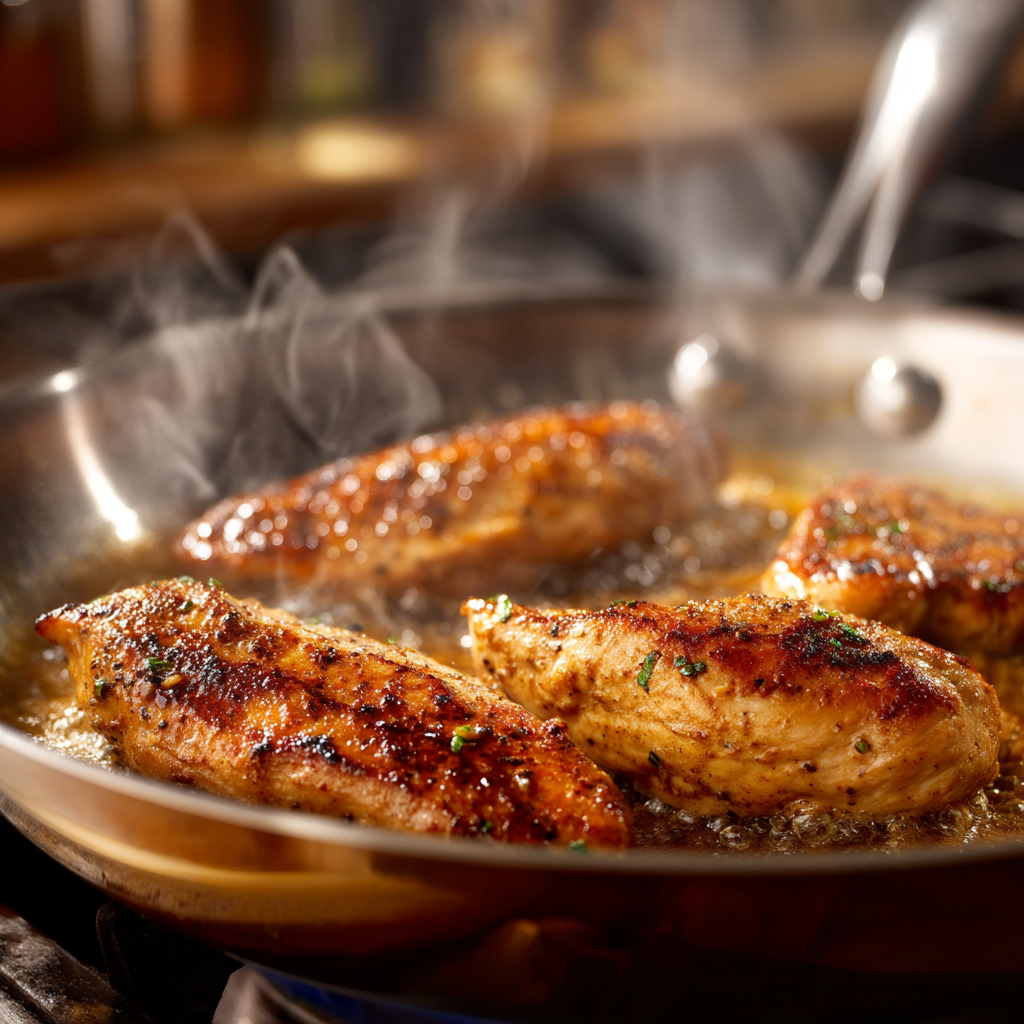
Dry the chicken strips with paper towels. Wet chicken steams instead of sears — this single step determines whether you get a golden crust or a gray one.
Toss in garlic powder, smoked paprika, onion powder, salt, and pepper.
Heat your widest pan over medium-high. Add olive oil. When it shimmers, add chicken in a single layer — no crowding. Leave it untouched for 3 full minutes. Flip once. Cook 2–3 more minutes to 74°C (165°F) internal. Remove and rest on a plate.
The brown layer left on the pan bottom is not burning — it’s concentrated flavor. You’re about to dissolve it into the best part of your sauce.
Step 2 — Build the Aromatic Base (8 min)
Same pan, reduce to medium. Add butter and olive oil. Once foamy, add shallots. Cook 3 minutes until soft and lightly golden at the edges.
Add garlic. Stir constantly for 90 seconds — garlic goes from golden to bitter in under 30 seconds at this temperature.
Pour in the white wine. It will sizzle hard. Immediately scrape every brown bit off the pan bottom with a wooden spoon — this is the fond dissolving into your sauce. Reduce by half, about 2 minutes.
No wine? Replace with equal chicken broth + 1 tsp white wine vinegar. The vinegar provides the acidity wine contributes without alcohol.
Step 3 — Cook the Pasta (parallel)
While the sauce builds, cook pasta in heavily salted water until 2 minutes before al dente. It finishes in the sauce.
Before draining: scoop out at least 240ml pasta water. Set aside. This is your safety net against a too-thick or broken sauce.
Step 4 — Make the Creamy Sauce (5 min)
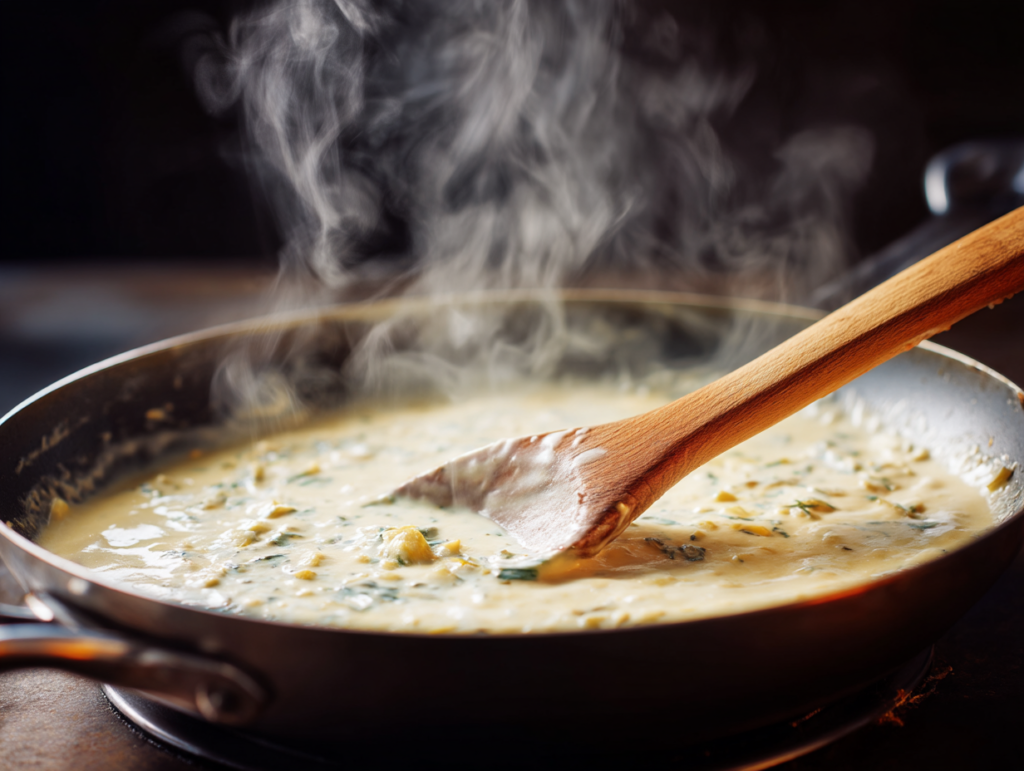
Reduce to medium-low. Pour in heavy cream. Stir to combine. Add Italian seasoning. Simmer gently — small bubbles at the edges only — for 3 minutes until it lightly coats a spoon.
Add 120ml pasta water. Stir vigorously. The sauce looks thin here. That’s correct — it thickens when the pasta and cheese go in.
Step 5 — Combine and Finish (5 min)
Add drained pasta to the sauce. Toss to coat. Cook 2 minutes at medium-low, tossing every 30 seconds — the pasta releases starch directly into the sauce, thickening it from inside.
Return chicken to the pan. Add spinach. Toss until wilted, about 60 seconds.
Remove pan from heat completely. Add parmesan in two additions, stirring between each. Add lemon zest. Taste and adjust salt. If sauce is thicker than you want, add pasta water one tablespoon at a time.
Serve immediately in warmed bowls. Top with parsley, extra parmesan, cracked black pepper.
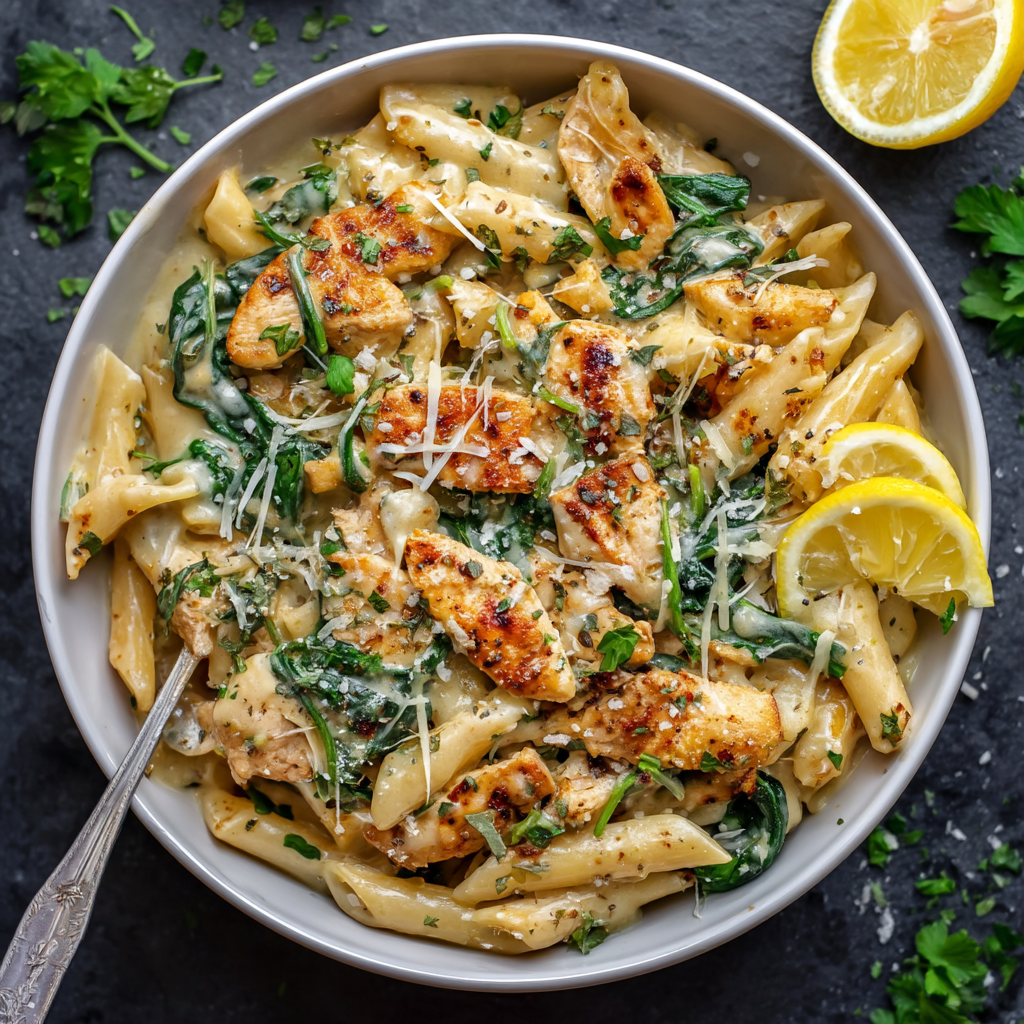
How Do You Thicken Creamy Pasta Sauce?
The best way to thicken a creamy pasta sauce is to finish cooking the pasta directly in the sauce — the pasta releases starch that thickens it naturally from the inside. Adding freshly grated parmesan off the heat also thickens the sauce through protein binding. As a last resort, press a few tablespoons of cooked pasta against the pan wall, mashing the starch into the sauce. Never use flour or cornstarch in a cream sauce — they create a heavy, gluey texture.Nutrition Per Serving
| Nutrient | Per Serving |
|---|---|
| Calories | ~520 kcal |
| Protein | ~38g |
| Carbohydrates | ~48g |
| Fat | ~19g |
| Fiber | ~3g |
| Calcium | ~22% DRI |
Calculated using USDA food database estimates.
Quick Chicken Pasta Dinner Variations — Tested and Approved
Lighter Version (No Heavy Cream)
Replace cream with 180g full-fat Greek yogurt whisked with 60ml pasta water. Add off the heat only — above 70°C it separates. The result is tangier and slightly less rich but genuinely creamy with a significant protein boost.
For a dairy-free alternative: blend 1 can of white cannellini beans with 120ml chicken broth until completely smooth. The result is neutral, thick, and almost indistinguishable from a cream sauce in a well-seasoned dish.
High Protein Chicken Pasta Version
Swap regular penne for chickpea or lentil pasta — adds 10–14g protein per serving on top of the chicken, bringing each bowl to 50g+ protein. Pair with the Greek yogurt sauce swap for maximum protein density without adding calories from fat.
👉Try our High Protein Beef Chili for a week of healthy dinners
Spicy Creamy Chicken Pasta
Add ½ tsp red pepper flakes to the garlic step. For deeper heat, stir in 1 tsp of calabrian chili paste with the cream — it adds fruity, complex heat that dried flakes cannot match.
Vegetables That Work Perfectly Here
- Cherry tomatoes — halved, added with the cream, they burst and cut through richness
- Zucchini — diced small, sautéed with the shallots in Step 2
- Roasted red peppers — sliced, added with the chicken in Step 5
- Frozen peas — straight from frozen in Step 5, warmed through in 90 seconds
- Kale — stems off, added 2 minutes before the spinach would go in
Meal Prep Tips for This One Pan Chicken Pasta
This quick chicken pasta dinner is one of the better meal prep recipes in the rotation — not because it stores beautifully forever, but because it reheats properly when you know how.
Fridge: Up to 3 days in an airtight container. The sauce thickens overnight as pasta absorbs it — this is normal.
Reheating the right way: Add 2–3 tablespoons of water or chicken broth per portion to a skillet over low heat. Toss gently for 3–4 minutes. The sauce becomes smooth again. Microwave works at 60% power with a stir halfway through.
Freezing: Not recommended. Cream sauces separate when frozen and pasta texture degrades significantly.
Frequently Asked Questions
What makes a pasta sauce creamy?
A creamy pasta sauce comes from three elements: a fat base like heavy cream, a protein binder like parmesan, and an emulsifier like pasta water. The dissolved starch in pasta water holds fat and protein in suspension, creating a stable coating that clings to pasta instead of separating. Heat control is essential — gentle simmering builds the sauce, high heat breaks it.
How do you thicken creamy pasta sauce?
The best method is finishing the pasta in the sauce — pasta releases starch that thickens the sauce naturally. Adding freshly grated parmesan off the heat also thickens through protein binding. Pressing a few tablespoons of cooked pasta against the pan wall and stirring in the starch works as a final adjustment. Avoid flour or cornstarch in cream sauces — they create a gluey texture.
What is the best pasta shape for creamy chicken pasta?
Penne rigate is the best choice for a cream-based sauce — the ridges grip the sauce on the outside while the hollow center fills with it. Fettuccine and rigatoni are strong alternatives. Avoid smooth pasta like spaghetti or angel hair — the sauce slides off rather than coating.
Can I make this easy chicken pasta recipe without wine?
Yes. Replace the white wine with equal parts chicken broth plus 1 teaspoon of white wine vinegar. The vinegar provides the acidity that wine contributes without any alcohol. The flavor difference is minimal in a heavily seasoned cream sauce.
How do I keep the chicken from drying out in pasta?
Two steps prevent dry chicken: sear it separately over high heat to 74°C (165°F), then remove it from the pan while the sauce builds. Return it only in the final 2 minutes of cooking. The brief sauce contact warms it through without cooking it further. Boneless thighs are more forgiving than breasts if you’re concerned about overcooking.
Can I meal prep this one pan chicken pasta?
Yes — refrigerate for up to 3 days. Reheat in a skillet with 2–3 tablespoons of water or broth per portion over low heat, tossing gently until the sauce loosens. This method restores the texture better than microwaving. Do not freeze cream-based pasta — the sauce separates on thawing.
Is this recipe beginner friendly?
Yes. The technique — sear, sauté, deglaze, simmer, combine — is the same sequence used in dozens of one-pan dinners. Once you’ve made it once, it becomes intuitive. The most common beginner mistake is rushing the sear (don’t touch the chicken for the first 3 minutes) and adding parmesan over high heat (always off the heat). Avoid both and the recipe is straightforward.
Want 5 more one-pan dinners like this one? Join the newsletter and get a free weekly meal plan built around recipes that actually fit into a real schedule. No fluff, no 47-ingredient lists. Just food that works. Yes, send me the meal plan →