
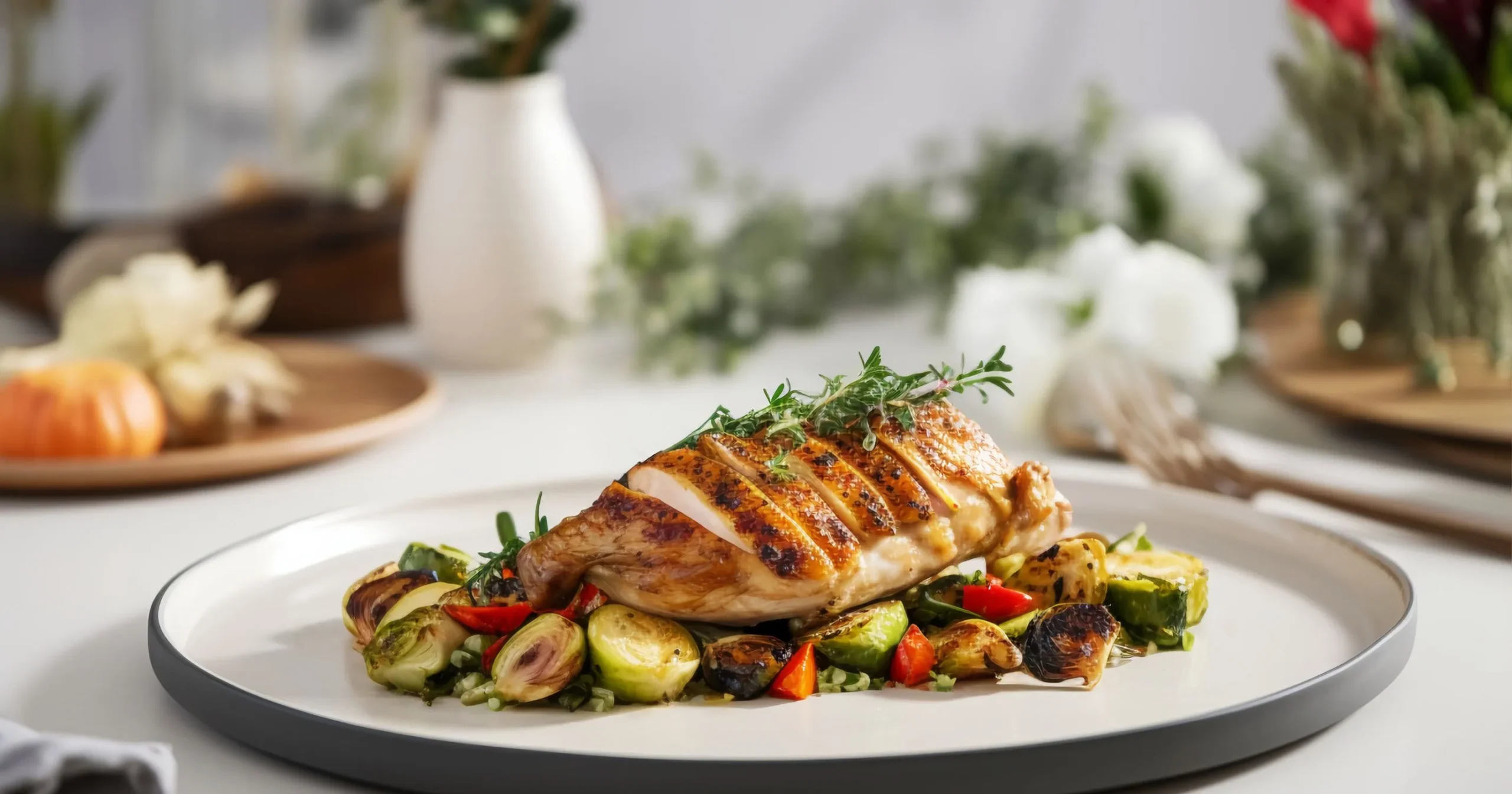
Low Fat Chicken Recipes
Table of Contents
Three years ago, I reached a point where I was genuinely tired of chicken breast. I was eating it most nights, and it always turned out the same—pale, kind of rubbery, and honestly just not good. I’d cover it in sauce just to get it down and move on. At first I thought I was doing everything “right,” but clearly something wasn’t working.
The turning point wasn’t a big revelation, just a lot of trial and error. Over the next couple of years, I tested a bunch of different approaches—air fryer vs pan, dry brining vs wet marinades, different spice blends, timing, temperatures. I messed things up plenty of times too: overcooked batches, under-seasoned ones, sauces that didn’t quite work. But I started paying attention to what actually changed the outcome.
What I ended up with is a small set of recipes I keep coming back to. They’re all simple, quick (usually under 30 minutes), and lighter in calories—generally around or under 300 per serving depending on ingredients. I’m not claiming lab precision nutrition here, just consistent, repeatable results based on tracking portions and ingredients over time.
More importantly, they’re meals I actually want to eat, not just something I tolerate for the sake of eating “clean.”
Picking the Right Cut: A Numbers-First Look
Before you cook anything, you need to know what you’re working with. Not all chicken is created equal — fat content swings dramatically depending on which part of the bird you choose and whether the skin stays on or comes off.
| Chicken Cut (100g) | Calories | Protein | Fat | Best For |
| Skinless Breast | 165 kcal | 31g | 3.6g | Everyday meals |
| Skinless Tenderloin | 170 kcal | 32g | 4.0g | Quick stir-fries |
| Skinless Thigh | 185 kcal | 28g | 7.0g | Richer flavor dishes |
| Skinless Drumstick | 172 kcal | 24g | 8.0g | Slow-cooked recipes |
| Breast with Skin | 197 kcal | 30g | 8.0g | Remove skin before eating |
| Wing with Skin | 266 kcal | 27g | 17g | Limit — high fat |
| 💡 The Practical Takeaway Skinless breast and tenderloin are your best bets for strict low-fat cooking. Skinless thigh is worth keeping in your rotation too — it has slightly more fat, but it’s also harder to overcook, which makes it forgiving for beginners. The extra flavor is a real bonus when you’re just starting out. |
How to cook chicken without drying it
Dry chicken usually isn’t about flavor—it’s about how it’s cooked. I’ve had my share of those disappointing meals where the chicken comes out dry, tough, and honestly kind of depressing to eat. The kind you try to fix with extra sauce, but it never really helps.
Once I started changing a few basic things, it stopped happening. These three rules are what turned things around for me, and they’re the reason chicken doesn’t feel like a gamble anymore.
Rule 1 — The Dry Brine (15 Minutes, Zero Effort)
Salt the chicken on both sides and let it sit for 15 minutes so it can absorb the seasoning and stay more flavorful and juicy—no brining needed.
Rule 2 — The Acid Marinade
An acid-based marinade tenderizes chicken by breaking down surface proteins, improving both texture and flavor—even in as little as 20 minutes, with deeper effects after overnight marination.
Rule 3 — The Thermometer Rule
Use an instant-read thermometer to cook chicken to exactly 165°F (74°C), then let it rest for five minutes so it stays juicy and properly cooked.
| ⚠️ The Most Common Mistake Is cutting into chicken right after cooking—if you don’t let it rest for five minutes, the juices will run out and the meat will end up dry. |
For an easy hands-off option, learn how to cook chicken breast in a Crock Pot while keeping it tender and moist.
Cooking Methods Compared
Your cooking method changes the calorie count, texture, and flavor profile of chicken more than any single ingredient. Here’s how the main options stack up for low-fat cooking:
| Method | Fat Used | Cal Impact | Best Result |
| Air Fryer | 0–1 tsp | –120 kcal vs frying | Crispy crust, juicy inside |
| Oven Bake/Roast | 0–1 tsp | –100 kcal vs frying | Even cook, hands-off |
| Poaching | None | Lowest overall | Ultra-tender, meal-prep ready |
| Grilling / Broil | None | Fat drips away | Char flavor, fast |
| Pan-Sear (Non-stick) | ½ tsp | Minimal | Golden crust, quick |
| Deep Frying | 3–4 cups | +200–300 kcal | Avoid for low-fat goals |
3 low fat chicken Recipes
Each recipe was developed to solve a specific dinner problem: the weeknight rush, the takeout craving, the meal-prep Sunday, the “I want something impressive” Saturday. Pick your situation, start there.
Recipe 1 — Lemon-Herb Grilled Chicken
The foundational recipe. Simple enough for a Tuesday, good enough for guests. Once you’ve made this twice, it becomes automatic.
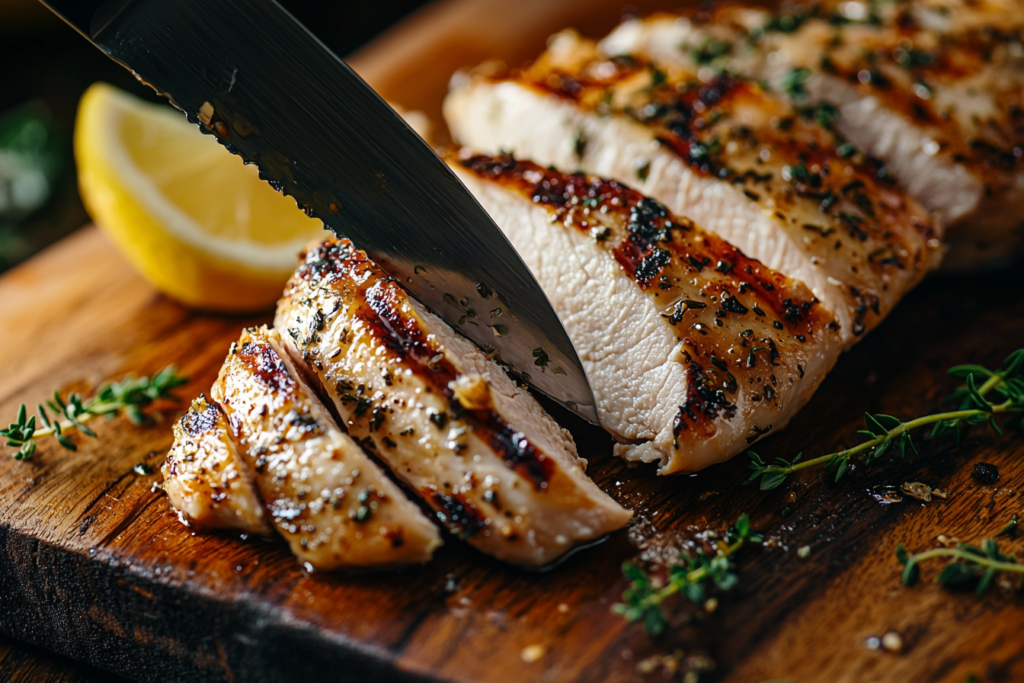
| ⏱ Prep 10 min | 🔥 Cook 20 min | 👤 Serves 4 | 📊 Calories ~245 kcal |
Ingredients
| Ingredient | Amount | Notes |
| Skinless chicken breast | 4 pieces (600g) | Pound to even thickness |
| Fresh lemon | 2 lemons | Juice + zest |
| Garlic | 4 cloves | Minced or pressed |
| Fresh rosemary | 2 sprigs | Leaves only, chopped |
| Fresh thyme | 4 sprigs | Leaves stripped |
| Olive oil | 1 tbsp | For the marinade only |
| Kosher salt | 1 tsp | |
| Black pepper | ½ tsp | Freshly cracked |
Steps
- Mix lemon juice, zest, garlic, herbs, olive oil, salt, and pepper in a bowl.
- Add the chicken, coat it well, cover, and let it marinate in the fridge for at least 20 minutes (up to 8 hours for more flavor).
- Take the chicken out 10 minutes before cooking and heat your grill to medium-high.
- Remove excess marinade and cook the chicken for about 5–6 minutes per side without moving it.
- Cook until it reaches 165°F (74°C), then let it rest for 5 minutes.
- Slice and serve with a squeeze of lemon and a little salt.
| 🍽️ Serving & Storage It’s great with roasted asparagus, a grain salad, or wrapped up with some Greek yogurt sauce, and it keeps well in the fridge for a few days—perfect to enjoy cold in a salad the next day. |
Recipe 2-Homemade Orange Chicken (Lighter Than Takeout)
A sticky, sweet and tangy glaze that gives you all the flavor of takeout orange chicken—just without the frying or unnecessary extras.
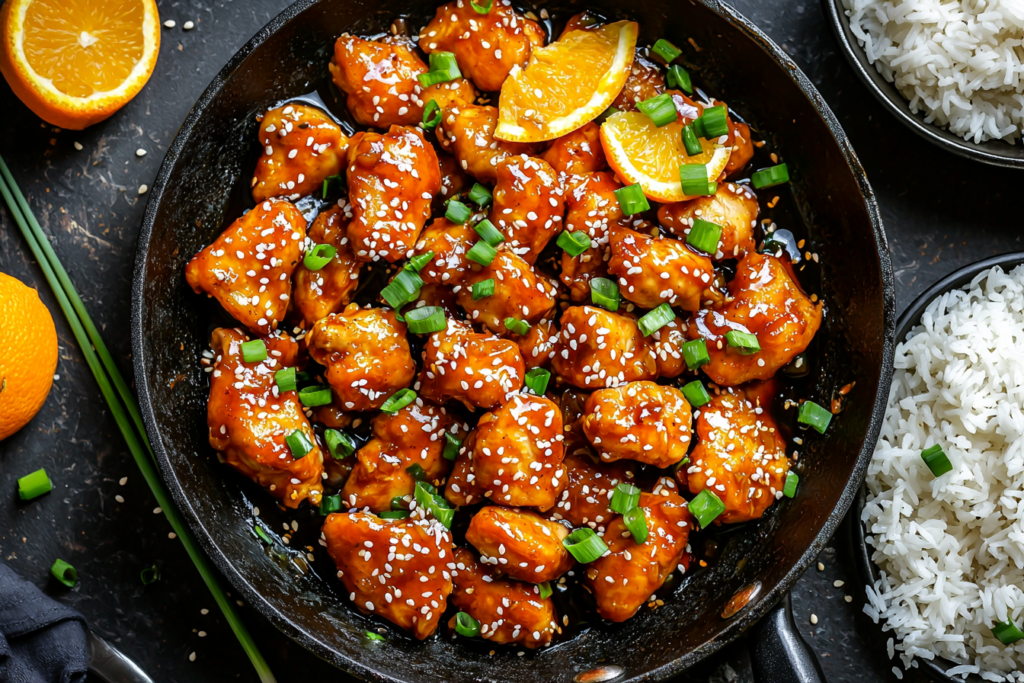
| ⏱ Prep 15 min | 🔥 Cook 20 min | 👤 Serves 4 | 📊 Calories ~295 kcal |
Ingredients
| Ingredient | Amount | Notes |
| Skinless chicken breast | 500g | Cut into 1.5-inch cubes |
| Fresh orange juice | ¾ cup | About 3 medium oranges |
| Orange zest | 1 tsp | Use a microplane |
| Low-sodium soy sauce | 3 tbsp | Or coconut aminos |
| Raw honey | 1 tbsp | Or maple syrup |
| Fresh ginger, grated | 1 tsp | – |
| Garlic | 2 cloves | Minced |
| Cornstarch (for chicken) | 1.5 tbsp | Coating before cooking |
| Cornstarch (for sauce) | 1.5 tsp | Mixed with 1 tbsp cold water |
| Sesame oil | ½ tsp | Finishing only — don’t heat |
| Red chili flakes | Pinch | Optional heat |
Steps
- Coat the chicken pieces lightly with cornstarch.
- Mix all the sauce ingredients in a bowl and set it aside.
- Cook the chicken in a hot pan for a few minutes on each side until golden and cooked through (do it in batches if needed).
- Take the chicken out, then pour the sauce into the same pan and let it simmer until it thickens.
- Put the chicken back in and toss it in the sauce.
- Serve right away with rice and top with scallions and sesame seeds.
| Takeout vs Homemade — At a Glance Restaurant orange chicken is usually high in calories and fat because it’s deep-fried, but this version gives you the same flavor with much less—about 295 calories and only 5g of fat. |
Recipe 3 — Air Fryer chicken recipe
This is the recipe that made me get an air fryer—the chicken comes out crispy on the outside, juicy inside, and it’s ready in under 25 minutes.
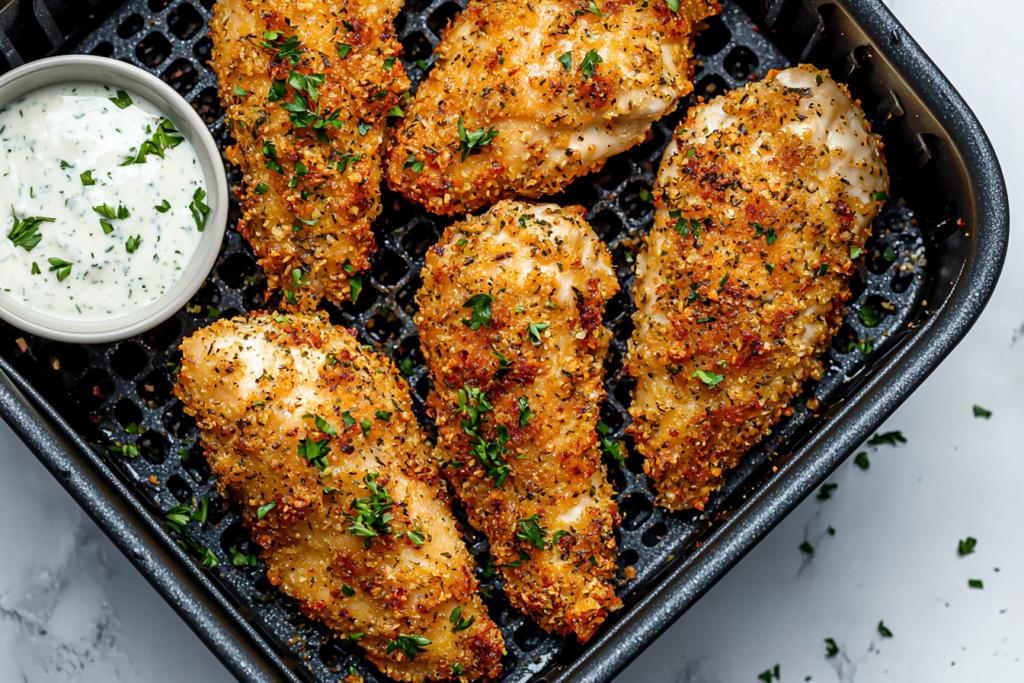
| ⏱ Prep 10 min | 🔥 Cook 12 min | 👤 Serves 4 | 📊 Calories ~215 kcal |
Ingredients
| Ingredient | Amount | Notes |
| Chicken tenderloins | 450g | Or breast cut into strips |
| Egg whites | 2 large | The binder — keeps it light |
| Panko breadcrumbs | ¾ cup (80g) | Panko is key — regular crumbs go soggy |
| Parmesan, grated | 2 tbsp | Optional but adds depth |
| Garlic powder | ½ tsp | – |
| Smoked paprika | ½ tsp | – |
| Dried oregano | ¾ tsp | – |
| Dried thyme | ½ tsp | – |
| Salt & pepper | To taste | – |
Steps
- Prepare two bowls: egg whites in one, seasoned panko in the other.
- Dip the chicken in egg white, then coat it in the panko mixture.
- Preheat the air fryer to 375°F (190°C).
- Cook the chicken in a single layer for 10–12 minutes, flipping halfway.
- Once golden and cooked through (165°F), let it rest for a couple of minutes before eating.
| 🥣 The Dipping Sauce (45 kcal per 2 tbsp) Mix fat-free Greek yogurt with Dijon mustard, a little honey, lemon juice, and garlic powder until smooth—it tastes like a creamy honey mustard sauce without the mayo. |
Conclusion
Low-fat chicken cooking isn’t about restriction — it’s about technique. Once you understand how heat, moisture, and seasoning interact, you stop settling for food that’s “healthy but boring” and start making meals you genuinely want to eat.
Start with one recipe this week. Recipe 1 if you want something proven and simple. Recipe 2 if you’re trying to break a takeout habit. Recipe 4 if you want to set up a solid meal-prep foundation. They all work, and they all improve the longer you make them.
The seven recipes in this guide are ones I return to weekly. They’re not complicated. They don’t require expensive equipment or hard-to-find ingredients. They just require you to make them once.
Frequently Asked Questions
Q: How many calories are in a plain 6oz skinless chicken breast?
A: A 6oz (170g) skinless chicken breast contains approximately 185 calories, 38 g of protein, and 3 g of fat before cooking. The final calorie count shifts slightly depending on your cooking method — grilling and poaching add no extra fat, while even a light pan sear with ½ tsp of olive oil adds roughly 20 calories.
Q: Is it safe to eat chicken breast every day?
A: Yes, eating chicken breast daily is generally safe and nutritionally sound for most people. It’s a complete protein containing all nine essential amino acids, plus meaningful amounts of B vitamins, selenium, and phosphorus. The main caveat is variety — rotating cuts, cooking methods, and pairings prevents both nutritional gaps and the kind of meal fatigue that derails healthy eating habits.
Q: What’s the real difference between an air fryer and a conventional oven for chicken?
A: An air fryer circulates hot air at higher velocity, producing a noticeably crispier surface crust in less time — typically 30–40% faster than a conventional oven. For low-fat cooking specifically, both methods use minimal added oil, but the air fryer delivers a texture closer to pan-frying without the fat. The oven beats the air fryer for larger batches and whole birds.
Q: Can I freeze marinated chicken breast and cook it from frozen?
A: Yes — marinating before freezing is actually a smart technique. As the chicken thaws, the marinade continues working on the fibers, enhancing tenderness. Freeze in a zip-lock bag with air pressed out, with the marinade included. Thaw overnight in the fridge before cooking — never on the counter. Cook from fully thawed only.
Q: How long should I marinate chicken for maximum flavor without compromising texture?
A: The sweet spot for acid-based marinades (lemon, lime, vinegar) is 2–8 hours. Beyond 12 hours, the acid begins denaturing surface proteins in a way that makes the exterior mealy rather than tender. For yogurt-based marinades — which are enzymatic rather than purely acidic — you can safely go up to 24 hours. Oil-and-herb marinades without acid can marinate indefinitely, though flavor absorption plateaus around the 12-hour mark.