
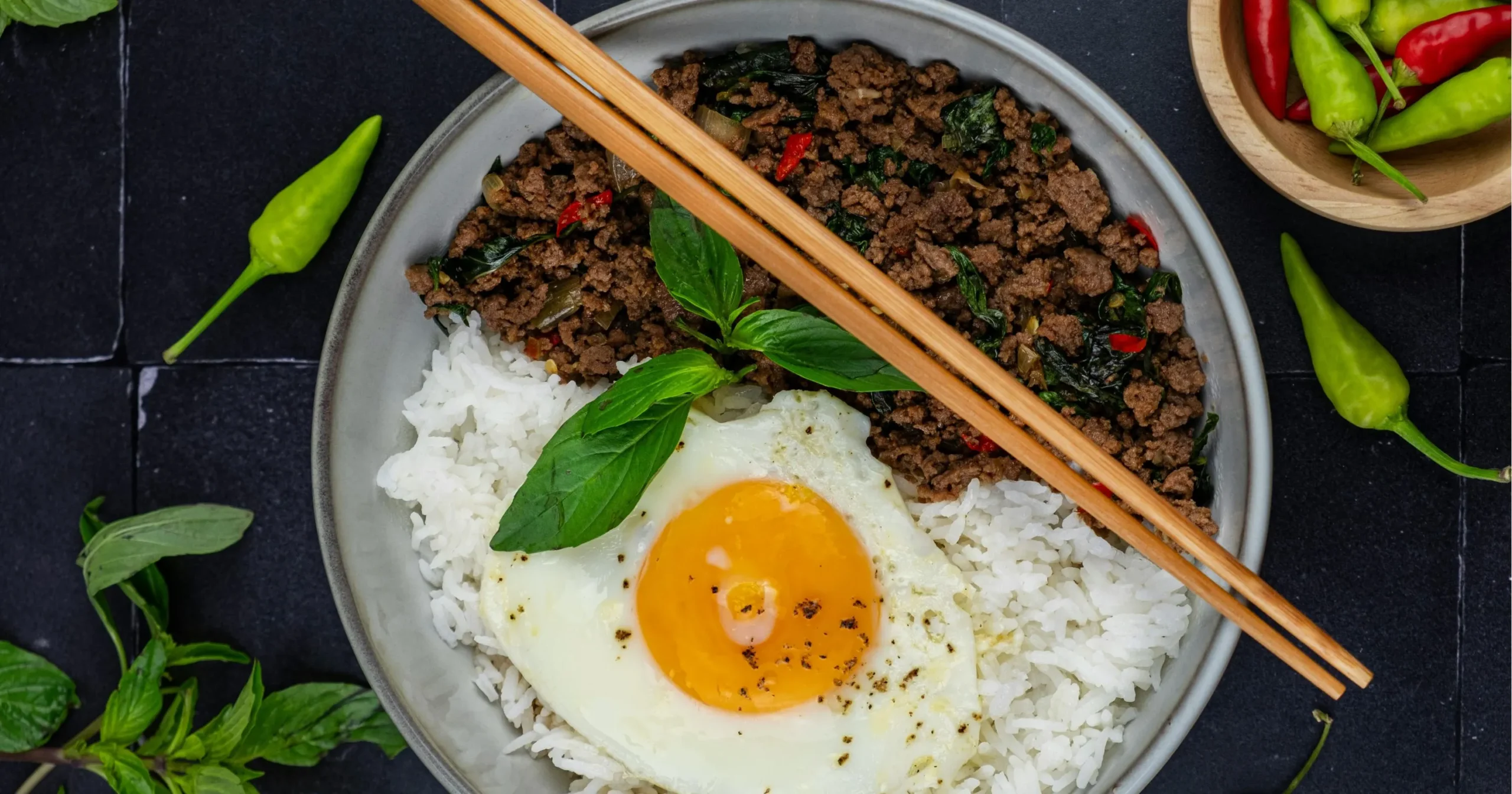
Healthy Ground Beef Recipes (4 Easy 30-Minute Meals)
Table of Contents
Ground beef doesn’t have to be greasy, heavy, or unhealthy. In fact, the right healthy ground beef recipes can be some of the fastest, most balanced meals you can make — even on your busiest days.
If you’re trying to eat better without spending hours in the kitchen, you’re in the right place. With the right cuts, simple cooking methods, and smart ingredient combinations, ground beef becomes a powerful, budget-friendly protein for everyday meals.
Why Healthy Ground Beef Recipes Are Actually Good for You?
The nutrition case for lean ground beef is stronger than most people realize. A 100g serving of 93% lean ground beef, cooked, delivers a dense package of micronutrients that few proteins can match — all within a reasonable calorie range.
| Protein~26g | Iron (heme)~2.5mg | Zinc~6mg | Vitamin B12~2.4mcg | Calories ~170 kcal | Saturated fat ~4g |
| Muscle repair & satiety | Most bioavailable form — 2–3x better absorbed than plant iron | Immune function & wound healing | Energy metabolism & nerve health | Per 100g cooked (93/7 lean) | Well within daily guidelines when portioned correctly |
The key word throughout is lean. The difference between 80/20 and 93/7 ground beef is roughly 8g of fat and 70 calories per 100g — a significant gap when you’re cooking with it several times a week.
Choosing the right cut — a practical guide
When buying ground beef, the label tells you the lean-to-fat ratio. Here’s what those numbers mean in practice:
- 80/20 (regular)~20% fat: Best for burgers — fat keeps them juicy. Not ideal for health-focused recipes.
- 85/15 (lean)~15% fat: Good balance for tacos, pasta sauces, and chili. Drain after browning.
- 90/10 (extra lean)~10% fat: Great for skillets and stir-fries. Needs a little oil to avoid sticking.
- 93/7 (ultra lean)~7% fat: Best for meal prep and high-protein bowls. Always add moisture (broth, sauce).
Fresh and healthy ground beef should be bright red on the outside and may appear darker in the center — that’s normal oxidation, not a sign of spoilage. Avoid packages with gray or brown patches throughout.
The cooking techniques that actually preserve nutrients
Best methods for healthy beef
Stir-frying and skillet cooking over medium-high heat preserve the most nutrients while building flavor through the Maillard reaction (the browning that creates depth). Keep cook time under 8 minutes for ground beef. Grilling and broiling also work well — fat drips away naturally, reducing calorie density without losing protein or micronutrients.
What to avoid
Slow cooking at very high temperatures for extended periods degrades B vitamins significantly. Deep frying adds fat and calories that cancel out the lean cut’s benefits. And always drain excess fat after browning 85/15 or fattier ground beef — a simple step that removes 30–40% of the rendered fat from the pan.
4 healthy ground beef recipes you can make tonight
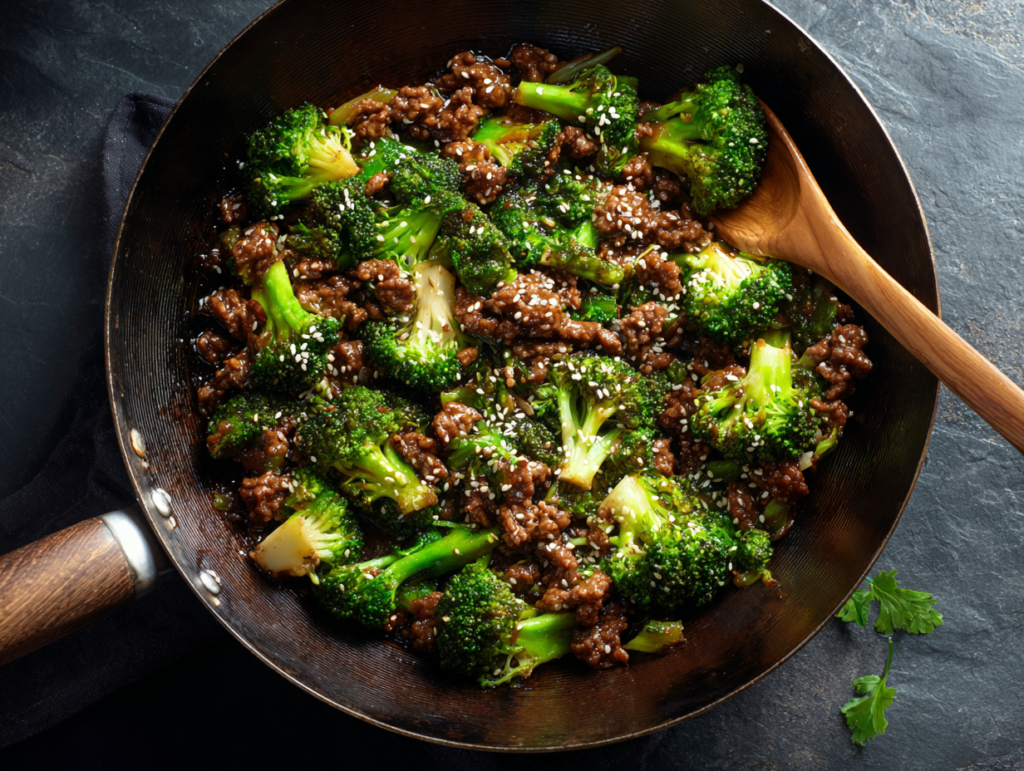
1. Beef and broccoli stir-fry — ready in 20 minutes
Time: 20 min Servings: 2 Difficulty: Easy Calories: ~390 kcal/serving
Ingredients
- 14 oz (400g) 93/7 lean ground beef
- 2 cups broccoli florets, cut small
- 3 garlic cloves, minced
- 1 tsp fresh ginger, grated
- 3 tbsp tamari or low-sodium soy sauce
- 1 tbsp oyster sauce (optional but recommended)
- 1 tsp sesame oil
- 1 tsp honey
- 1 tsp cornstarch dissolved in 2 tbsp cold water
- 1 tbsp neutral oil (avocado or canola)
- Sesame seeds and sliced green onions to finish
How to make it
- Whisk together tamari, oyster sauce, honey, sesame oil, and the cornstarch slurry. Set it aside — you’ll use it as your sauce later.
- Blanch broccoli in boiling salted water for 90 seconds, then drain and set aside. This helps it stay bright green and a bit crisp.
- Heat the oil in a large pan or wok over high heat until it starts to smoke. Add ground beef and press it flat — don’t stir for 2 minutes to let it sear and develop color.
- Break the beef apart, add garlic and ginger, cook for 1 more minute stirring constantly.
- Add broccoli and pour over the sauce. Toss everything together over high heat for 2 minutes until the sauce thickens and coats the beef.
- Serve immediately over steamed brown rice or cauliflower rice. Finish with sesame seeds and green onions.
Pro tip: for a gluten-free version, use tamari instead of soy sauce and arrowroot powder instead of cornstarch — same texture, zero gluten.
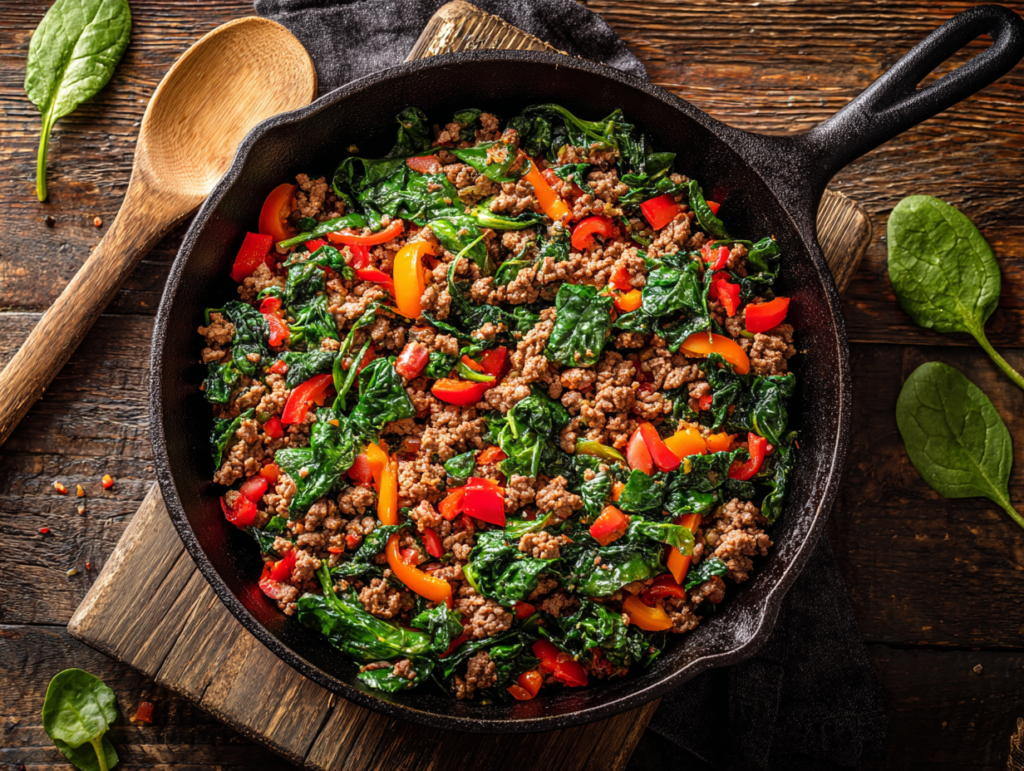
2. Lean beef and vegetable skillet — ready in 25 minutes
Time: 25 min Servings: 2–3 Difficulty: Easy Calories: ~340 kcal/serving
Ingredients
- 14 oz (400g) 90/10 lean ground beef
- 1 red bell pepper, diced
- 1 zucchini, diced
- 2 large handfuls of fresh spinach
- 1 can (14oz) diced tomatoes, drained
- 3 garlic cloves, minced
- 1 tsp smoked paprika
- 1 tsp cumin
- ½ tsp chili flakes (optional)
- Salt, pepper, olive oil
- Fresh parsley to finish
How to make it
- Heat olive oil in a large pan over medium-high heat. Add the ground beef and cook for 5–6 minutes, breaking it up, until browned. Drain excess fat if using 85/15.
- Push beef to the side. Add garlic, bell pepper, and zucchini. Cook for 4–5 minutes until softened and starting to color.
- Add smoked paprika, cumin, and chili flakes. Mix everything well and cook for a minute — toasting the spices really enhances the flavor.
- Add drained tomatoes and stir. Simmer for 5 minutes over medium heat.
- Add spinach in two batches, stirring until wilted. Season with salt and pepper. Finish with fresh chopped parsley.
Pro tip: this skillet works over rice, stuffed into a baked potato, or scooped into lettuce cups for a low-carb option. One recipe, three different meals.
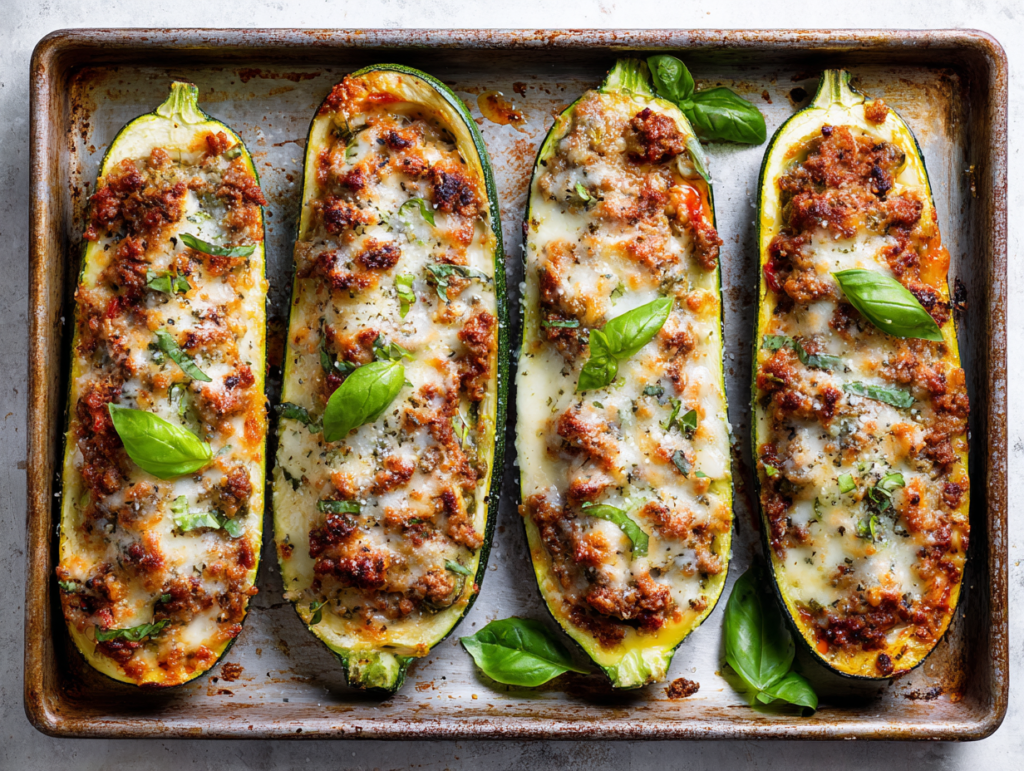
3. Low-carb beef-stuffed zucchini boats — ready in 30 minutes
Time: 30 min Servings: 2 Difficulty: Easy Calories: ~360 kcal/serving
Ingredients
- 2 large zucchini, halved lengthwise
- 12 oz (340g) 93/7 lean ground beef
- ½ cup marinara sauce (no added sugar)
- 2 garlic cloves, minced
- ½ tsp Italian seasoning
- ¼ tsp red pepper flakes
- ¼ cup shredded mozzarella
- 2 tbsp grated parmesan
- Salt, pepper, olive oil
- Fresh basil to serve
How ro make it
- Preheat oven to 400°F (200°C). Scoop out the center of each zucchini half with a spoon, leaving a ½-inch shell. Cut up the removed flesh and set aside.
- Brush the zucchini halves with olive oil and season with salt and pepper.Set cut-side up on a baking sheet and roast for 10 minutes while preparing the filling.
- Cook ground beef with garlic in a skillet over medium-high for 5 minutes. Add the chopped zucchini flesh, Italian seasoning, and pepper flakes. Cook 2 more minutes.
- Stir in marinara sauce. Season and remove from heat.
- Fill each zucchini shell with the beef mixture. Top with mozzarella and parmesan. Bake for 10–12 minutes until cheese is melted and bubbling.
- Finish with fresh basil. Serve immediately — these don’t hold well, so eat right out of the oven.
Pro tip: the zucchini flesh you scoop out is full of flavor and nutrients — never discard it. Cook it right into the filling.
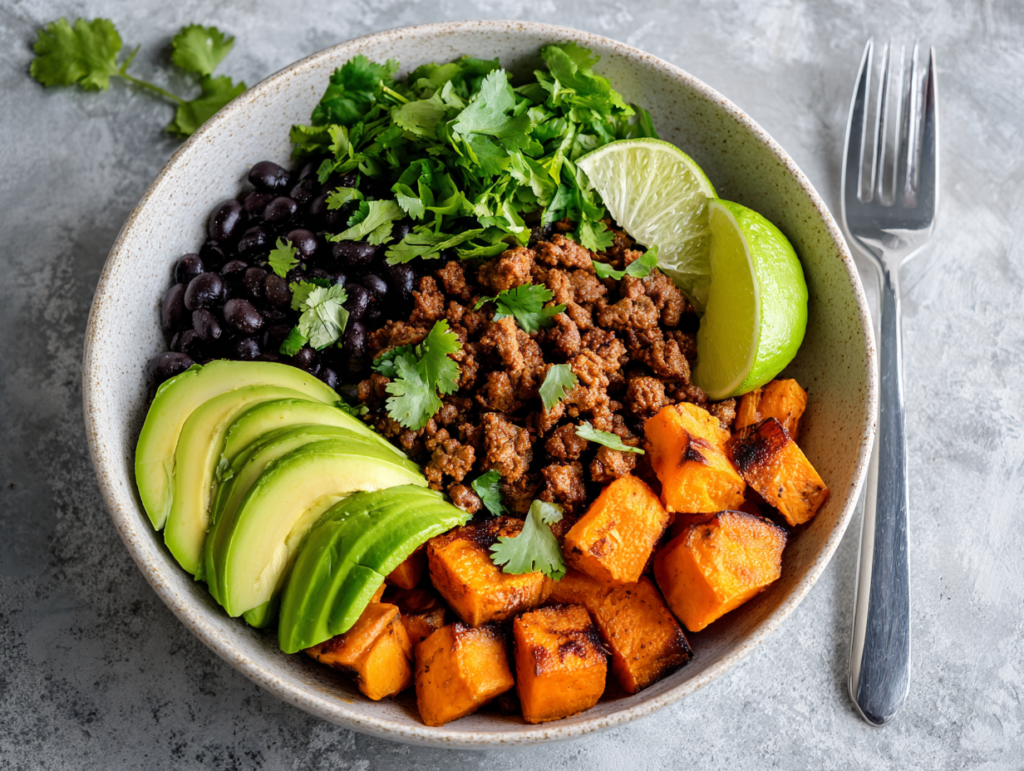
4. Post-workout beef and sweet potato bowl — ready in 25 minutes
Time: 25 min Servings: 2 Difficulty: Easy Calories: ~480 kcal/serving
Ingredients
- 14 oz (400g) 93/7 lean ground beef
- 2 medium sweet potatoes, cubed (about 2 cups)
- 1 cup cooked black beans (canned, rinsed)
- 1 avocado, sliced
- 1 tsp cumin, 1 tsp garlic powder, ½ tsp smoked paprika
- Salt, pepper, olive oil
- Lime juice and fresh cilantro to finish
How to make it
- Toss sweet potato cubes in olive oil, salt, and paprika. Roast at 425°F (220°C) for 20 minutes, flipping halfway, until caramelized at the edges.
- While potatoes roast, cook ground beef in a skillet over medium-high for 5–6 minutes. Add cumin and garlic powder in the last minute of cooking.
- Warm black beans in the same pan for 1–2 minutes after removing the beef.
- Build your bowl: sweet potatoes first, then beef, then black beans. Top with sliced avocado.
- Finish with a squeeze of lime juice and fresh cilantro. Eat within 30 minutes of finishing your workout to support maximum muscle protein synthesis.
Pro tip: This recipe is a high-protein meal. It provides approximately 45g of protein, 55g of complex carbohydrates, and healthy fats from avocado—a near-perfect post-workout macro split without the need for supplements.
Budget-friendly meal combinations
- Ground beef is one of the most cost-effective proteins available — especially at the 85/15 or 90/10 lean ratios. Here are combinations that stretch it further without sacrificing nutrition:
- Ground beef + lentils (50/50 mix): cuts cost in half, doubles the fiber, you won’t taste the difference in a chili or Bolognese
- Beef and cabbage skillet with garlic and caraway: a complete meal under $4 per serving, high in vitamin C and fiber
- Ground beef pasta bake with homemade tomato sauce: batch-cook Sunday, eat all week
- Beef and egg fried cauliflower rice: low-carb, high-protein, under 20 minutes and under $3 per serving
Mistakes that ruin healthy beef dishes
- Using the wrong fat ratio for the dish: 80/20 in a bowl drowns everything in grease. 93/7 in a burger turns dry and crumbly. Match the cut to the recipe.
- Not draining after browning: skipping this with 85/15 beef adds 5–8g of fat per serving that you simply don’t need in a health-focused dish.
- Underseasoning: lean beef has less intramuscular fat, which means less natural flavor. It needs more seasoning than fattier cuts — be generous with salt, garlic, and spices.
- Overcrowding the pan: ground beef steams instead of searing when piled too deep. Work in batches if needed — the browned crust is where the flavor lives.
- Skipping acid at the end: a squeeze of lemon, lime, or a splash of vinegar right before serving cuts through richness and lifts the entire dish. Most home cooks skip this step.
Meal prep & storage guide
- ❄️Refrigerator: 3–4 days
- 🧊Freezer (cooked): 2–3 months
- 🧊Freezer (raw): 3–4 months
- ♨️Reheating:165°F internal + splash of broth
Cook 1.5–2 lbs (680-900 g) of seasoned ground beef on Sunday and portion it into containers. During the week, you have a base ready for bowls, pasta, or skillets. For taco night, try these easy ground beef tacos with homemade taco seasoning and fresh toppings.
Conclusion
Lean ground beef is one of the most underrated proteins for quick, healthy cooking. It’s fast, affordable, rich in iron and B12, and adaptable enough to carry completely different flavor profiles from one meal to the next. The difference between healthy and unhealthy beef dishes comes down to three things: choosing the right lean ratio, not overcooking it, and loading up on vegetables. Start with the skillet if you’re new to this — one pan, 25 minutes, and a result that will actually make you want to cook again tomorrow.
Frequently asked questions
What is the healthiest lean ratio for ground beef?
93/7 gives you the best protein-to-fat ratio for health-focused cooking — roughly 26g of protein and only 7g of fat per 100g cooked. For dishes that need more moisture (like meatballs or meatloaf), 90/10 is a better balance. Avoid 80/20 for daily healthy cooking — it’s better saved for burgers.
How do I keep lean ground beef from turning dry?
Three things: don’t overcook it (internal temp of 160°F / 71°C is the USDA safe mark for ground beef — pull it there, not beyond), always add moisture in the form of sauce, broth, or vegetables, and never skip seasoning. Lean beef without fat needs flavor from external sources.
Is ground beef good for weight loss?
93/7 lean ground beef can absolutely fit into a weight-loss diet. Its high protein content (26g per 100g) promotes satiety and helps preserve muscle mass during a caloric deficit. The key is portion control — a 4–5oz serving per meal is typically appropriate for most adults.
What can I substitute for soy sauce to keep it gluten-free?
Tamari is the closest 1:1 substitute — same saltiness, same umami, zero wheat. Coconut aminos is milder and slightly sweeter, so you may need to reduce other sweeteners in the recipe. Both work well in stir-fries, marinades, and sauces.
How much ground beef should I eat per week?
Most nutritional guidelines suggest limiting red meat to 2–3 servings per week (roughly 12–18oz total). Lean ground beef fits well within that window. Vary your protein sources across the week — chicken, fish, legumes, and eggs alongside beef gives you a broader micronutrient profile.
Which recipe is best for someone who never cooks?
The vegetable skillet (recipe 2). One pan, no special technique, forgiving timing — and it tastes genuinely good. Once you’re comfortable with it, the stir-fry is the next logical step up in skill level.